



KAMPALA Uganda (UGNEWSLINE) – The Uganda Law Society has today launched a four-week Artist in Residence pilot programme aimed at bridging the gap between the legal profession and the creative industry, with Court of Appeal Justice Oscar Kihika calling for urgent reforms to the Copyright Act and greater collaboration to protect artists’ livelihoods.
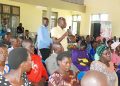
The event, held at ULS House in Kololo as part of the Radical New Bar ULS@70 commemorations, brought together lawyers, musicians, designers and other creatives. Justice Kihika, a jurist, musician and former ULS president, launched the residency, delivered the keynote address and conferred Lifetime Achievement Awards on select trailblazers.
“Talent is like a land title and should be protected,” Justice Kihika said. He urged artists to always approach lawyers for all their businesses and not to sign contracts they do not understand, because their livelihoods depend on their talents. He called on artists to create a committee on creatives, entertainment and technology, and advocated partnership with the Uganda Registration Services Bureau (URSB), Uganda Performing Rights Society (UPRS), Uganda Communications Commission (UCC) and the Ministry of Gender, Labour and Social Development to simplify registration and revenue collection.
Justice Kihika noted that the Copyright Act was enacted in 2006, “before AI, before TikTok, before technology,” and therefore needs amendment to incorporate technological developments.
“Parliament should look into the need to amend the Copyright Act 2006,” he said, adding that lawyers should become “architects of protection” for artists. He observed that Uganda’s exports are increasingly in the creative sector, citing the late Joseph Oryema, whose music promoted Uganda internationally, particularly in Luo. Artists sometimes earn more than lawyers and other professionals, he added, and therefore deserve respect as contributors to the economy. The partnership, he said, would also create more business opportunities for both sides. ULS, he urged, should champion the certification and protection of artists.
Honourable Mbidde Mukasa said it is the mandate of lawyers to educate artists about the law so that their businesses become productive, help fight poverty and prepare them for the future. He pointed out that the global creative industry generates about USD 1.7 billion, yet Uganda lags far behind countries such as Russia and China. Lawyers, he argued, should help evolve the creative industry into a corporate sector.
ULS Vice President Anthony Asiimwe said the Society recognised that the art industry needed legal services and sought to bridge the gap between lawyers and artists. “Talent is a job, and there are lawyers who have talent,” he said. The Artist in Residence pilot, launched that day, will host various artists over the next four weeks to expose their work and make the legal profession more relevant to creatives. With over 7,000 lawyers in the country, he added, the profession is ready to support and work with artists.
Legendary artist and lawyer Sylvia Kyagulanyi described the initiative as one that would unpack many opportunities for lawyers to understand emerging businesses, noting that AI is now a feature in every trade. She urged all artists to engage lawyers in their dealings to avoid repercussions. “When the Copyright Act was written, we were happy but for nothing,” she said, calling for proper administration of copyright, describing it as “a quasi-court on its own.” She observed that artists have often tried to organise themselves into associations but faced repeated setbacks.
Artist Joanita Kawalya noted that things have changed and art is now a source of income, making legal services essential for creatives.
Lifetime Achievement Awards were presented to Julius Kyazze of Swangz Avenue, Samson Senkaaba, Monica Katoko (designer for the ULS president), Joanita Kawalya, Sylvia Kyagulanyi and Victor Kamenyo. Kyazze encouraged the legal fraternity to join the entertainment world, noting that everyone needs entertainment. Kamenyo said divisions among artists undermine their businesses and called on the music industry to develop a proper system.
The pilot places a practising artist at the heart of the legal profession for four weeks, seeking genuine cross-fertilisation between law and the creative arts, with intellectual property, the formalisation of creative work and the human dimensions of practice at its core.