


BRAC Uganda has called on the government to integrate the Graduation Approach into existing poverty reduction and social protection programmes, including the Parish Development Model (PDM), to help more vulnerable households move from extreme poverty to sustainable livelihoods.
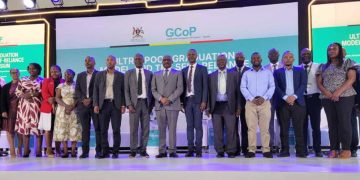
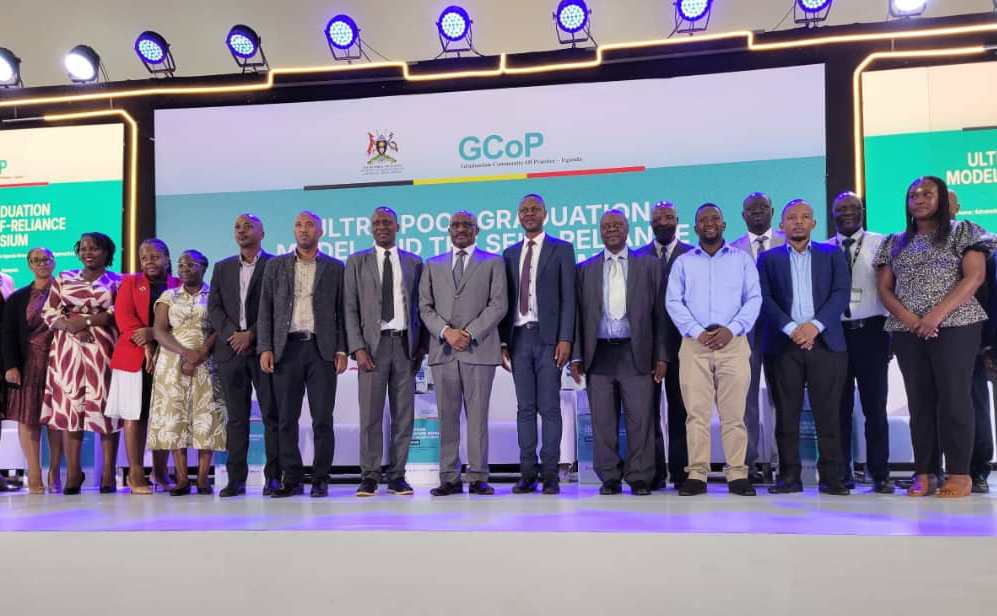
Joseph Kabanda, Programme Manager at BRAC Uganda, which is part of Uganda’s Graduation Community of Practice (GCOP), made the call during the Ultra-Poor Graduation and Self-Reliance Index Symposium held in Kampala under the theme, “Advancing Sustainable Livelihoods and Self-Reliance in Uganda through Graduation Approaches.”
The symposium brought together government officials, development partners, humanitarian agencies, civil society organisations and other stakeholders to discuss how graduation approaches can be expanded through government systems, financing mechanisms and partnerships.
He said the model goes beyond providing cash or assets by offering continuous support to help households develop sustainable sources of income.
“The Graduation Approach is a proven model designed to help people living in extreme poverty build sustainable livelihoods,” Kabanda said.
Uganda’s Graduation Community of Practice was established in 2024 by organisations implementing the approach, including BRAC, Village Enterprise, Masiko and other partners.
Kabanda said discussions at the symposium also focused on Uganda’s Self-Reliance Index, which measures progress in areas including economic capacity, food security and nutrition, health, education, shelter, water, sanitation and hygiene, and social cohesion.
He said the seven areas covered by the index are largely aligned with the objectives of graduation programmes because households cannot achieve sustainable self-reliance through income generation alone.
BRAC is currently implementing the Graduation Approach in eastern Uganda, targeting about 3,300 households in Iganga, Bugweri and Luuka districts.
Kabanda said BRAC previously implemented the approach in northern Uganda and in the West Nile refugee context between 2020 and 2025.
According to Kabanda, more than two million Ugandans and refugees have been supported through graduation programmes implemented by different organisations, with programmes reporting improvements in household incomes, assets, social cohesion and access to education.
He said BRAC’s latest programme in West Nile recorded an 86 percent graduation rate among participants.
“Over 86 percent of the participants graduated from extreme poverty,” Kabanda said, adding that globally, several graduation programmes have recorded graduation rates of more than 70 percent.
He also said evidence from randomized controlled trials conducted by BRAC and other organisations indicates that many participants are able to maintain improvements in their livelihoods several years after programmes end.
How the Graduation Approach works
Kabanda explained that graduation programmes normally run for between 18 and 36 months, depending on the local context, while maintaining several core components.
These include providing productive assets such as livestock or business inputs, business and skills training, financial inclusion through savings groups and links to financial institutions, as well as individual and group coaching.
Regular household visits are also central to the model, he said, because households facing extreme poverty often require continuous guidance to manage new businesses and overcome challenges.
Programme staff work with households to develop short-term plans and regularly assess their progress, helping participants set and achieve livelihood goals.
Kabanda said government involvement is critical if the approach is to reach millions of vulnerable people because many of the services required for households to become self-reliant are provided through government systems.
“For our participants to graduate, there should be a functional health facility in their location where they can go when they are sick. There should be a VHT. There should be a primary school. There should be a government school. There should be an extension worker. There should be police,” he said.
He said national, district, sub-county and village-level government structures are better positioned to ensure that vulnerable households can access essential public services.
Kabanda also pointed to declining global donor funding as a reason for increased government ownership of poverty reduction programmes.
He said civil society organisations can demonstrate effective approaches, but their coverage remains limited compared with government systems.
“We as civil society are too small. We can’t really go too far. The idea is good but our hands are tied,” he said.
He urged the government to study the evidence generated by graduation programmes and integrate the approach into national programmes, particularly the PDM.
However, Kabanda cautioned that simply adopting the name or concept of graduation would not be enough, saying all the core components must be maintained for the approach to achieve its intended results.
UNHCR calls for scaling up refugee self-reliance programmes
During the same symposium, UNHCR called for increased investment and stronger partnerships to help refugees and vulnerable host communities build sustainable livelihoods and reduce dependence on humanitarian assistance.
Arifur Rahman, representing UNHCR during a panel discussion, said the agency is working towards a global vision in which at least 50 percent of refugees become self-reliant by 2035.
Rahman said Uganda has policies that provide refugees with opportunities to access land, employment, businesses and freedom of movement, but implementation barriers still prevent some refugees from fully participating in economic activities.
“UNHCR’s role is to reduce the barriers that prevent refugees from accessing jobs, land and opportunities to start businesses, while ensuring their inclusion in national systems,” he said.
He said Uganda was hosting more than two million refugees in over 558,000 households as of August 31, adding that existing graduation initiatives targeting several thousand refugees and host community members need to be expanded.
Rahman stressed that programmes should support both refugees and vulnerable host communities because the two groups can face similar economic challenges.
“We are talking about graduating both refugees and host communities out of extreme poverty. The key issues are scalability and sustainability,” he said.
He called for what he described as “end-to-end programming”, combining skills training, start-up capital, apprenticeships, employment linkages, documentation support and protection services.
He also urged stronger coordination between government agencies, local governments, donors, NGOs, the World Bank, refugee communities and host populations to reduce duplication and improve the sustainability of interventions.
PDM extends support to refugee-hosting communities
Julius Kapwepwe, Technical Advisor for the Parish Development Model, said the government programme is already being implemented in refugee-hosting districts and parishes, where interventions benefit both Ugandan communities and refugees.
Kapwepwe said PDM has reached more than 3.7 million Ugandan households, with more than Shs4 trillion invested through the programme.
He said about three-quarters of beneficiaries have invested the funds according to business plans they developed.
Kapwepwe said PDM could also provide opportunities for refugees who often arrive in Uganda after losing their property and livelihoods because of conflict.
“Some arrive when they are wounded, they are hopeless, they left their property behind because of war. How do we begin building some of them?” he asked.
He noted that some refugees arrive with professional skills in areas such as medicine, teaching and trade, which could be utilized to improve their livelihoods while contributing to host communities.
According to Kapwepwe, PDM interventions such as community access roads are intended to benefit people living in the areas where they are implemented rather than being restricted to Ugandan citizens.
“PDM is being implemented across all parts of the country, including the refugee-hosting districts and parishes,” he said.
He added that some refugees have already benefited from opportunities linked to PDM, including employment for those with teaching and training skills, while increased community production can also contribute to food availability.
Kapwepwe further highlighted the role of digital financial services in expanding access to finance for people previously excluded from formal banking.
He said more than 3.7 million people who had previously been unbanked or unable to access formal financial services have been reached through PDM-linked systems, allowing beneficiaries to access financial services using mobile phones.
He said the government also plans to strengthen the Parish-based People’s Bank under PDM, with lending expected to be offered at lower interest rates than commercial loans.
According to Kapwepwe, proposed lending at about six percent could make it easier for low-income households without conventional collateral to access financing and invest in productive activities.
He said digital financial services could also help refugees receive and send money, allowing them to maintain financial links with relatives and communities outside Uganda.
The discussions at the symposium highlighted the need for stronger links between government programmes such as PDM and graduation initiatives implemented by development and humanitarian organisations.
For BRAC, integrating graduation principles into government programmes could enable existing systems to build on evidence from graduation programmes and extend support to more households living in extreme poverty.