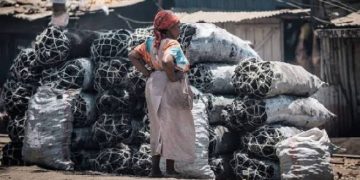



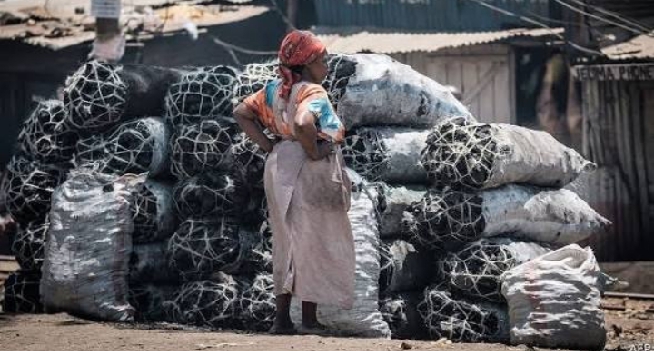
For millions of Ugandan families, the debate over charcoal is not about environmental policy alone. It is about how to prepare the next meal, how much it will cost and whether a government determined to protect forests has done enough to ensure that cleaner cooking alternatives are within reach.
That tension came into sharp focus in Parliament on Wednesday (October 14, 2026), when Speaker Jacob Marksons Oboth ordered a temporary halt to enforcement of restrictions on the charcoal trade, demanding answers from the government on the availability and affordability of alternative energy.
The intervention followed a challenge by Leader of the Opposition Joel Ssenyonyi, who questioned the government’s readiness to intensify its crackdown on charcoal production and transportation when large sections of the population continue to depend on wood and charcoal for everyday cooking.
Oboth, who was presiding over the parliamentary sitting on, directed the government to return to the House the following Wednesday, 21 October, with a detailed account of the restrictions and progress made in promoting alternative cooking fuels.
In the meantime, he ordered enforcement to be suspended, highlighting the practical difficulties security agencies could face if the policy proceeded without adequate preparation.
“I do that not because I support charcoal, but because I am aware of how difficult it is going to be for the enforcers,” the Speaker said.
The directive represents a significant intervention in an increasingly contentious environmental campaign, placing the burden on the government to explain not only why the restrictions are necessary but also whether ordinary citizens have been given realistic alternatives.
Oboth’s response went beyond concerns about the immediate enforcement operation. He questioned the reach of the government’s programme to distribute cooking-gas cylinders, suggesting that its benefits might not have extended far enough into ordinary communities.
He told the House that he was unaware of anyone in his West Budama Central constituency who had received a cylinder through the programme.
A government programme designed to encourage households to abandon traditional cooking fuels, the Speaker suggested, must be judged by its reach among ordinary citizens rather than by the existence of policy commitments or distribution campaigns alone.
Oboth consequently directed the Ministry of Energy and Mineral Development to provide statistics on the distribution of gas cylinders when it presents its report to Parliament.
Lawmakers will be seeking a clearer picture of how many households have benefited, what obstacles have slowed the programme and whether the alternatives being promoted are affordable enough to support a transition away from charcoal.
The restrictions stem from Executive Order No. 3 of 2023, issued by President Yoweri Museveni on 19 May that year.
The directive prohibits charcoal burning and trade in West Nile, northern Uganda, Karamoja and the Teso sub-region as part of efforts to curb deforestation and protect the country’s forest resources.
The current enforcement campaign has renewed scrutiny of the policy, particularly as security agencies target the transportation and sale of charcoal originating from restricted areas.
Ssenyonyi argued that the government had had roughly three years to prepare communities for the transition but had yet to demonstrate that affordable alternatives were sufficiently available.
Citing a 2024 Uganda Bureau of Statistics survey, he told Parliament that between 87 and 94 per cent of Ugandans rely on charcoal and firewood for cooking.
“How aggressively are we making it possible for ordinary persons to access alternative sources of energy?” he asked, questioning why enforcement should be intensified before the government had made cleaner fuels affordable.
For households living on limited incomes, the distinction between having access to a cooking alternative and being able to afford it is crucial.
Liquefied petroleum gas requires cylinders, burners and regular refills, while electric cooking depends on access to a reliable power supply and the ability to meet electricity bills.
Biogas and other technologies may offer solutions in particular circumstances, but their suitability varies according to household resources and location.
Ssenyonyi also challenged claims about the uptake of liquefied petroleum gas, putting its adoption at about two per cent and arguing that the distribution of free equipment would have limited impact if recipients could not afford subsequent refills.
His criticism exposed a central weakness in the transition debate: providing an initial appliance does not necessarily make a household’s cooking costs sustainable over the long term.
Responding to the concerns, State Minister for Energy and Mineral Development Phiona Nyamutooro told Parliament that the government was promoting several alternatives, including liquefied petroleum gas, electric cooking, ethanol and biogas.
She said a special electricity tariff had been introduced to encourage households to cook using power and that the government was distributing gas cylinders and accessories to stimulate adoption.
Nyamutooro also pointed to the potential for domestic LPG production from Uganda’s oil projects, including Tilenga and Kingfisher, as a way of improving future access to cooking gas.
She said the ministry was conducting public sensitisation to address safety concerns and cultural barriers associated with the use of gas.
The minister’s explanation, however, did not remove the questions raised by legislators about the scale of implementation and the ability of low-income households to pay for alternative fuels.
Government Chief Whip Jane Ruth Aceng indicated that the issue would require coordination among several government agencies and a phased approach rather than an abrupt transition.
She said discussions would be held through the office of the Leader of Government Business and the Energy Ministry to establish a way forward.
Another legislator, Cohen Amanya, the National Resistance Movement representative for Igara County West, questioned the legal basis of the restrictions and called for the status quo to be maintained until legislation was enacted.
His intervention broadened the debate from affordability to the legal and administrative framework governing enforcement.
The dispute comes as security agencies intensify operations against charcoal production and transportation in restricted areas.
The measures have raised concerns among traders and transporters who face potential financial losses, while consumers in markets supplied by the affected regions have been exposed to the risk of higher prices and disrupted supplies.
The restrictions do not amount to a nationwide ban on all commercial charcoal production and sales.
Their geographical scope is central to the current controversy, although the effects can extend beyond the affected regions because charcoal produced in one part of the country is transported to markets elsewhere.
For environmental campaigners, reducing dependence on charcoal is an important step towards slowing forest destruction.
Unsustainable charcoal production can accelerate the loss of tree cover, degrade ecosystems and undermine the natural resources on which rural communities depend.
Traditional cooking fuels also raise concerns about indoor air pollution and the associated health risks, particularly for women and children who spend considerable time near cooking areas.
The government has therefore promoted cleaner cooking as part of its broader environmental and energy agenda.
In August, the Ministry of Energy told Parliament that continued reliance on biomass fuels remained a major obstacle to cleaner energy adoption and that electricity could provide an alternative for households connected to the national grid.
The Electricity Regulatory Authority has also urged connected households to consider electric cooking, arguing that a special cooking tariff can make it competitive with charcoal.
But electricity access remains uneven, and the initial cost of appliances and concerns about reliability continue to influence household decisions.
For traders, meanwhile, the uncertainty surrounding enforcement presents a different challenge.
Some have invested borrowed money in charcoal stocks and transport, while others depend on the trade to support their families.
A sudden interruption can leave them with unsold goods, outstanding debts and limited opportunities to move into alternative businesses.
The government must therefore balance environmental protection with the economic consequences of its policy, including the livelihoods of people whose incomes depend on charcoal production, transportation and sales.
Oboth’s intervention has temporarily shifted the immediate focus from enforcement to accountability.
By requiring the Energy Ministry to provide figures on gas distribution and an update on alternative energy programmes, Parliament has created an opportunity to examine whether the government’s plans are translating into practical support for households.
The report expected on 21 October will be an important test of that commitment. Lawmakers will be looking for evidence of progress, details on the reach of the gas-cylinder programme and a clearer explanation of how the government intends to make alternative fuels accessible to people who cannot easily absorb the costs of switching.
The Speaker’s decision does not resolve the wider disagreement over charcoal or remove the government’s environmental objectives. Instead, it highlights the gap between announcing a transition and ensuring that the people expected to make it can afford to do so.
For Uganda, the challenge is no longer simply whether charcoal use should be reduced. It is how to protect forests without making the daily cost of cooking more difficult for families already under financial pressure. Until affordable alternatives are widely available, the government’s ability to enforce its restrictions will remain inseparable from its ability to convince the public that a different way of cooking is both practical and sustainable.