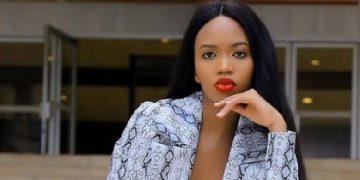



KAMPALA (UGNEWSLINE) – A Shs500 million challenge over miraculous healing has escalated into a wider debate about religious freedom, financial accountability and the responsibility of pastors to the people who trust them, drawing media personality Sheila Gashumba into a heated exchange with Pastor Robert Kayanja Jr.
What began as a provocative challenge to Uganda’s religious establishment has developed into a public debate touching on faith, money, healing and the delicate relationship between religious leaders and their critics.
At the centre of the latest confrontation is Sheila Gashumba, the media personality who has stepped into the growing dispute between her father, social commentator Frank Gashumba, and prominent evangelical pastors.
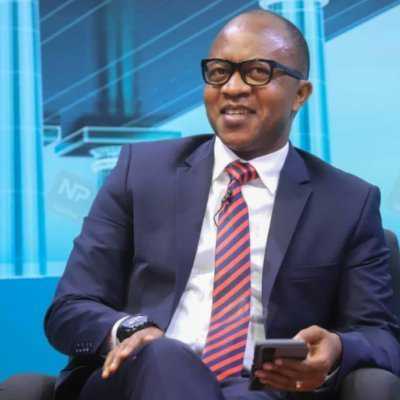
Her exchange with Robert Kayanja Jr, the son of renowned pastor Robert Kayanja, has brought a familiar but often uncomfortable question into sharp focus: where does legitimate criticism of religious leaders end, and an attack on faith begin?
The disagreement erupted on social media on Tuesday night, with both sides defending positions that extend beyond their families.
Sheila argued that her father’s criticism was directed at pastors he believes exploit vulnerable believers through questionable miracle claims and relentless demands for financial contributions.
Kayanja Jr, meanwhile, defended his father’s ministry and challenged what he considers an unfair focus on Christianity compared with other religions.
The result was a heated exchange that has drawn fresh attention to the growing public scrutiny of Uganda’s religious institutions.
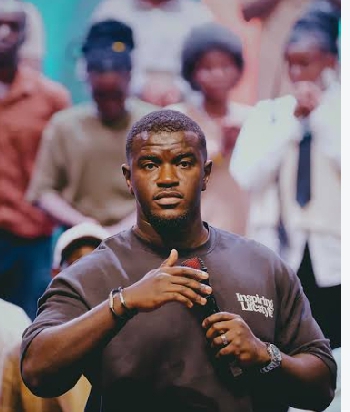
The dispute traces its roots to Frank Gashumba’s challenge to pastors, prophets and apostles who claim supernatural healing powers.
He initially offered Shs200 million before raising the amount to Shs500 million for any religious leader who could demonstrate the healing of a critically ill patient under publicly verifiable conditions at a major hospital, such as Mulago or Nsambya.
Gashumba’s argument was straightforward, if deliberately provocative.
If religious leaders publicly claim the power to heal serious illnesses, he believes those claims should withstand scrutiny beyond the pulpit, particularly when vulnerable people are encouraged to part with money in the expectation of divine intervention.
The challenge quickly became a flashpoint, exposing a deeper divide between those demanding greater accountability from religious leaders and those who believe such demands risk reducing matters of faith to a public spectacle.
Pastor Robert Kayanja was among the prominent religious figures who responded, defending the authenticity of miracles associated with his ministry and insisting that healing comes from God rather than from pastors themselves.
Other religious leaders, including Bishop David Kiganda, have also weighed into the controversy, arguing that faith cannot simply be reduced to a financial contest or a public demonstration.
Their responses reflect a broader concern among some church leaders that the debate risks undermining religious belief by judging spiritual experiences through tests designed for public consumption.
For Sheila, however, the issue is not whether God exists or whether miracles are possible. It is whether some individuals are using religion to manipulate people who are already struggling financially.
In her social media response, she rejected the suggestion that her father was attacking Christianity, arguing that his criticism targeted what he described as staged miracles, excessive demands for tithes and the use of church collections to sustain lavish lifestyles.
She also questioned why some churches appear to lack the financial transparency expected of other institutions that collect money from the public.
Her intervention was personal as well as ideological. Seeking to counter the portrayal of her father as an opponent of Christianity, Sheila said he remains a practising Catholic who regularly attends Mass at Ggaba Catholic Church in Kampala and Villa Maria Catholic Church in Masaka.
She also spoke of her own Catholic upbringing, including baptism, Holy Communion and Confirmation at Christ the King Church in Kampala.
Her message was that criticism of particular pastors should not automatically be interpreted as a rejection of God.
Sheila also challenged reports of curses directed at her father and his family during the controversy, questioning whether such pronouncements were consistent with Christian teachings.
For her, the dispute had moved beyond theological disagreement into a question of how religious authority is exercised and whether public criticism should be met with threats or condemnation.
Kayanja Jr was equally forceful in his defence of his family’s ministry.
He rejected allegations that the church stages miracles or avoids accountability, pointing instead to what he described as its humanitarian work and community support programmes.
He cited initiatives in Karamoja, including food distribution and the purchase of tractors, as examples of efforts intended to improve the lives of vulnerable communities by his father’s Ministry.
He also said the ministry had supported children through education and helped people who later became professionals in fields such as medicine, law and teaching.
On the question of financial transparency, Kayanja Jr said the church keeps proper records and is audited by the Uganda Revenue Authority.
He maintained that his family’s ministry should be judged by its activities and contributions rather than by broad allegations directed at religious leaders.
He also reiterated his father’s position that pastors do not personally perform miracles, arguing that healing is attributed to Jesus.
Yet the exchange took another turn when Kayanja Jr questioned why critics of religious practices, in his view, focus so heavily on Christianity while giving other faiths less scrutiny.
However, the argument has also underscored the need to distinguish between scrutinising the actions of particular religious leaders and making generalisations about entire religious communities.
The controversy has unfolded against a wider backdrop of public debate in Uganda about the role of Pentecostal churches, the influence of charismatic preachers and the need for greater accountability in religious organisations.
The growth of evangelical ministries has brought spiritual support, community networks and charitable programmes to many people.
At the same time, concerns about alleged exploitation, unverified healing claims and the financial vulnerability of worshippers have periodically triggered calls for greater scrutiny of religious leadership.
These tensions are not unique to Uganda. Across the world, religious institutions face the challenge of maintaining public trust while protecting the freedom of believers to practise their faith.
Questions about donations, accountability and claims of miraculous healing have surfaced in different countries, particularly where religious leaders command large audiences and receive substantial financial contributions.
For many believers, faith is deeply personal and cannot be measured by a public challenge or a cash reward.
For critics, however, the sincerity of religious belief does not remove the need to question practices that may expose vulnerable people to financial or other forms of exploitation.
That is the difficult territory now occupied by the Gashumbas and the Kayanjas.
Frank Gashumba has maintained that his criticism is aimed at pastors he believes misuse the name of Jesus Christ to take advantage of the poor, rather than at God or Christianity itself.
His daughter has reinforced that distinction, while Kayanja Jr insists that the accusations unfairly undermine genuine ministries and overlook their contributions to society.
Neither side appears willing to retreat from its position, and the exchange has become about more than the original Shs500 million challenge.
It has turned into a contest over who gets to define legitimate faith, what accountability should look like in religious institutions and whether public criticism can be separated from personal attacks.
Ultimately, the most consequential question may not be whether a pastor can win a financial challenge by demonstrating a miracle.
It may be whether religious institutions can sustain public confidence through transparency, responsible leadership and clear evidence of the good they say they do.
For ordinary worshippers, the stakes are more immediate than the online arguments suggest.
They include the money they contribute, the hope they place in promises of healing and the trust they extend to leaders who speak with spiritual authority.
As the debate continues, Uganda’s religious community faces an opportunity to move beyond personal exchanges and address those concerns directly.
Faith may be a matter of conviction, but public trust is built through conduct, responsibility and the willingness to answer difficult questions.