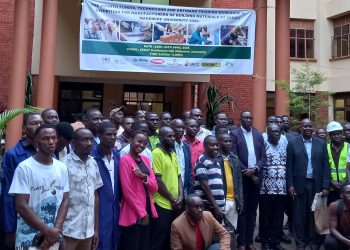



KYEGEGWA DISTRICT, Uganda (UGNEWSLINE) — At a time when refugees in Uganda face growing challenges of limited land, unpredictable weather and access to agricultural inputs, the Grow Together Project is equipping farmers in Kyaka II Refugee Settlement with practical skills to improve food security and household incomes.
Implemented by ADRA Uganda with funding from Croatia’s Ministry of Foreign and European Affairs through ADRA Croatia, the project supports 500 farmers through agricultural training, mentorship and the promotion of sustainable farming practices.
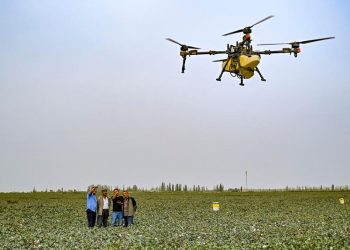
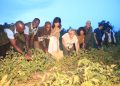
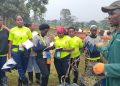
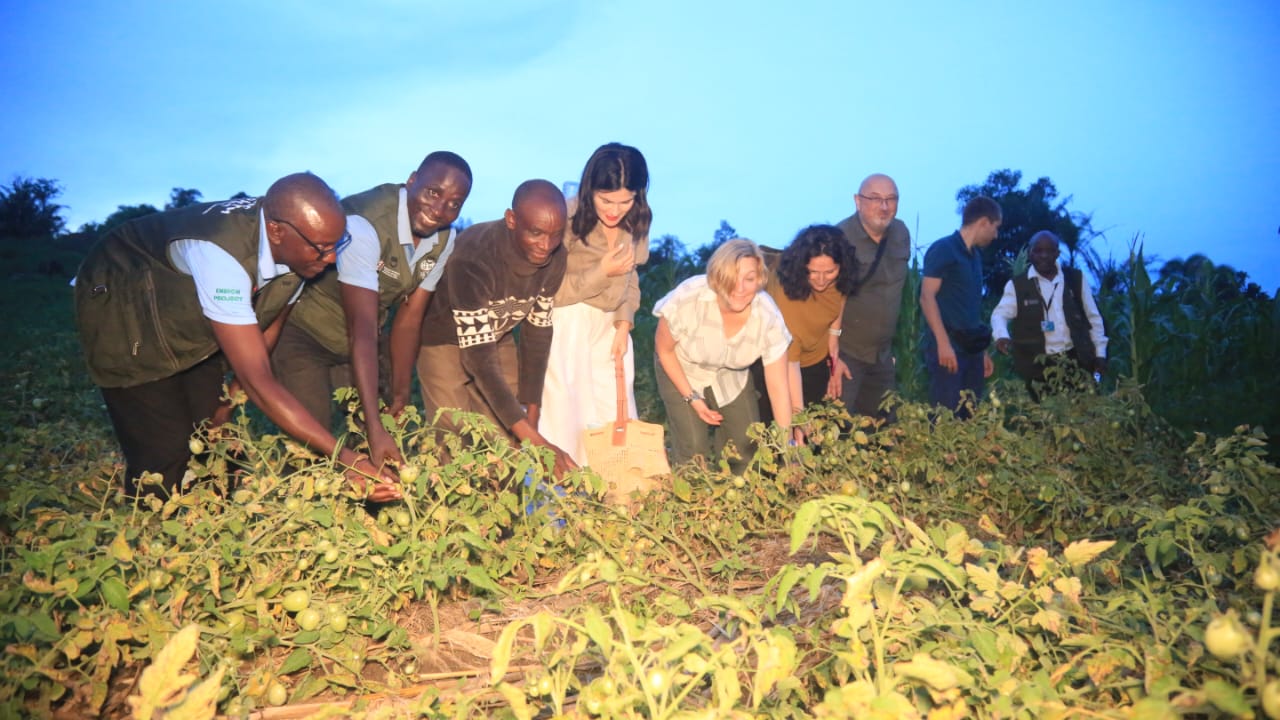
During a field visit to the settlement, farmers demonstrated their farming techniques, showcasing different varieties of watermelons, spinach, onions, tomatoes and beans. They also presented goat breeds that continue to reproduce, providing opportunities for livestock production and income generation.
The farmers explained that although they are adopting improved farming practices, heavy rains sometimes affect their gardens. They highlighted the importance of proper crop spacing according to soil quality to support healthy crop growth and improve yields.
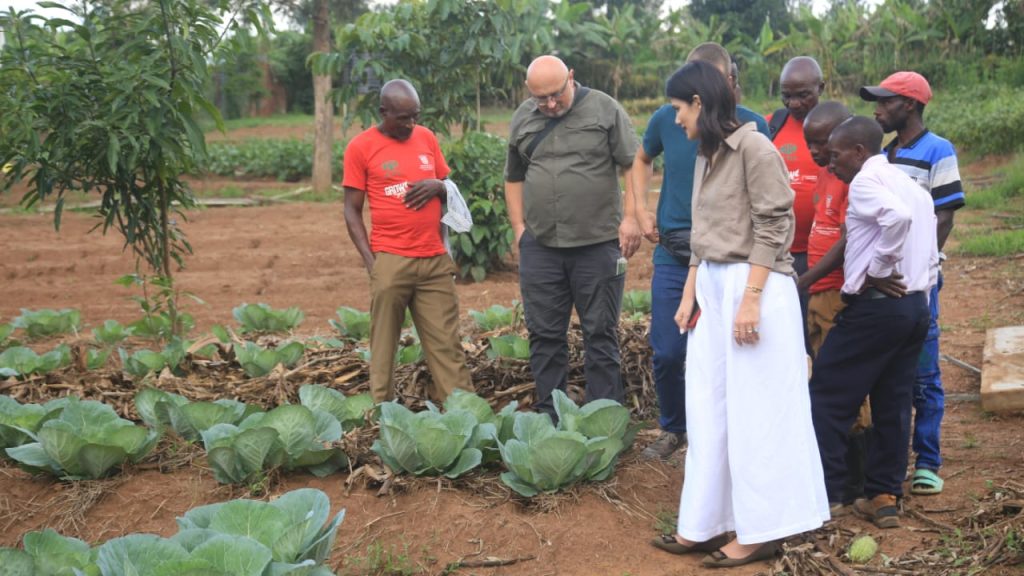
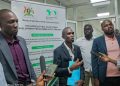
George Williams Kiberu, Projects Director at ADRA Uganda, said the visit was intended to monitor progress and provide support to farmers under the Grow Together Project.
“We are here in Kyaka II Refugee Settlement to monitor and support the Grow Together Project, whose main objective is to strengthen food security, promote sustainable agricultural practices and improve efficiency,” Kiberu said.
He explained that the project has established 50 Trainers of Trainers (ToTs), each responsible for training and mentoring 10 households, bringing the total number of participating farmers to 500.
“The ToTs capture, train and mentor farmers in high-value crops such as cabbages, tomatoes and watermelons, which can be harvested in a short time. Because the trainers come from the local communities, coordination is easier, and farmers can readily access their support,” he said.
Kiberu added that the approach is intended to strengthen farmers’ practical knowledge and enable them to improve both household food production and income generation.
Martina Mihovilic Vracaric, Head of Department at Croatia’s Ministry of Foreign and European Affairs, said the ministry was funding the project and that the field visit was part of efforts to monitor implementation.
“We are here to monitor the project in the field and ensure that farming is done in the right way, from seeding to harvesting,” Vracaric said.
She added that sharing agricultural knowledge among the 500 participating farmers was an important component of the initiative, helping them improve their farming practices.
Meanwhile, Kisamo Daniel, the Settlement Commandant of Kyaka II Refugee Settlement in Kyegegwa District, said the settlement is divided into 26 villages and nine zones, with 395 Refugee Welfare Council leaders supporting community coordination.
However, he identified population pressure and limited access to land as major obstacles to agricultural production.
“We are challenged by overpopulation and a lack of land. Each refugee is allocated approximately 30 by 30 metres, which is not enough for meaningful agricultural production,” Daniel said.
He added that farmers also face challenges accessing agricultural inputs and markets, affecting their ability to sustain production and earn income.
Despite these obstacles, Daniel commended the Grow Together Project for its group-based approach, which is overseen by Trainers of Trainers. He said the initiative complements efforts by development partners to improve the livelihoods of refugees.
For Nkwasibwe John George, one of the Trainers of Trainers, the project has provided practical knowledge that he can share with other farmers.
“This project has taught us how to farm and harvest for both food and money. I have learnt how to grow tomatoes, and I am also training other farmers to do the same,” he said.
However, farmers say several challenges continue to affect their productivity.
Ndyagumisiriza Mackline, a participating farmer, cited pests and diseases, limited access to insecticides and inadequate markets as some of the difficulties they face.
She encouraged farmers to harvest crops when they are ready and adopt proper storage practices to minimise post-harvest losses and maintain the quality of their produce.