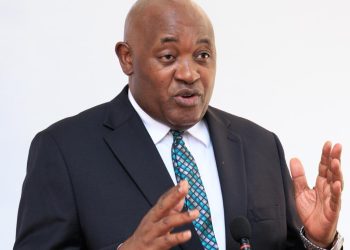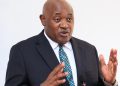



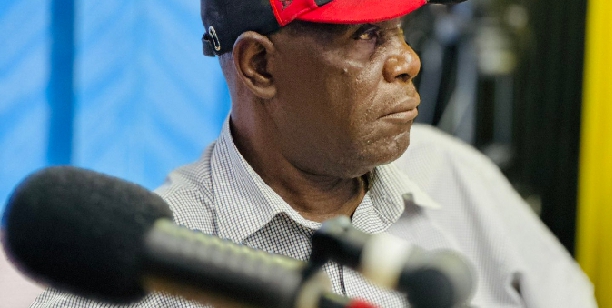
KAMPALA, Uganda (UGNEWSLINE) — Former government spokesperson and Member of Parliament Ofwono Opondo has weighed into Uganda’s succession debate, saying anyone seeking to replace President Yoweri Museveni must demonstrate greater political tolerance and a stronger commitment to dialogue than the incumbent, rather than relying on what he described as crude power.
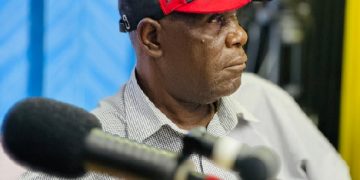
Opondo made the remarks while appearing on Capital FM’s weekly political talk show, The Capital Gang, where he discussed the qualities required of a leader seeking to take over the country’s highest office.
His comments come amid renewed debate over Museveni’s eventual successor and growing endorsements of Chief of Defence Forces Gen Muhoozi Kainerugaba by figures within the ruling National Resistance Movement (NRM).
“Whoever wants to replace President Museveni must do more than he has done in terms of tolerance and verbal engagement, rather than using crude power,” Opondo said.
The remarks put the question of leadership style at the centre of Uganda’s succession debate, suggesting that the next president should be judged not only by political influence or the ability to mobilise support, but also by how they engage critics and respond to competing views.
Museveni has governed Uganda since 1986, making the question of who will eventually succeed him one of the country’s most enduring political issues.
Although the president has not publicly announced a successor, Muhoozi has increasingly featured in discussions about the country’s political future, with several government ministers and ruling-party figures openly backing his potential presidential ambitions.
The endorsements have drawn attention because they have emerged while Museveni remains in office and has begun a new presidential term following the January 2026 election.
Opondo has separately questioned the timing of the endorsements, arguing that ministers promoting a successor so soon after Museveni received a fresh mandate risk sending the wrong political signals.
His latest comments broaden that argument by focusing on the standards expected of anyone who hopes to lead Uganda after Museveni.
Rather than making succession solely a question of identity or political connections, Opondo has emphasised tolerance, verbal engagement and the ability to manage disagreements without resorting to force.
Political dialogue remains a significant issue in Uganda, where relations between the government and opposition have repeatedly been strained by disputes over political freedoms, the treatment of opposition supporters and the conduct of security agencies.
These tensions have fuelled wider discussions about how future leaders might handle political competition and protect space for dissent.
Opondo’s reference to tolerance is particularly relevant to the question of how a successor would relate to people who oppose their leadership.
In a politically divided environment, the ability to listen to criticism and engage opponents can influence whether disagreements are managed through institutions and negotiations or deepen into prolonged confrontation.
His call for stronger verbal engagement also highlights the role of communication in political leadership. Dialogue does not necessarily eliminate disagreements, but it provides a way for competing interests to be heard and disputed issues to be addressed without automatically escalating tensions.
The succession question, however, extends beyond the personal qualities of a future president. It also concerns the political process through which leadership is transferred, the role of party institutions and the extent to which citizens can participate meaningfully in determining the country’s direction.
Muhoozi’s growing visibility has made him a central figure in these discussions, although support from influential politicians does not by itself establish the level of acceptance he enjoys among the wider electorate.
Research published in African Affairs in 2026 found that Muhoozi was widely perceived as a likely successor, while survey findings also indicated significant public reservations about him.
The research underscores the uncertainty surrounding the eventual transition.
For the NRM, the succession debate also raises questions about internal cohesion and how competing ambitions will be managed while Museveni remains the party’s dominant figure.
Public endorsements of potential successors can signal political alignments, but they may also generate debate about the timing and management of a transition.
As debate over Museveni’s eventual successor continues, Opondo’s message is that the next leader should be measured by more than their political connections or ability to exercise authority. Tolerance and dialogue, he argues, must be central to the leadership Uganda expects after Museveni.