


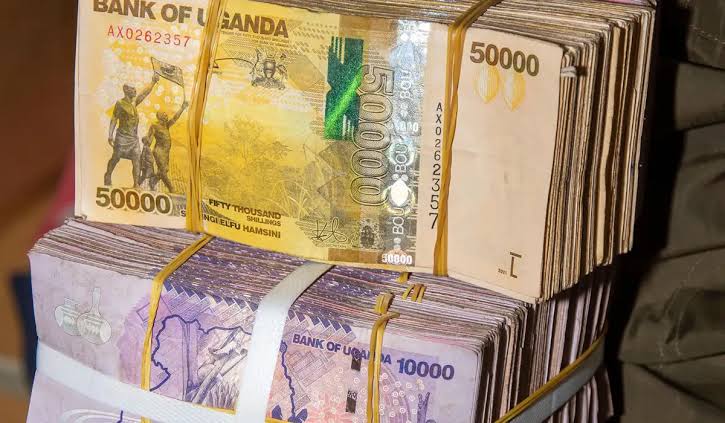
Absa Bank Uganda Weekly Markets Update (UGNEWSLINE) – The Uganda shilling experienced another sharply bearish and volatile week against the US dollar, as sustained corporate, interbank and offshore demand significantly exceeded available foreign-currency supply. Through the week, the local unit depreciated by approximately 5.79%, marking a significant extension of the recent bearish trend, trading at new all-time highs of 4400 / 4440 to the dollar on Friday morning. Looking ahead, the shilling is expected to remain under pressure as persistent importer requirements, offshore portfolio exits and subdued foreign-currency inflows continue to weigh on the market. Dollar demand from the energy, manufacturing and telecommunications sectors is likely to remain elevated, while continued global risk aversion could encourage further reductions in offshore holdings of shilling-denominated assets. Nevertheless, tighter domestic liquidity, stronger commodity-export receipts, remittance inflows and further intervention by the Bank of Uganda could provide intermittent support and help contain disorderly market movements. In the near term, the currency is expected to trade within a broad UGX 4000 – 4500 range against the US dollar, with risks remaining tilted toward further depreciation unless foreign-currency supply improves materially.
Money market liquidity remained constrained throughout the week as the market continued to adjust to the recent tightening in monetary policy. Overnight funding rates averaged 11.75% at the week’s open, before rising to the 12.00%–12.50% range on Wednesday and 12.25%–12.50% on Thursday, reflecting increasingly tight shilling liquidity and elevated funding pressures. The Bank of Uganda remained on the sidelines during the first half of the week, with no liquidity intervention undertaken. In the fixed-income secondary market, activity improved across the yield curve, although trading was predominantly offer-driven as investors reduced positions in response to tighter domestic liquidity, the higher policy rate and rising yields in developed markets. These conditions kept government securities yields under upward pressure and raised concerns over potential capital outflows from frontier markets. At the Treasury bill auction, yields rose sharply across all tenors, reflecting the tighter monetary environment and investors’ demand for higher returns. The 91-day, 182-day and 364-day bill yields increased by 155, 265 and 300 basis points to 11.249%, 13.400% and 14.499%, respectively. Despite the substantial repricing, demand remained robust, with the Bank of Uganda accepting UGX 372.55 billion in face value against UGX 350 billion offered. Looking ahead, liquidity conditions are expected to remain tight as the higher reserve requirement and policy rate continue to transmit through the banking system, keeping interbank funding costs elevated and maintaining a firmer yield bias across the government securities curve.
The Kenyan shilling remained broadly stable against the US dollar during the latter part of the week, with USDKES holding within a narrow 129.85/95 range. The Central Bank of Kenya reportedly supplied dollars on Monday to ease pressure on the local currency, helping anchor the pair around prevailing levels. At the tail end of the week, USDKES remained at 129.85/95 as improved foreign-currency inflows late in the session moderated demand, although the flows were insufficient to push the pair materially lower. The pair subsequently closed Thursday around 129.85/90, with increased dollar supply from state-owned enterprises, corporates, and interbank participants broadly matching underlying demand. Looking ahead, the Kenyan shilling is expected to remain broadly range-bound, although anticipated month-end corporate and importer demand could keep USDKES supported near the upper end of its recent range. Dollar inflows from state-owned enterprises, corporates and remittance channels, together with possible intervention by the Central Bank of Kenya, should help contain excessive volatility. Kenya’s external buffers also remain supportive, with foreign-exchange reserves recently reported at approximately USD 14.7 billion, equivalent to 5.9 months of import cover. In the near term, USDKES is expected to trade within the 129.70–130.00 range, with the balance of risks modestly tilted toward shilling weakness should month-end demand intensify or foreign-currency inflows slow.
WTI and Brent recorded a divergent performance this week, as oil markets reacted sharply to shifting signals around the US-Iran conflict. WTI declined 2.2% to $99.19 per barrel, after rising to $103.66 early in the week before falling on reports of possible diplomatic progress. In contrast, Brent gained 2.2% to $112.22 per barrel, reaching its highest level since May as renewed attacks on Saudi energy infrastructure, threats to the Strait of Hormuz and reports of potential US military action against Iran reinforced concerns about global supply disruptions. Brent’s outperformance reflected its greater exposure to Middle Eastern supply risks, while the contraction in Iranian exports and lower Russian shipments added to the international benchmark’s risk premium. Recovering exports from Kuwait and Saudi Arabia provided some offset but were insufficient to eliminate broader supply concerns. Near-term oil direction will remain highly sensitive to US-Iran diplomatic developments and the security of the Strait of Hormuz, with de-escalation likely to pressure prices lower and renewed conflict presenting further upside risk.
Gold declined approximately 2.3% this week to $4,045 per ounce, leaving it roughly 28% below its January peak. The selloff was largely gold-specific, with bullion falling more sharply than the broader commodity market despite a modestly weaker dollar. Rising oil prices intensified inflation concerns and strengthened expectations that the Federal Reserve may keep interest rates elevated, increasing the opportunity cost of holding non-yielding gold. Geopolitical tensions around Iran and the Strait of Hormuz failed to generate a meaningful safe-haven bid, as investors favored US Treasuries instead. Elevated ETF holdings also create a risk of further selling if investors unwind positions. The $4,000 per ounce level is now the key level to watch, while the upcoming FOMC decision will be the main catalyst. A less hawkish Fed could provide relief, but signals of further tightening could trigger another leg lower.
Both the Euro and Sterling strengthened against the US dollar this week, with the Sterling materially outperforming the Euro. EUR/USD was unchanged at 1.1220, having recovered from a sharp decline triggered by French political unrest and fiscal concerns, while GBP/USD rose 0.96% to 1.3403. Sterling was supported by stronger-than-expected UK data, including inflation rising to an 11-month high of 3.5% and an unexpected increase in payroll employment, which reinforced expectations of a Bank of England rate increase. However, weak manufacturing orders and concerns over the UK’s rising debt burden ahead of the upcoming Budget presented countervailing risks. The euro remained constrained by French political uncertainty and growing expectations that the ECB will leave rates unchanged at its October 29 meeting, despite mixed signals from policymakers and an improved German growth forecast. The sharp increase in oil prices also widened the performance gap: higher energy costs strengthened the UK rate-hike narrative and supported sterling, while adding to euro-area growth concerns. Consequently, EUR/GBP declined 0.94%, highlighting sterling’s relative strength. Looking ahead, GBP performance will depend on the Bank of England’s response to persistent inflation and the UK Budget, while the euro remains sensitive to French political developments and the ECB’s policy decision.