


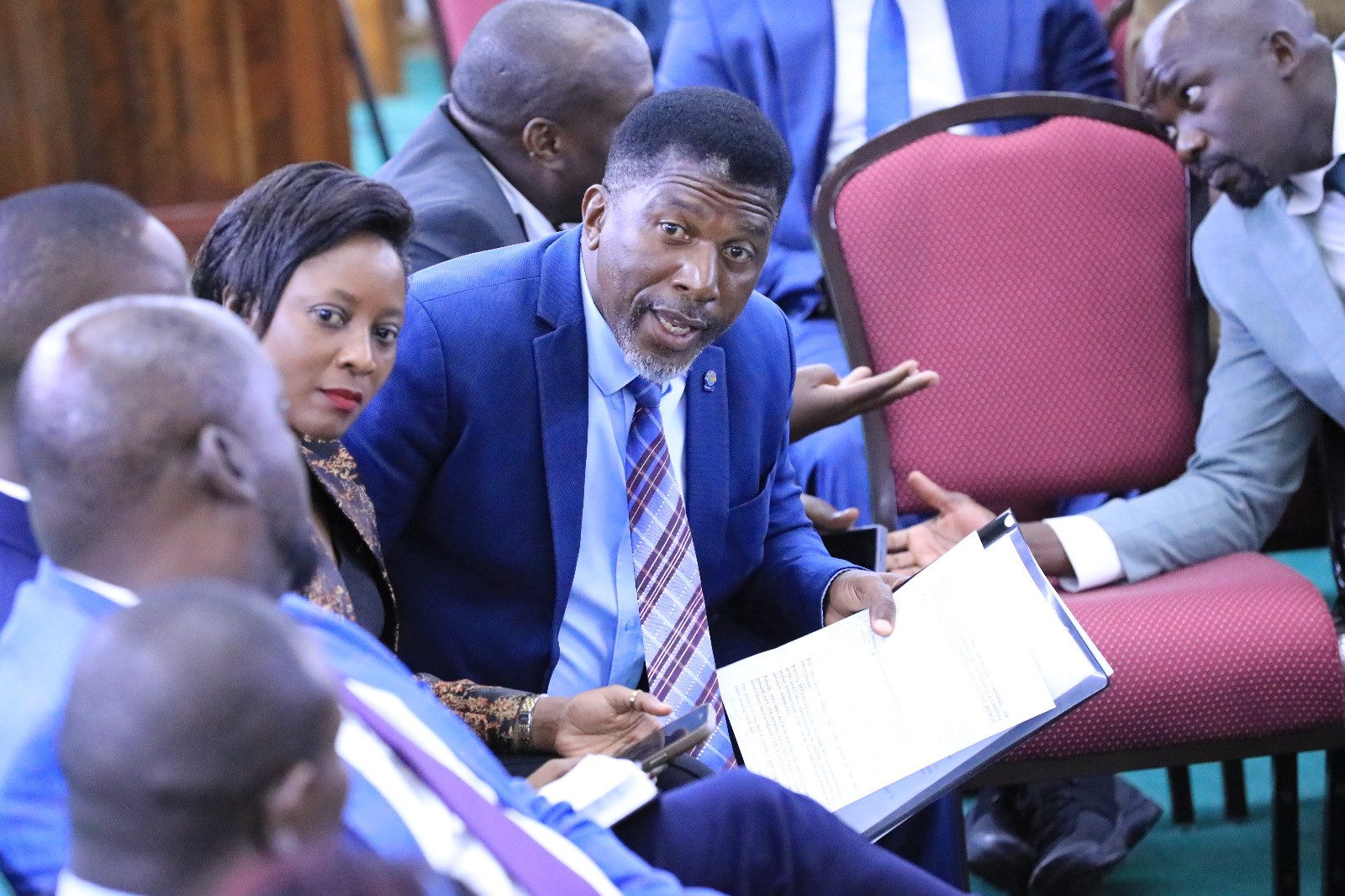
A growing number of political observers and lawmakers are warning that Uganda’s 12th Parliament could see a record number of more new faces, with projections suggesting that as many as 70 percent of current MPs may not be re-elected in the 2026 general elections.
This potential wave of turnover is being attributed to a mix of voter frustration, misaligned expectations, internal party conflicts, and the lingering reputational damage suffered by the current 11th Parliament.
The 11th Parliament, which sits with 556 members as of March 2025, is facing heightened scrutiny. Historical precedent already paints a stark picture: in the 2021 elections, only 107 of the 457 MPs from the 10th Parliament were re-elected, while 319 were voted out and 31 did not contest.
Now, lawmakers, and political analysts believe the upcoming elections may result in an even higher rate of attrition.
Mismatch of expectations, roles
In one of the recent interviews by one of the local papers, Dr. Mwambutsya Ndebesa, a history professor at Makerere University, attributed much of the anticipated turnover to a fundamental misunderstanding of what MPs are supposed to do.
“The voters expect MPs to be service providers, constructing roads, paying school fees, funding funerals. Yet, constitutionally, their role is legislation and oversight,” he explained.
Ndebesa noted that the belief, encouraged by some political rhetoric, including from President Museveni, that MPs should directly contribute to local development has made it nearly impossible for MPs to meet voters’ demands.
This misperception, he argued, leads to inevitable frustration when legislators are unable to deliver on such expectations, especially given their limited personal resources.
“No MP will ever satisfy the voters’ expectations,” Ndebesa added.
Internal party battles
For members of the ruling National Resistance Movement (NRM), the challenges are not just at the national level but also within their own party.
MPs must first survive competitive party primaries, often marred by allegations of vote rigging, internal favoritism, and violent disputes, before facing the general electorate.
On his part Dr. Tanga Odoi, chairperson of the NRM Electoral Commission, acknowledged that internal democracy remains fragile.
He emphasized the importance of credible party primaries, noting that flawed processes often lead to disgruntled party members running as independents, splitting votes and weakening party cohesion.
Scandals have also plagued the 11th Parliament, severely damaging its public image.
Speaker of Parliament Anita Among recently defended several MPs under investigation for corruption, including Lwengo District Woman MP Cissy Namujju.
Despite her defense, many voters perceive Parliament as corrupt and disconnected from their everyday struggles.
Robert Kasolo, MP for Iki-Iki County (NRM), echoed that sentiment. “The 11th Parliament has not worked for the people. We have spent too much time on unclear matters, and the scandals have severely tarnished our image,” he said, predicting that over 70 percent of MPs may not return.
Political dynamics, economic pressures
Political dynamics in Uganda are shifting rapidly and cannot be downplayed either. The rise of new political parties like the National Unity Platform (NUP) in 2021 demonstrated how political waves can unseat even long-serving incumbents.
MPs like Yeri Apollo Ofwono (Tororo Municipality, NRM) warn that party affiliation may not protect candidates if a similar wave hits in 2026.
“In wave elections, even competent MPs lose if their party falls out of favor with the electorate,” he said.
Economic hardship is also playing a role, as many MPs are struggling with debt, while competition from recently retrenched public servants, some casualties of the government’s cost-cutting Rationalization of Government Agencies and Expenditure (RAPEX) program, adds further pressure.
Many of these individuals are simply entering the political arena in search of new livelihoods, making the battle for parliamentary seats even fiercer.
Michael Kamugisha Timuzigu, the Kajara County MP, revealed he will not contest in 2026, citing fatigue and the growing burden of political life.
“Over 250 MPs are likely to lose. At least 50 won’t even stand again due to competition, debt, or burnout,” he said.
Opposition not spared
The attrition is not limited to the ruling party. Legislators from the opposition are facing equally steep challenges.
Gilbert Olanya (Kilak South, FDC) criticized what he sees as unrealistic campaign promises made by newcomers, who often paint incumbents as failures.
“They escalate voter expectations, and when they themselves fail, the cycle of rejection continues,” he said.
Olanya added that MPs are often judged by standards far removed from their legislative mandates.
“Voters expect MPs to buy ambulances, fix roads, pay school fees, attend burials, yet these are roles for local councils or the central government,” he added.
Call for civic education, exit plan
Several MPs and analysts have called for increased civic education to realign voter expectations with constitutional roles.
Others are urging MPs to adopt more realistic career plans. Workers MP Abdulhu Byakatonda warned against turning politics into a “do or die” career, noting, “One is not born an MP. There must be life after Parliament.”
With other factors constant, the 2026 elections could fundamentally reshape Uganda’s Parliament. Whether through internal party challenges, political waves, economic pressures, or the weight of public disillusionment, a large portion of the current 556 MPs may not return.
As Uganda prepares for its next electoral cycle, the fate of the 11th Parliament’s members hangs in a precarious balance, shaped as much by their performance as by the broader systemic expectations and frustrations of the electorate.