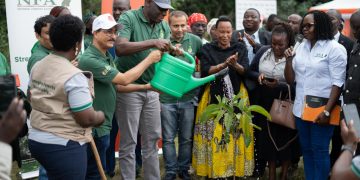



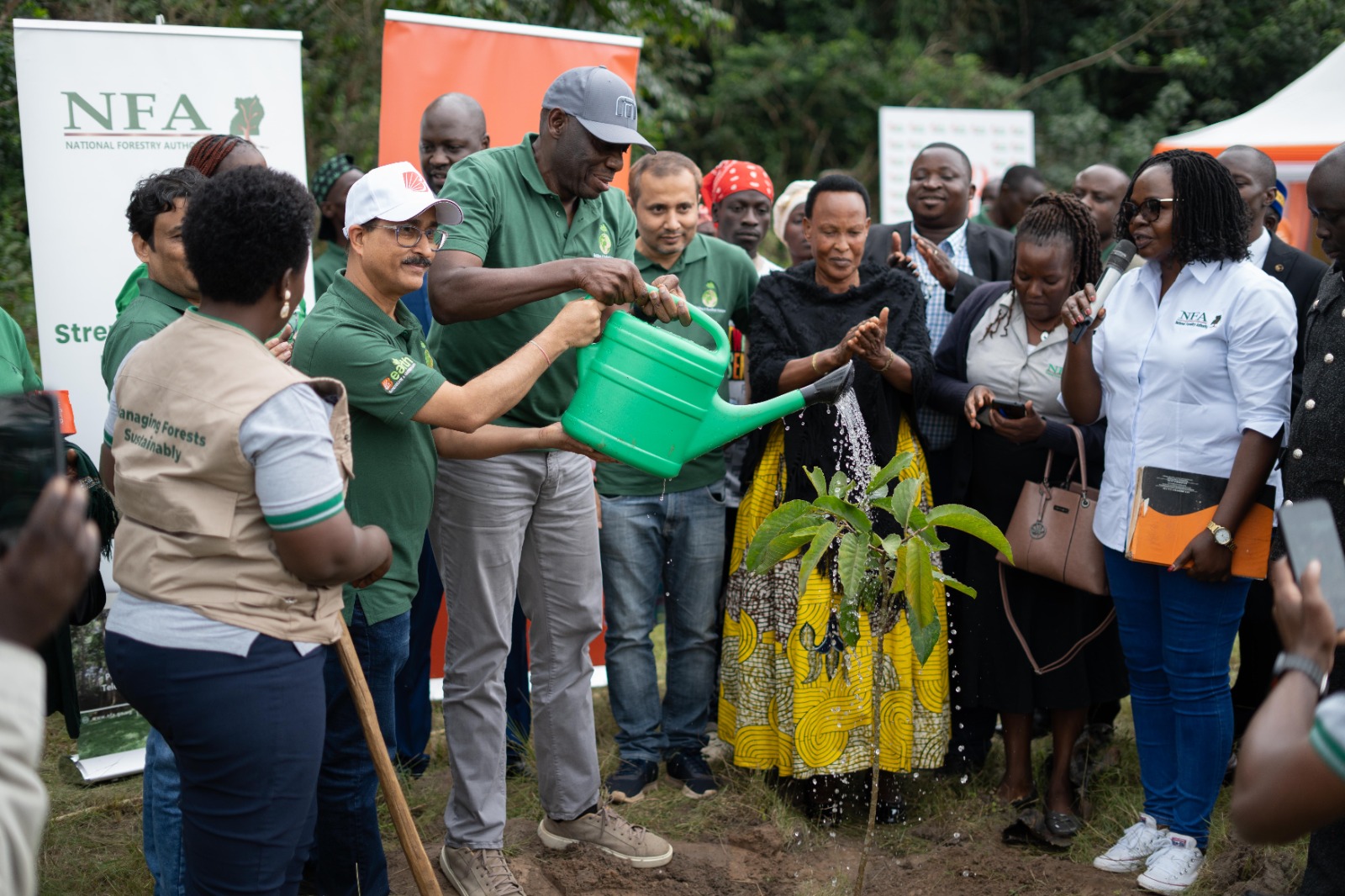
Masaka, Uganda –Bank of Baroda (Uganda) Limited has launched a forest restoration project in partnership with the National Forestry Authority (NFA). The project aims to restore 20 hectares of the threatened Jubiya Central Forest Reserve in Masaka District, showing the bank’s commitment to protecting the environment.
Held at the heart of the forest reserve, the event brought together top dignitaries, including Governor of the Bank of Uganda Michael Atingi-Ego, Board Chairperson Dr. Rebecca Issabella Kiconco, and Bank Managing Director Shashi Dhar, along with community leaders, environmentalists, and local residents.
Restoring a Threatened Ecosystem
The Jubiya Central Forest Reserve, a biodiversity-rich ecosystem located in the Lake Victoria basin, is under mounting pressure due to deforestation, encroachment, and unsustainable land use. The forest plays a vital role as a water catchment area and supports diverse wildlife. Yet, decades of degradation have jeopardized its ecological balance and the livelihoods it sustains.
Through the new initiative, over 12,000 indigenous trees will be planted across the designated 20 hectares, funded by a UGX 55.8 million investment from Bank of Baroda. The project also includes afforestation, reforestation, and long-term landscape restoration.
Leadership Speaks: A Call for Action
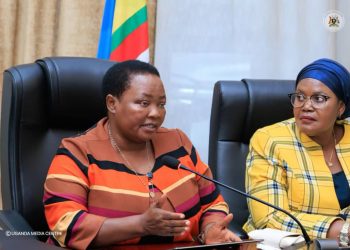
Speaking at the launch, Dr. Rebecca Issabella Kiconco, Chairperson of the Board at Bank of Baroda, emphasized the importance of joint responsibility in environmental protection:
“Our forests are more than just trees — they are the lungs of the Earth, a source of life and livelihood. Protecting forests is not the job of government alone; it is a shared responsibility. Let us plant more trees, use forest products responsibly, and report illegal activities,” she urged.
Dr. Kiconco reiterated the bank’s dedication to a greener Uganda, noting that sustainability is now central to Bank of Baroda’s strategic vision.
ESG Commitment in Action
Governor Michael Atingi-Ego praised Bank of Baroda’s strong alignment with Environmental, Social, and Governance (ESG) principles, highlighting their multifaceted environmental programs, from distributing solar lamps to underserved communities to supporting sustainable agriculture.
“Tree planting is more than symbolic; it is a meaningful contribution to preserving our natural heritage,” he said. “Bank of Baroda’s leadership in ESG is comprehensive, impactful, and aligned with the national framework on sustainable finance.”
The Governor also emphasized that climate-related risks like floods and droughts threaten Uganda’s economy, particularly its agriculture-dependent communities. As such, the Bank of Uganda has embedded sustainability into its strategic plan and introduced national ESG guidelines for the financial sector.
Beyond Trees: Empowering Communities
Bank of Baroda’s Managing Director, Mr. Shashi Dhar, highlighted how the initiative extends beyond forest restoration to include the distribution of solar lights to nearby communities:
“Access to clean, renewable energy improves safety, education, and livelihoods while reducing reliance on kerosene and charcoal. Our environmental programs are about building a resilient, empowered Uganda,” he stated.
The bank also continues to support a range of community development initiatives, including:
Construction of Kembo Primary School in Buvuma District in partnership with Rotary Club of Acacia Sunset
Support for dormitories for cancer patients
Restoration of a community church building in Kabale
A Collective Path Forward
The NFA, in its technical and community engagement role, will oversee the planting and ensure long-term monitoring of the restored forest.
All speakers stressed the power of collaboration across government, private sector, and local communities, urging Ugandans to play an active role in safeguarding natural resources.
“Let us be the generation that not only speaks of change but embodies it — one tree at a time,” concluded Governor Atingi-Ego.