


KAMPALA, Uganda (UGNEWSLINE) – The Assistant Superintendent of Police (ASP) Kitaka Umar, the Officer in Charge of traffic at Jinja Road Police Station, has urged boda-boda riders in Nakawa Division to prioritise their safety, wear helmets correctly, avoid intoxicating substances and treat motorcycle transport as a professional occupation that requires discipline and responsibility.
Speaking at the inception meeting for the Empowering Boda-Boda Riders as Leaders in Health and Safety Action Project at Mbuya Community Centre in Kampala on Friday, October 23, 2026, Kitaka said riders should take personal responsibility for protecting their lives rather than wearing helmets only when they encounter police officers.
He observed that some riders carry helmets on their motorcycles instead of wearing them, putting themselves at risk of serious head injuries in the event of a crash.
“Helmets are meant to protect your lives, not simply to help you avoid police enforcement,” he emphasised, urging riders to use helmets that are in good condition and offer adequate protection.
Kitaka, who said he regularly uses boda-boda transport, also challenged riders to abandon the perception that their work is informal or unserious, noting that the sector provides employment and supports numerous livelihoods.
He encouraged them to maintain personal hygiene, wear clean jackets and present themselves professionally, explaining that their motorcycles and their conduct were effectively their offices and influenced passengers’ confidence in their services.
The police officer further warned riders against using intoxicating substances, including marijuana, kuba, waragi and mayirungi, particularly under the pretext of keeping warm during cold weather.
He said such substances could impair judgement, coordination and reaction time, increasing the likelihood of crashes. He also cautioned against speeding and urged riders to obtain appropriate driving permits and comply with traffic regulations.
The meeting followed the launch a three-year project by Community Integrated Development Initiatives (CIDI Uganda), in partnership with Danish People’s Aid (DPA) and with funding from CISU. The project runs from July 2026 to June 2029.
The initiative, presented under the title Driving Change: Empowering Boda-Boda Riders as Leaders in Health and Safety Action, seeks to strengthen road safety, emergency response, leadership and accountability within the boda-boda sector.
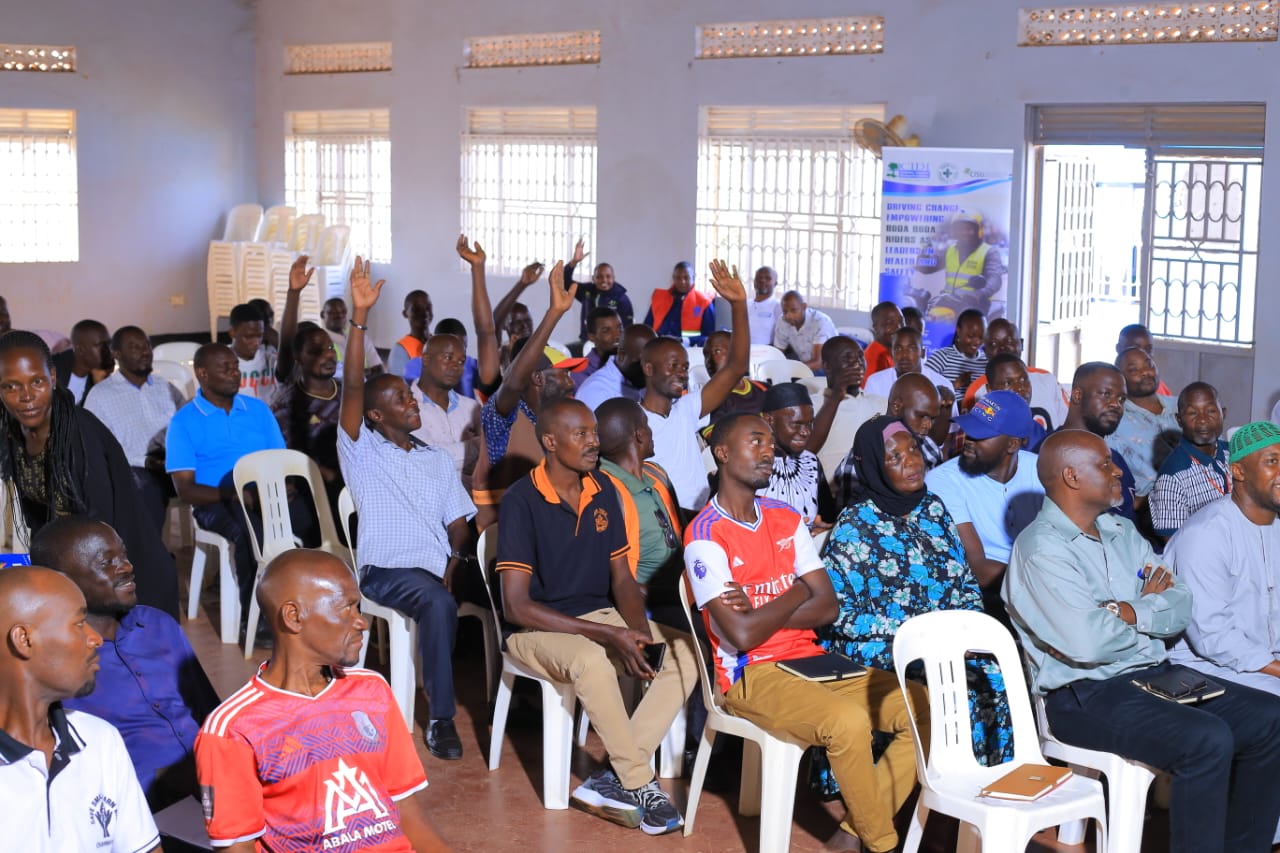
The meeting brought together riders, stage leaders, political and technical leaders, traffic police, health and community development stakeholders, and project partners to discuss practical ways of reducing road crashes and improving the welfare of motorcycle operators.
Project targets more than 2,000 riders
During a presentation, Evelyn Zalwango Miyingo, CIDI Uganda’s Senior Programme Officer for Health, outlined the project’s objectives, implementation strategy and expected outcomes.
She said the initiative would cover 23 pilot boda-boda stages in Nakawa Division, targeting approximately 2,120 riders and engaging about 700 stage leaders. The project also plans to train 30 safety ambassadors.
The project seeks to strengthen citizen agency and civic organisation in the boda-boda sector, enabling riders to participate more effectively in decisions affecting their safety, livelihoods and welfare.
According to road safety statistics presented by Ms. Miyingo, Uganda recorded 26,044 road crashes in 2025, with 15,096 motorcycles involved. The figures also indicated that 2,525 motorcyclists and passengers died, while motorcyclists accounted for 55 per cent of seriously injured road users.
She further cited a 2021 survey indicating that only one in ten riders had received professional training, underscoring the need for practical road safety education and emergency response skills.
The project will focus on four pillars: first aid and emergency response; road safety and defensive driving; strengthening the governance of rider associations; and evidence-based advocacy.
Through these interventions, CIDI and its partners hope to promote safer riding practices, improve emergency response, strengthen stage leadership and encourage constructive engagement between riders and authorities.
Key stakeholders identified for collaboration include SafeBoda, the Amalgamated Transport and General Workers’ Union (ATGWU), Kampala Capital City Authority (KCCA), traffic police, relevant government ministries, health facilities, media organisations, insurers and local communities.
CIDI calls for ownership and inclusion
Rachel Nagadya, the project lead, said the inception meeting was intended to familiarise riders, stage leaders, committees and local authorities with the project’s objectives and responsibilities.
She called on riders and their leaders to take ownership of the initiative by mobilising colleagues, promoting responsible riding, sharing safety information and participating actively in planned training and sensitization activities.
Nagadya also emphasised the importance of cooperation between boda-boda operators and local authorities in addressing challenges through dialogue and joint action.
She drew attention to the participation of women riders, saying their specific safety concerns and experiences needed to be considered during implementation to ensure that the project responds to the needs of different groups in the industry.
The meeting marked an initial step towards building a more organised, informed and safety-conscious boda-boda sector in Nakawa Division.
Assistant RCC warns against illegal operations
Ms Jemimah Babirye Katende, the Assistant Resident City Commissioner (RCC) for Nakawa Division, commended CIDI and its partners for initiating the project, describing it as a timely intervention that could contribute to transforming the boda-boda industry in Nakawa, Kampala and the country at large.
However, she warned riders against alleged illegal operations targeting the sector, saying some individuals claiming to be rider leaders reportedly conduct enforcement activities without the involvement or knowledge of authorised security agencies and use them to extort money from operators.
Katende urged riders to verify the legitimacy of such operations and contact the relevant authorities whenever they encounter suspicious enforcement activities.
She cautioned that such incidents could increase during festive seasons, when public movement and enforcement activities often intensify, and warned that individuals organising illegal operations risked arrest.
The Assistant RCC also called on CIDI and its partners to intensify practical training on traffic signals, particularly the meaning of red, yellow and green lights.
She observed that some riders appeared to misunderstand traffic signals, contributing to violations and accidents, and urged them to observe traffic rules at junctions and intersections.
KCCA representative calls for rider involvement in city ordinance
Lord Councillor Godfrey Luyombya, representing Lord Mayor Ronald Balimwezo, commended CIDI and its partners for addressing the challenges facing boda-boda operators.
He noted that the sector employs many young people and contributes to the economy through transport services, fuel consumption and related business activities.
Luyombya expressed hope that lessons and recommendations emerging from the project would inform the proposed Kampala city ordinance intended to bring greater order to the boda-boda industry.
He said riders and other stakeholders should be consulted during the development of the proposed regulations to ensure that their experiences and concerns were considered through the appropriate approval processes.
He emphasised that operators should participate in discussions about rules affecting their work rather than being excluded from decision-making.
Citing a 2025 road safety report by Uganda Police and KCCA, Luyombya said 407 people died in road crashes in Kampala during the year, with boda-boda riders accounting for approximately 50 per cent of the deaths.
He expressed concern about the impact of crashes on families and communities, particularly because people aged 20 to 29 were identified as the most affected age group.
Luyombya also highlighted several locations he described as road crash black spots, presenting figures of 47 deaths at Jinja Road traffic lights, 36 at Spear Motors traffic lights, 33 along Nakivubo Street connecting to Entebbe Road, 29 at Bwaise Roundabout, 29 along Queensway, 27 at Kibuye Roundabout, 24 at Wandegeya traffic lights, 23 along Lugogo Bypass and 21 in the Nakawa area.
He said the figures demonstrated the need for sustained investment in road safety and targeted interventions at high-risk locations.
Luyombya called for increased government support for the sector, including helmets, reflective gear and road safety training. He suggested that if government provision of protective equipment free of charge was not possible, authorities could consider reducing taxes on such items to make them more affordable.
He also raised concerns about Kampala’s road network, stating that the city has approximately 2,100 kilometres of roads, of which about 38 per cent are tarmacked.
He called for greater attention to potholes and other road defects that endanger riders and other road users. He said the new KCCA leadership under Lord Mayor Ronald Balimwezo was focusing on road improvements and expressed hope that significant changes would be realised over the next five years.
He further urged the central government to provide KCCA with the necessary funding for road infrastructure improvements.
Nakawa Mayor promotes helmets, health and savings groups
Nakawa Division Mayor Ali Bukeni thanked CIDI and its partners for introducing the project, saying training in road safety and first aid was timely and could help address persistent challenges affecting boda-boda operators.
He urged riders to wear helmets and reflective clothing, particularly at night, to improve visibility and reduce the risk of crashes.
Bukeni observed that visitors from other countries often use helmets when riding or travelling on boda-bodas in Uganda and encouraged local operators to adopt similar safety-conscious practices.
The mayor also urged riders to take their sexual health seriously by practising safer sex and using appropriate protection to reduce the risk of HIV and other sexually transmitted infections.
He said the demands of boda-boda work and the pursuit of daily income should not cause riders to neglect their health and general wellbeing.
He encouraged them to dress appropriately for changing weather conditions, including wearing suitable jackets.
On economic empowerment, Bukeni urged riders to establish savings and credit cooperative organisations (SACCOs) at their respective stages to help them save, manage their earnings and pursue long-term financial goals.
He also called on stage leaders to identify and orient new entrants into the industry, ensuring they understand road safety, professional conduct and stage regulations.
He cautioned leaders against focusing mainly on collecting stage fees without investing in the development and welfare of their members.
Riders urged to embrace the initiative
Mr Semakula Jamil, representing Mr Kawawa, the chairman of Nakawa boda-boda riders, thanked CIDI and its partners for selecting the division for the project.
He observed that not every organisation undertakes initiatives specifically designed to address the challenges faced by boda-boda operators and urged riders not to take the opportunity for granted.
Jamil called on his colleagues to take the project seriously, attend training sessions whenever invited and embrace collective responsibility for improving safety and organisation within the sector.
Red Cross trains riders in first aid
Malik Katerega, a member of the Uganda Red Cross Society’s Kampala East Branch, led a first aid training session aimed at equipping riders with basic skills to respond to road crash victims while awaiting professional medical assistance.
Katerega explained that riders could be among the first people to arrive at crash scenes and that appropriate initial assistance could help reduce preventable deaths caused by delayed or inadequate emergency response.
He trained participants on recognising different types of bleeding, with particular emphasis on severe arterial bleeding, which can cause rapid blood loss and become life-threatening if not managed promptly.
The session covered the application of firm, direct pressure to wounds and the use of a tourniquet for life-threatening bleeding from an arm or leg when indicated and when the responder is trained to apply it correctly.
Katerega stressed that first aid was not exclusively the responsibility of doctors and other medical professionals, noting that members of the public could provide appropriate initial assistance while waiting for emergency services.
He also encouraged riders to familiarise themselves with basic first aid supplies, including gloves and other protective barriers, and to avoid direct contact with blood when assisting injured people.
He said practical knowledge would help riders respond more confidently to emergencies encountered on the road and expressed commitment to continued community engagement and additional training opportunities.
Riders raise concerns over inclusion
During the discussion, Ssenabulya John of Luzira Stage thanked CIDI and its partners for introducing the initiative but raised concerns about how riders operating in Nakawa Division without affiliation to recognised stages would be identified and included in the training.
He noted that mobilisation was expected to take place mainly through established stages and sought clarification on how independent operators would benefit from the project.
Mubiru Muhammad of Banda Stage welcomed the initiative and appreciated the efforts to improve the boda-boda sector.
The concerns highlighted the importance of broad mobilisation to ensure that the project reaches riders beyond established stage structures.
As implementation begins, the project is expected to provide a platform for riders, community leaders, security agencies, health practitioners and city authorities to work together towards safer roads, stronger rider associations and improved working conditions.
By positioning boda-boda operators as potential leaders in health and safety, CIDI Uganda and its partners aim to encourage a shift from treating riders solely as transport providers to recognising their role in preventing crashes, assisting accident victims and shaping decisions that affect their communities.