


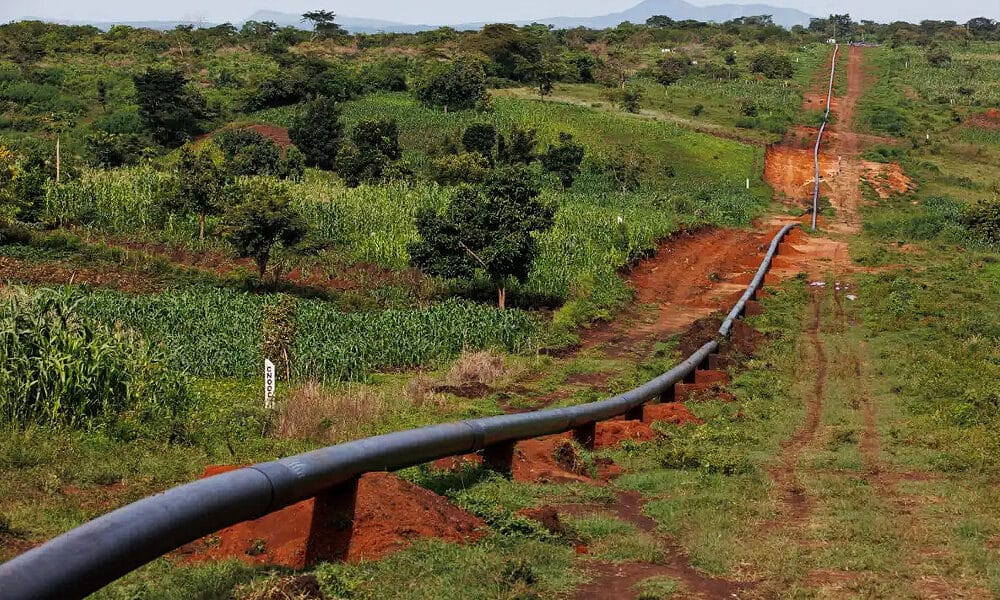
A new research report released today by the Africa Institute for Energy Governance (AFIEGO) has raised fresh concerns over the effectiveness of the Livelihood Restoration Programme (LRP) being implemented for communities affected by the East African Crude Oil Pipeline (EACOP) project in Uganda.
The study finds that a sizeable percentage of project-affected persons (PAPs) consider the programme inadequate, placing at risk the recovery of 3,648 households comprising over 24,744 individuals who were displaced by the pipeline project.
The LRP, which has been implemented by the EACOP Company through subcontractors since 2022, is intended to restore affected households to their pre-displacement socio-economic status, or better, in line with commitments in the project’s Resettlement Action Plan (RAP) and international standards such as IFC Performance Standard 5.
Nearly 40% Express Negative Attitudes
The research, conducted by a consultant contracted by AFIEGO between June 2025 and February 2026, also assessed community attitudes toward the pipeline. Data was collected from 246 PAPs between September and October 2025 across seven districts: Hoima, Kikuube, Kakumiro, Sembabule, Lwengo, Rakai and Kyotera.
According to the findings, nearly 40% of respondents expressed a negative attitude toward the pipeline. Many cited safety concerns, saying the infrastructure is being constructed too close to their homes. Others fear potential long-term impacts on soil biodiversity, soil fertility and micro-weather conditions that could undermine agricultural livelihoods.
AFIEGO hopes the findings will inform decision-making by project developers and government authorities, particularly regarding the routing of the pipeline near residential areas.
Gaps in Agricultural Support
Under the agricultural improvement programme, PAPs were entitled to receive inputs such as seeds, seedlings, livestock and fertilisers. While 130 respondents confirmed receiving items including coffee seedlings, banana suckers, maize and bean seeds, many reported significant shortcomings.
Participants cited poor-quality seedlings and untimely distribution often during dry seasons or after the rains had begun—reducing crop survival rates. One participant from Kyotera district said that out of 70 coffee seedlings received, only 20 survived.
Communities also reported unfulfilled promises of livestock distribution, saying that although many had opted for livestock during consultations, only a fraction received animals.
Food Security and Compensation Concerns
Under the food security programme, 116 respondents said demonstration gardens were established in their communities. However, several PAPs argued that the initiative failed to address deeper concerns, particularly delayed and what they described as inadequate compensation.
Some said they had been unable to purchase equivalent land after displacement, leaving them with reduced capacity to farm. Demonstration gardens, they argued, could not compensate for diminished landholdings.
Financial Literacy and Skills Training Questioned
The report further shows that 115 PAPs received financial literacy and money management training. However, 77% described the training as inadequate, citing its one-day duration and alleging that the facilitating commercial bank appeared more focused on recruiting customers than building financial management capacity.
Similarly, while 113 respondents participated in enterprise development and vocational training programmes covering skills such as catering, baking, soap making and hairdressing—78% said implementation was inadequate. Reported challenges included short training periods, absentee trainers, limited practical sessions and minimal start-up capital.
One youth from Hoima district reported that during a four-month catering course, practical sessions were rare and complaints were discouraged.
Transitional Food Assistance Falls Short
Although 75% of respondents said they received transitional food assistance, 65% of those beneficiaries described it as insufficient. Complaints ranged from inadequate rations to alleged discrimination in distribution, with some claiming that individuals critical of the project were excluded.
Call for Urgent Action
The livelihood restoration programme is considered critical to preventing increased poverty, food insecurity and other social risks such as gender-based violence that can arise following displacement.
AFIEGO is calling on the EACOP Company to address identified gaps and on government authorities to strengthen oversight, including through local government and civil society participation.
Diana Nabiruma, Communications Officer at AFIEGO, said the findings should serve as a wake-up call for both government and project developers.
“The livelihood restoration programme is not a favour to affected communities—it is a binding commitment under the project’s Resettlement Action Plan,” Nabiruma said. “If nearly 40% of project-affected persons feel unsafe or dissatisfied, that signals a serious implementation problem that must be urgently addressed.”
She added that restoring livelihoods requires more than distributing inputs or conducting short trainings.
“Communities lost land, which is their primary source of income and food security. Restoration must be timely, meaningful and responsive to the realities on the ground. Otherwise, the project risks entrenching poverty instead of delivering development,” she said.
AFIEGO’s Chief Executive Officer, Dickens Kamugisha, also warned that failure to address the identified shortcomings could undermine the promise that Uganda’s oil sector will create lasting value for citizens.
The organisation has urged government and project developers to engage affected communities more meaningfully and avoid constructing the pipeline against the aspirations of those who remain opposed to its proximity to their homes.