


A long-running dispute over the family legacy of one of Uganda’s most celebrated musicians has been dramatically narrowed after government and police forensic experts confirmed that only four of 25 people claiming to be children of the late singer Paul Job Kafeero are biologically related to him.
The findings, released on Thursday (June 25, 2026) in the Ugandan capital, Kampala, mark a significant development in a years-long battle over lineage and inheritance linked to Kafeero’s estate nearly two decades after his death.
For years, competing claims over the descendants of the legendary musician have fuelled family tensions, public speculation and legal disputes.
The controversy intensified in recent months as dozens of individuals came forward asserting that they were Kafeero’s biological children, raising questions over who should inherit and manage the estate of a man widely regarded as one of Uganda’s most influential cultural figures.
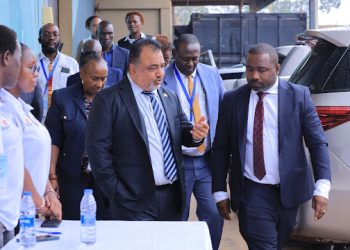
The DNA results were jointly presented by senior officials from Uganda’s Police Forensic Directorate and the Government Analytical Laboratory. Scientists from both institutions said they independently conducted the tests using identical scientific procedures and arrived at matching conclusions.
“Science does not lie,” Government Analytical Laboratory Director Kepher Kuchana Kateu told relatives and claimants gathered for the announcement. He urged all parties to accept the findings and bring an end to the conflict that has surrounded Kafeero’s family for years.
The tests confirmed that Benedict Kafeero, Simon Peter Kafeero, Tomas Kafeero, commonly known as Swazi, and Elizabeth Nagawa are the only biological children among the 25 individuals tested.
The remaining claimants were found not to share a biological relationship with the late musician.
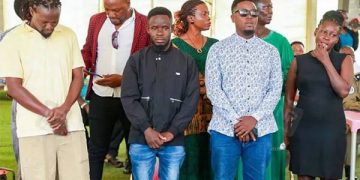
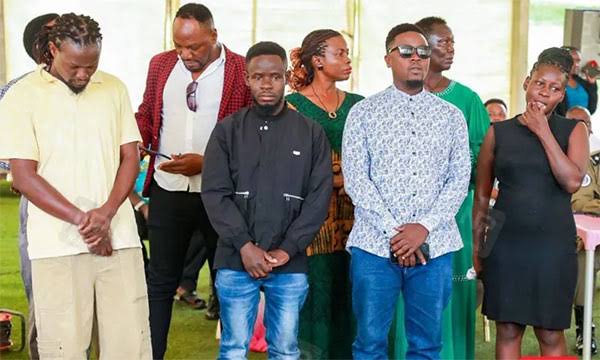
Witnesses at the announcement described emotional scenes as some claimants broke down in tears after learning the results.
Many had arrived at the venue alongside family members, friends and figures from Uganda’s entertainment industry, hoping the tests would finally settle questions that had lingered for years.
The dispute had attracted national attention and eventually drew the intervention of Uganda’s former Minister of State for Youth and Children Affairs, now Local Government Minister, Balaam Barugahara. According to the minister, nearly 30 people initially approached him claiming to be Kafeero’s children, although five did not complete the testing process.
Barugahara said the four individuals confirmed by the latest tests had also been identified in earlier DNA examinations conducted several years ago, findings that some family members and claimants had previously challenged.
He said the newly released results would now be used in court proceedings aimed at updating official records and determining rightful claims to Kafeero’s estate.
The case underscores the growing role of forensic science in resolving inheritance disputes across Africa, where questions of paternity and succession often become contentious after the deaths of prominent public figures.
In many jurisdictions, DNA testing has increasingly become the decisive tool for settling claims that once relied largely on testimony and family accounts.
Kafeero remains one of Uganda’s most revered musicians. Often referred to as the “Prince of Kadongo Kamu,” he helped popularise the traditional storytelling music genre known as Kadongo Kamu, which combines social commentary with acoustic instrumentation.
His songs, many of which addressed everyday struggles, politics and morality, earned him a devoted following and secured his place among the country’s cultural icons.
Since his death in 2007, Kafeero’s legacy has endured through his music. Yet the uncertainty surrounding his children has repeatedly overshadowed discussions about his contribution to Ugandan culture.
Thursday’s announcement may now clear the way for a legal resolution to the inheritance dispute and allow one of East Africa’s most celebrated musical legacies to move beyond years of family conflict.