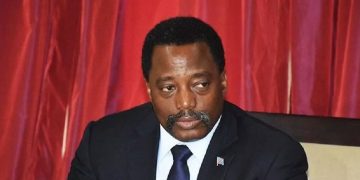



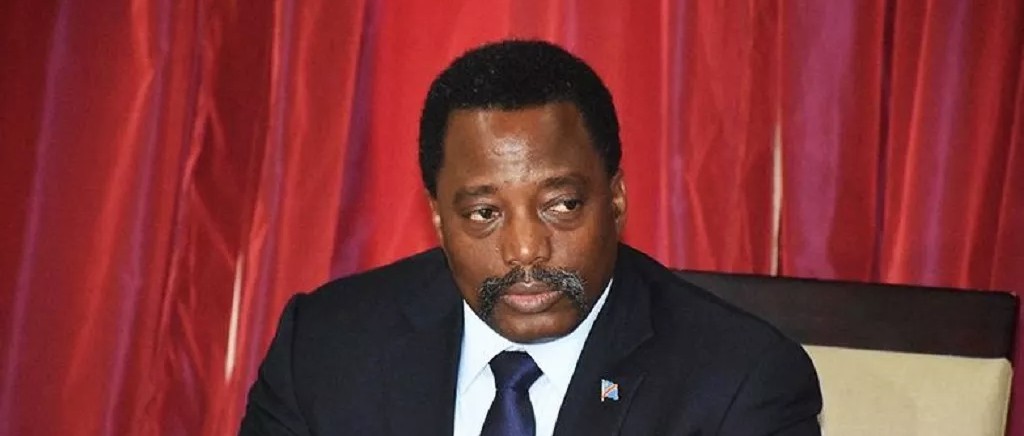
DRC — In a stunning turn of events that has sent shockwaves to the world, former Democratic Republic of Congo President Joseph Kabila has been sentenced to death by a military tribunal for a string of grave charges, including treason, crimes against humanity, murder, sexual violence, torture, and insurrection.
Reports indicate that the verdict, delivered in absentia, was announced by presiding military chairman Lt. Gen. Joseph Mutombo Katalayi, who invoked Article 7 of the Military Penal Code to impose what he called the “most severe sentence” under Congolese law.
“In applying Article 7 of the Military Penal Code, it imposes a single sentence, namely the most severe one, which is the death penalty,” declared Katalayi.
Kabila, 54, who ruled the DRC from 2001 to 2019, was not present during the proceedings and had no legal representation at the trial, which began in July.
His exact whereabouts remain unknown to date, though he had resurfaced in May this year (2025) with a controversial visit to Goma, a city now under the control of the M23 rebel group.
His return to the volatile east had raised suspicions, and soon, serious accusations, about his alleged support for the M23, a rebel movement widely believed to be backed by neighboring Rwanda, though Kigali has denied involvement.
Kabila, once seen as a stabilizing force after succeeding his assassinated father Laurent Kabila in 2001, now faces the harshest judgment a Congolese court has ever handed to a former head of state.
After stepping down in 2019 following a disputed election that saw Felix Tshisekedi take power, with Kabila’s political backing, the relationship between the two men dramatically deteriorated. Kabila eventually went into exile in 2023, only to reemerge this year claiming he wished to help end the conflict in the east.
But President Tshisekedi saw it differently, accusing his predecessor of orchestrating the M23 insurgency.
Earlier this year, DRC’s Senate stripped Kabila of his immunity as a former head of state, opening the door for his trial on war crimes and high treason.
The charges stem from his alleged collusion with M23 rebels, who have seized major swaths of mineral-rich territory in eastern DRC, including Goma, Bukavu, and two strategic airports.
The former president’s fall from grace is unprecedented history, and rare across the African continent, where former strongmen often enjoy immunity from prosecution.
The sentencing raises broader questions about justice, power, and accountability in a region plagued by resource-fueled conflicts, cross-border insurgencies, and long-standing impunity.
A ceasefire between the M23 and the Congolese government was brokered in July, but the situation on the ground remains tense, with sporadic fighting still reported.
With a death sentence now hanging over his head, the former president once hailed as a reformist has become the face of what many in the DRC see as a betrayal of the nation he once led.