





BUSINESS NEWS ARTICLE— Women’s increasing participation in business decision-making is emerging as a powerful force behind stronger families, more resilient enterprises, and inclusive economic growth, with Uganda’s Generating Growth Opportunities and Productivity for Women Enterprises (GROW) Project placing this transformation at the center of its mission.
Across communities, development experts and local leaders are observing a clear pattern: when women are actively involved in making business decisions, both households and enterprises perform better. Women tend to prioritize long-term investments such as education, healthcare, and savings, factors that directly contribute to improved family planning and household stability.
This shift is being reinforced through the “My Voice – My Family is Stronger for It” campaign, which seeks to challenge long-standing social norms that have historically limited women’s agency in economic and household decision-making. In many parts of Uganda, patriarchal structures have restricted women’s control over resources, often preventing them from scaling their businesses or fully contributing to household income.
The GROW Project, a Government of Uganda initiative supported by the World Bank with a USD 217 million grant, is working to change this reality. Implemented by the Ministry of Gender, Labour and Social Development in partnership with the Private Sector Foundation Uganda, the project is designed to help women transition their enterprises from micro to small, and from small to medium-scale businesses.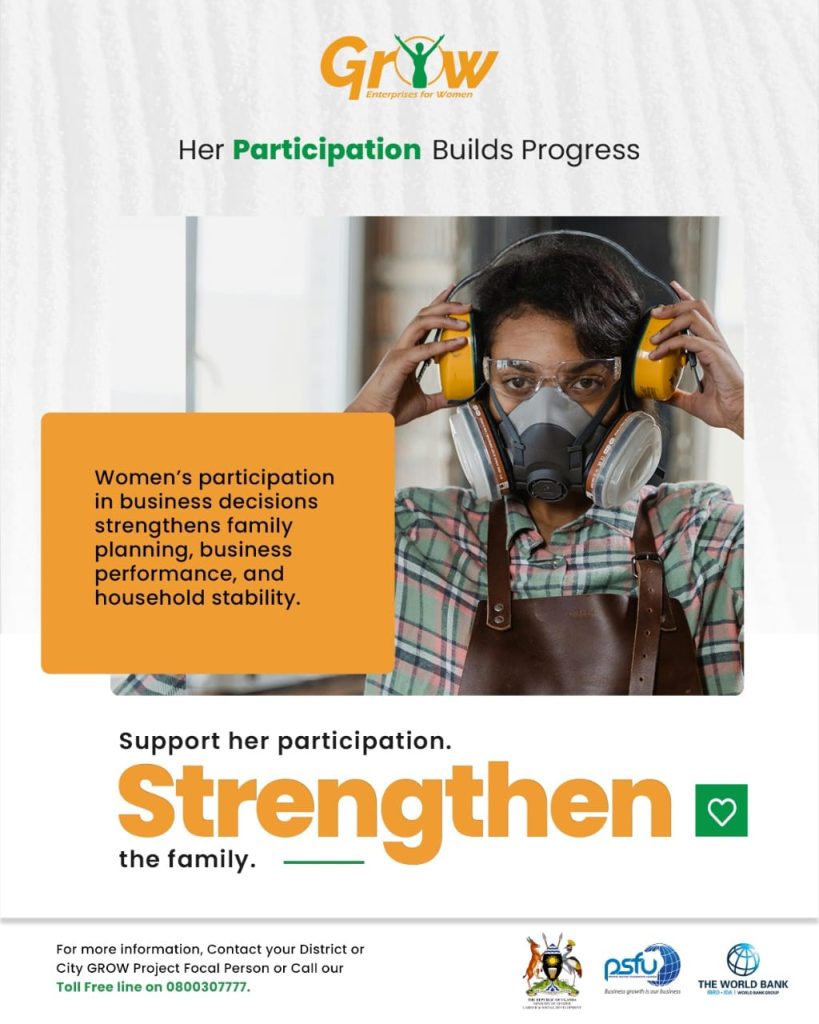 Through a comprehensive “wrap-around” approach, the project tackles the barriers women face on multiple fronts. Affordable financing is one of its key pillars. Under the GROW Loan scheme, women can access credit at a 10 percent annual interest rate significantly lower than most commercial lending rates. By late 2024, more than UGX 43.9 billion had been disbursed to over 2,000 women entrepreneurs.
Beyond financing, the project offers free business development training covering financial literacy, digital marketing, and enterprise management. It also invests in shared production facilities, enabling women to add value to their products, particularly in sectors such as agro-processing and tourism.
Equally important is the project’s focus on mentorship and community support. Women Entrepreneurship Platforms have been established in over 100 districts, creating spaces for networking, skills sharing, and peer support. These platforms also integrate services such as gender-based violence referral pathways, ensuring that women can pursue economic activities in safe and supportive environments.
Crucially, the GROW Project recognizes that economic empowerment cannot succeed without social change. Through structured dialogue sessions and a Male Involvement Strategy, men, spouses, and community leaders are being engaged as allies. This approach is helping to reduce resistance, ease household tensions over financial decisions, and encourage shared responsibility in both business and family life.
For many women, the impact is already tangible.
In Moroto Central Market, a local trader expanded her shop after accessing a GROW Loan, diversifying into cereal foods to meet rising demand in her community.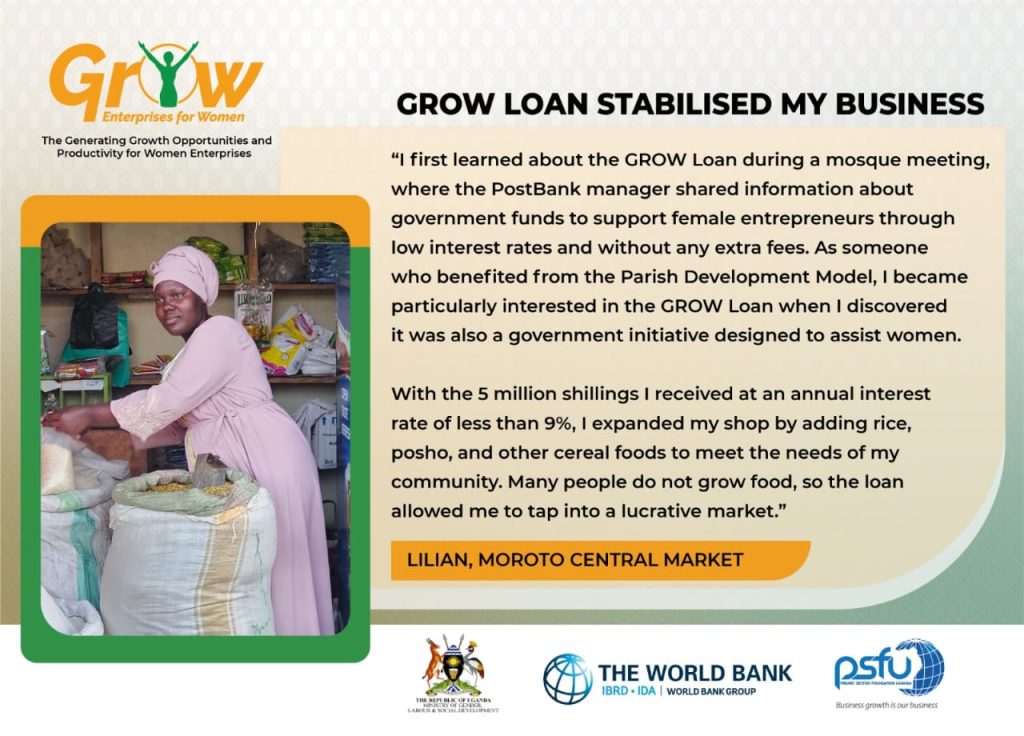 In Kayunga District, a home-based entrepreneur used her loan to invest in baking equipment and event management supplies, an opportunity she says was made possible with encouragement from her husband.
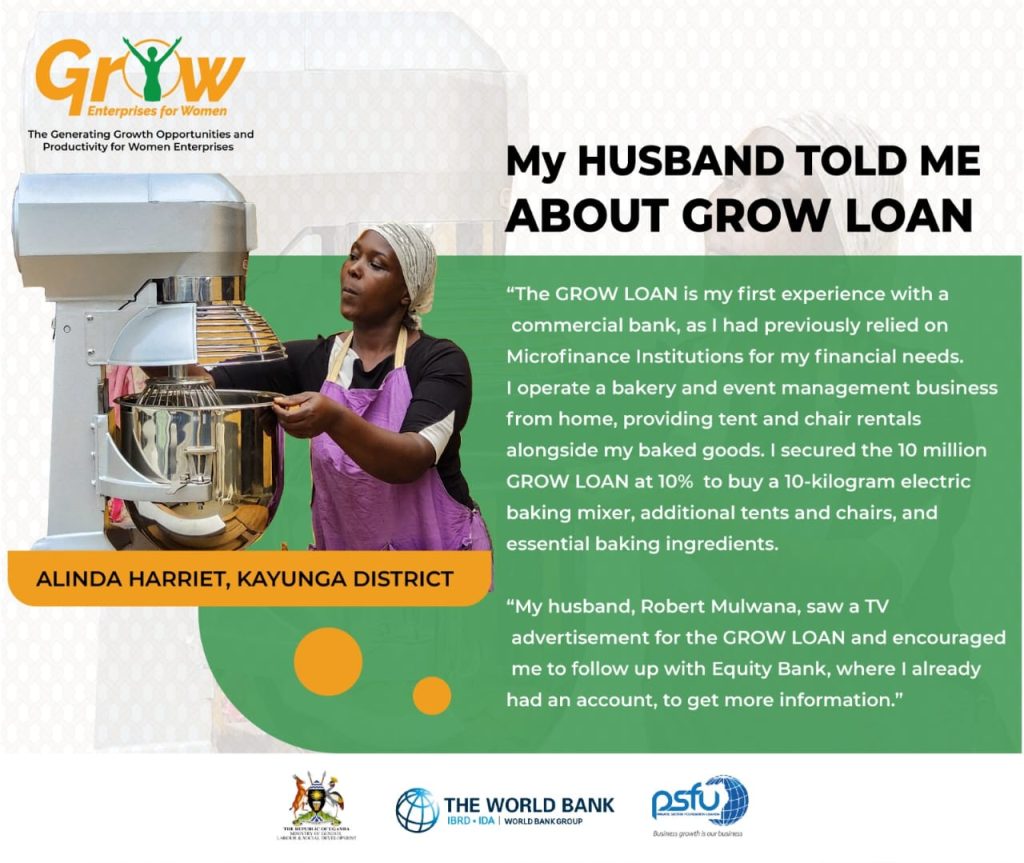 Meanwhile, in Wakiso District, another beneficiary invested in hospitality infrastructure, marking her first step into larger-scale enterprise development.
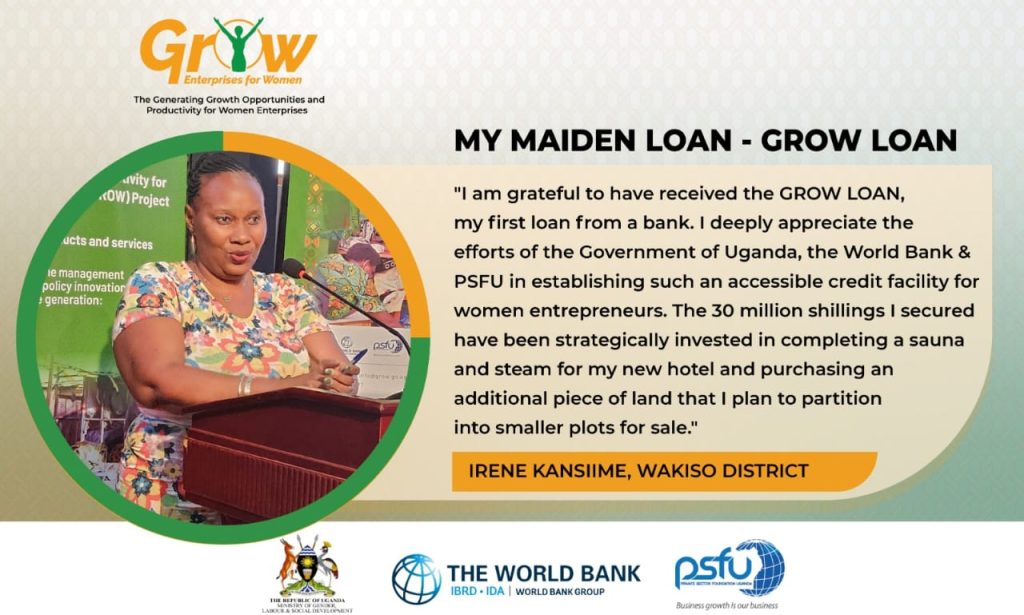 These stories highlight a broader trend: when women are supported to participate fully in business, progress follows, not only for individuals, but for entire families and communities.
However, challenges remain. Limited access to capital, gaps in financial literacy, and lingering social barriers continue to restrict many women’s full participation. Experts warn that without sustained investment in both economic tools and social transformation, progress could stall.
As Uganda continues to implement the GROW Project, the message is becoming increasingly clear. Supporting women’s participation in business decision-making is not simply a matter of inclusion—it is a strategic pathway to national development.