


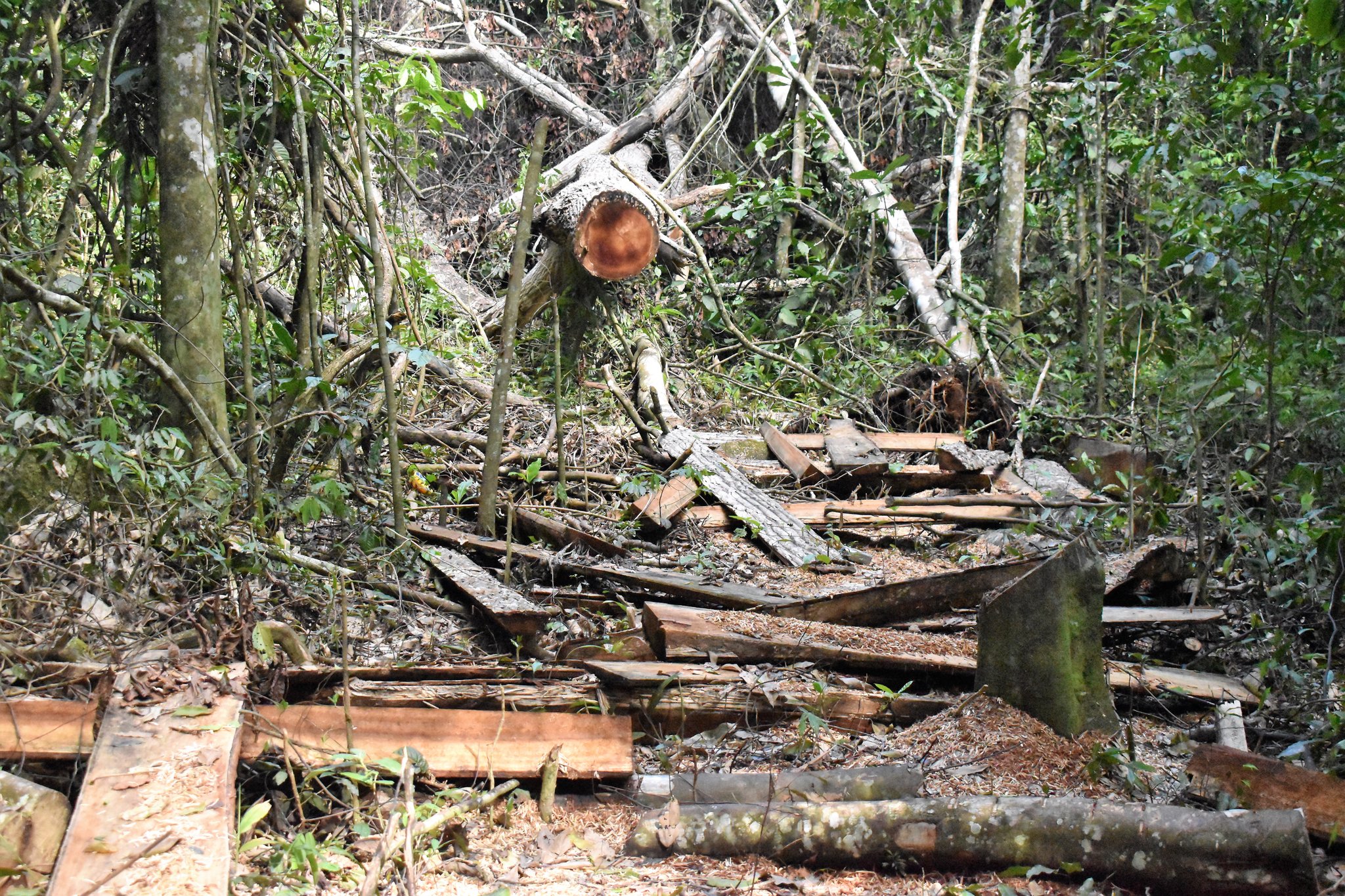
The National Forest Authority (NRA) and the leaders in Entebbe has protested the move by the Chinese Firm to establish an Alternative City in the Kitubulu Central Forest Reserve.
Reports indicate that forest authority had agreed with the Tian Tang Group to develop a eco-toursin project but later realised that that the firm was quietly planning to clear part of the forest to establish a city.
Now NFA is considering cancelling a deal that had been given the firm to develop an eco-tourism project in Kitubulu Central Forest Reserve.
According to the NFA spokesperson, Aldon Walukamba, in 2023, the authority granted Tian Tang access to 60 hectares of the protected forest under a two-year probation agreement.
The company was expected to conduct an environmental and social impact assessment and meet other conditions before qualifying for a full 50-year eco-tourism license.
However, new revelations from State Minister for Investment and Privatisation Evelyn Anite have cast doubt on the firm’s intentions. According to Anite, Tian Tang planned to build what she described as an “alternative city,” not the eco-tourism park as initially agreed upon.
At the time of publication, the minister could not be reached for a comment. Her team told us she was engaged in presidential campaign activities in her home district of Koboko, in the West Nile sub-region, where the President was campaigning ahead of the 2026 elections.
Walukamba made it clear that such a deviation violates the core purpose of the eco-tourism license, which under the National Forestry and Tree Planting Act is strictly for projects that promote conservation, provide employment, and generate income without damaging the environment.
He explained that eco-tourism is part of conservation without destruction.
He stressed that this is sustainable use of forests and they are supposed to be protected for posterity.
He explained that Kitubulu forest reserve plays a critical environmental role, from protecting Lake Victoria against siltation to safeguarding the local ecosystem, preventing floods on the peninsula, and preserving fish breeding grounds.
According to Walukamba, a team of experts is already on the ground assessing the development, and their findings will likely lead to the cancellation of Tian Tang’s offer.
He added that this would not be the first termination, another company, Abacus, previously had its license revoked for failing to meet requirements.
Currently, five approved eco-tourism enterprises operate within the 80-hectare reserve.
Tian Tang’s project was one of them, until it began straying from the agreement.
Entebbe Mayor Fabrice Brad Rulinda voiced strong support for the forest’s protection, stating that Kitubulu acts as a silent shield during heavy rains, which leads to rising water levels.
He noted that it is the Kitubulu forest reserve that quietly absorbs the force, protecting their homes, schools, and roads.
While not opposing development, the mayor stressed that it must not come at the cost of the environment.
He added that real development is not about how many buildings are erected but how wisely the preservation of the environment is balanced with development.
If the license is cancelled, it will mark a significant stance by NFA in enforcing conservation laws and protecting one of Entebbe’s last remaining natural buffers.
Apart from Kitubulu, the National Forestry Authority (NFA) is grappling with numerous other conflicts as several forest reserves across the country come under threat. These include Bugoma Forest in the Albertine region, Zoka in West Nile, Mabira in Buikwe, Maruzi in Gulu, Mt. Kei in Terego, Imaramagambo in Rukungiri, and Kasyohakitomi in Buhweju.
In 2024, the NFA also uncovered 703 illegal land titles within Uganda’s forest reserves. These titles were identified between July and early August during a nationwide assessment to determine the extent of forest degradation. Most of the illegal titles are concentrated in the central region, posing a severe threat to forest conservation efforts. Districts such as Wakiso, Kayunga, and Kampala are particularly affected.
The highest level of encroachment was recorded in eight central Uganda districts: Kampala, Wakiso, Kayunga, Buikwe, Buvuma, Mpigi, Butambala, and Luwero, the same region where Kitubulu is located.
According to the Ministry of Water and Environment, Uganda is currently losing approximately 122,000 hectares of forest cover each year.
Ministry statistics show that in 1990, the country had 24% forest cover. However, due to increasing illegal activities such as deforestation and the pressure from a growing population, which has led to widespread encroachment for cultivation, Uganda’s forest cover has now dropped to just 12.7%.