


Ugandan President Gen (Rtd) Yoweri Kaguta Museveni Tibuhaburwa has called for a sweeping rethink of how African nations approach the River Nile, warning that outdated political debates risk obscuring the deeper economic and environmental challenges shaping the continent’s future.
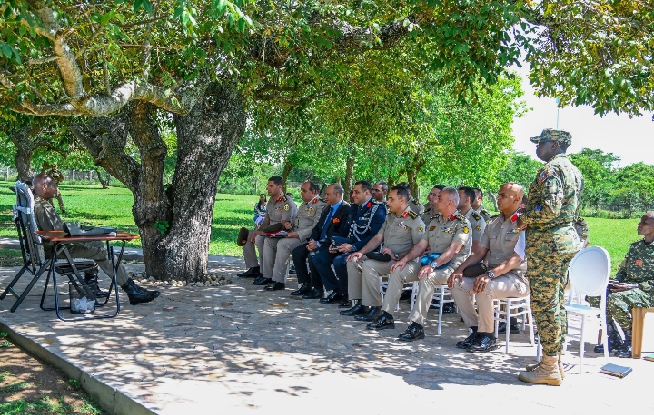
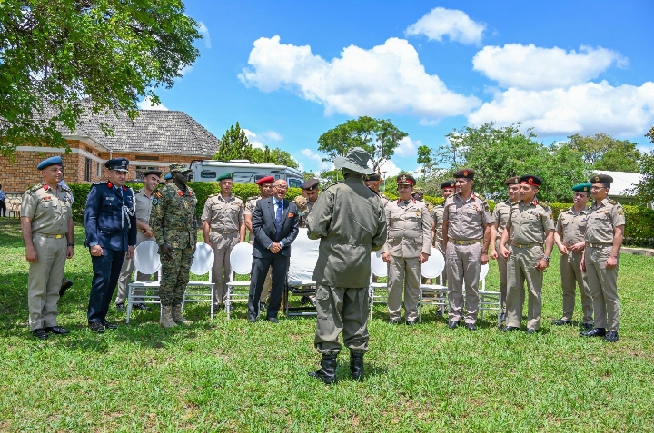
Speaking at Uganda’s National Leadership Institute in Kyankwanzi to a delegation from Egypt’s military command college, led by Ambassador Monzer Selim and Major General Khaled Elnahraway, Museveni framed the Nile not as a legal dispute rooted in colonial-era agreements, but as a development crisis tied to Africa’s broader structural weaknesses.
For decades, negotiations over the Nile have been dominated by historical treaties, particularly those brokered under British colonial rule.
But Museveni dismissed this focus as misplaced, arguing that the real threat to the river lies in underdevelopment across the tropical regions it traverses.
Without access to electricity, he said, millions of people depend on biomass such as firewood, accelerating deforestation and destabilizing fragile ecosystems that sustain the Nile’s flow.
The Ugandan leader linked environmental degradation directly to limited industrialization.
As populations grow without parallel economic transformation, communities are pushed into forests and wetlands in search of agricultural land, compounding ecological strain.
Industrial growth, he argued, would ease this pressure by shifting livelihoods away from subsistence farming.
Museveni also pointed to climate change as an intensifying factor, noting that emissions from industrialized nations are contributing to declining rainfall in parts of the Nile Basin.
He revealed that water flow from Uganda toward South Sudan has dropped significantly since the 1960s, underscoring the urgency of coordinated regional action.
In place of fragmented national strategies, Museveni proposed a comprehensive Nile Basin master plan centered on electrification and industrial expansion.
Such an approach, he suggested, could transform the Nile Valley into a driver of shared prosperity rather than competition.
He broadened the discussion beyond the Nile, contrasting it with the vast potential of the Congo River system. With sufficient cooperation and stability, he argued, Africa’s water resources could far exceed current utilization, reshaping the continent’s economic trajectory.
Museveni’s remarks were also a wider appeal for African integration.
He emphasized that no single country, including Uganda, can achieve global competitiveness in isolation.
Regional unity, he said, is essential for economic strength, strategic security, and long-term resilience.
Drawing on historical alliances with figures such as Julius Nyerere and Samora Machel, Museveni highlighted the enduring importance of solidarity in advancing both security and development goals.
Ultimately, he argued that Africa’s challenges are not due to a lack of resources or solutions, but a failure to prioritize the right strategies.