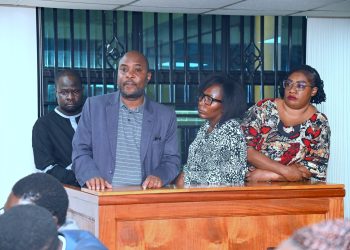




The Directorate of Traffic and Road Safety has urged Parliament to impose strict controls on the importation and use of sirens in Uganda, citing both security and public safety concerns. While appearing before the Public Accounts Committee (PAC) of Parliament this week, the acting director, Lawrence Nuwabiine, called for tighter regulation on who can import and install sirens on vehicles.
“Sirens are a security component and should not be freely imported by just anyone,” Nuwabiine told the committee. “If they are to be imported, it should only be by entities officially authorized for emergency use.”
Nuwabiine explained that the unrestricted importation and installation of sirens has led to widespread abuse on the roads, with an increasing number of private vehicles using sirens to force their way through traffic, often with no legitimate authority to do so.
He said this has complicated traffic management and undermined respect for emergency response protocols.
He clarified that the right of way on roads is officially reserved for a limited category of vehicles. These include state motorcades, vehicles of the Prime Minister, Speaker of Parliament, and Chief Justice, as well as ambulances and police or military vehicles responding to emergencies.
The traffic chief emphasized that restricting siren importation will simplify enforcement, making it easier to identify vehicles that are authorized to use such equipment.
He also proposed that mandatory annual or biannual vehicle inspections be reinstated under police management to help enforce these rules.
“If vehicle inspection is housed within the police, we can immediately begin to remove all unauthorized modifications, including illegal sirens. Once people know their vehicles are subject to thorough inspections, they will think twice before installing these devices,” Nuwabiine stated. “It’s unfortunate that this is not yet in place.”
He added that placing the inspection authority within the police force would strengthen enforcement, as the police are uniquely positioned to prosecute offenders and arbitrate disputes over vehicle compliance using specialized equipment.
Nuwabiine also used the opportunity to make a broader call for the automation of police services, including vehicle tracking systems and digital enforcement tools.
He recalled that the installation of CCTV cameras during the 2007 CHOGM summit laid the groundwork for such modernization, but noted progress has since stalled.
“Had we continued the same momentum after CHOGM, we wouldn’t be having many of the issues we’re discussing today,” he said.
The PAC Chairperson, Muwanga Kivumbi, raised concern over the increasing number of unauthorized vehicles using sirens and questioned the role of traffic officers who witness these violations daily.
“I’m not against automation,” Kivumbi noted, “but this kind of indiscipline is in plain sight. These motorists are driving past your officers, many of whom are equipped with radio calls. It’s a matter of coordination and enforcement.”
Several MPs echoed the frustration, arguing that drivers who misuse sirens or drive on the wrong side of the road should be penalized with Express Penalty Scheme (EPS) tickets, and repeat offenders should have their vehicles impounded.
The committee agreed that siren usage needs to be urgently regulated to restore order on the roads and maintain the integrity of emergency protocols