


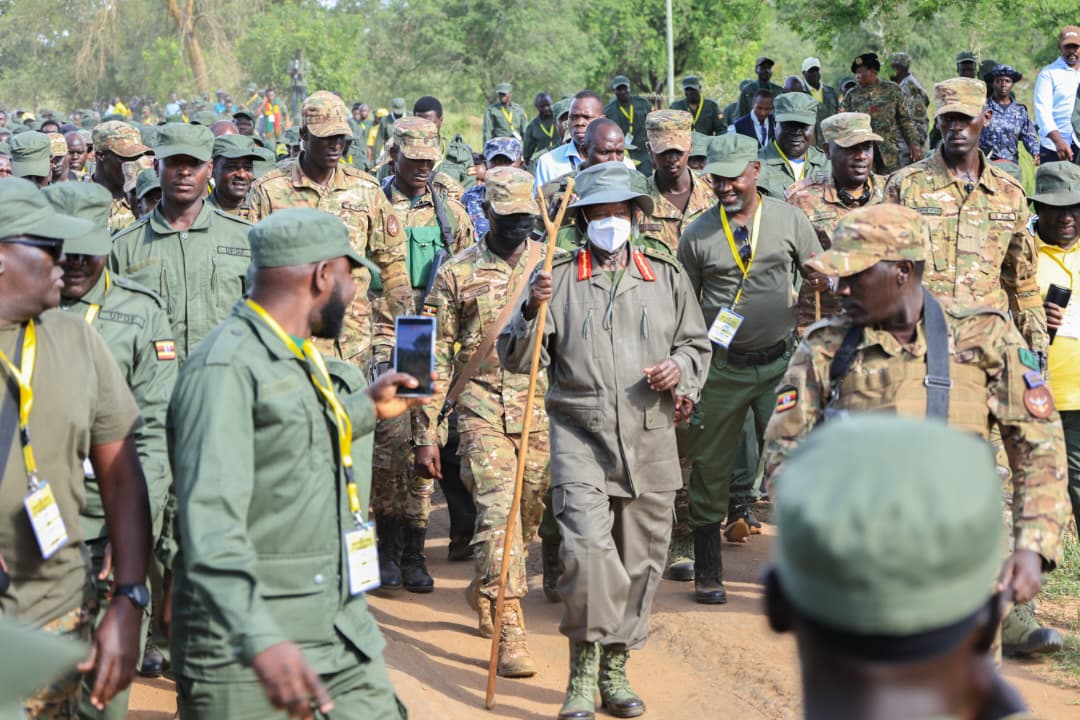
In the quiet, river-lined plains of Kyankwanzi, a landscape steeped in the memory of Uganda’s liberation struggle, President Yoweri Kaguta Museveni delivered more than a closing speech.
As he wrapped up the ruling party’s 2026 parliamentary retreat at the National Leadership Institute Kyankwanzi, he cast the moment as both a reflection on the past and a warning about the future, signaling rising pressure within the region’s dominant political force to confront corruption and redefine its economic mission.
The retreat, held in the aftermath of the National Resistance Movement’s latest electoral victory, unfolded against a broader East African backdrop where governance, accountability, and economic transformation remain central political battlegrounds.
Museveni’s choice of Kyankwanzi was deliberate. The area, once a strategic corridor during the bush war, allowed him to anchor his message in the mythology of the revolution that brought his government to power in 1986.
Recounting the 1984 assault on Masindi Barracks led by his brother, Caleb Akandwanaho, Museveni positioned today’s leaders as heirs to a legacy that demanded discipline and sacrifice, values he suggested are now under threat.
But it was not history alone that dominated the President’s tone. His sharpest remarks targeted corruption, particularly within Parliament, in what appeared to be a direct response to growing public concern and internal unease.
By warning that graft within the legislature would erode the state’s ability to enforce accountability elsewhere, Museveni framed corruption not merely as misconduct but as a systemic risk capable of undermining Uganda’s regional standing and long-term stability. Reports of bribery tied to budget processes, which he referenced openly, hinted at deeper fractures within the governing structure.
Alongside this, Museveni revived a familiar ideological pillar, transitioning citizens from subsistence living into a “money economy.”
This message, long central to his economic philosophy, was presented as unfinished business not only for Uganda but as part of a wider regional push toward middle-income status.
He pointed to transformation within Uganda’s cattle corridor as evidence of progress, arguing that mindset shifts among rural populations had begun to yield tangible gains.
Yet, his emphasis on productivity, infrastructure, and disciplined resource use underscored a recognition that economic disparities remain a political vulnerability.
The presence of Vice President Jessica Alupo and NRM Secretary General Richard Todwong reinforced the sense of a party attempting to consolidate ideological cohesion after elections.
Both figures framed the retreat as a recalibration moment, urging legislators to translate party doctrine into governance outcomes that can withstand scrutiny both domestically and across the region.
What emerged from Kyankwanzi was less a routine gathering and more a signal of a ruling movement aware of the pressures ahead.
With East Africa’s political landscape increasingly shaped by demands for transparency and inclusive growth, Museveni’s blend of revolutionary nostalgia and stern caution suggests a leadership navigating the tension between legacy and reform.
Whether the message resonates beyond the retreat, and results in meaningful institutional change, may determine not only Uganda’s trajectory but also its influence within the region’s evolving political order.