


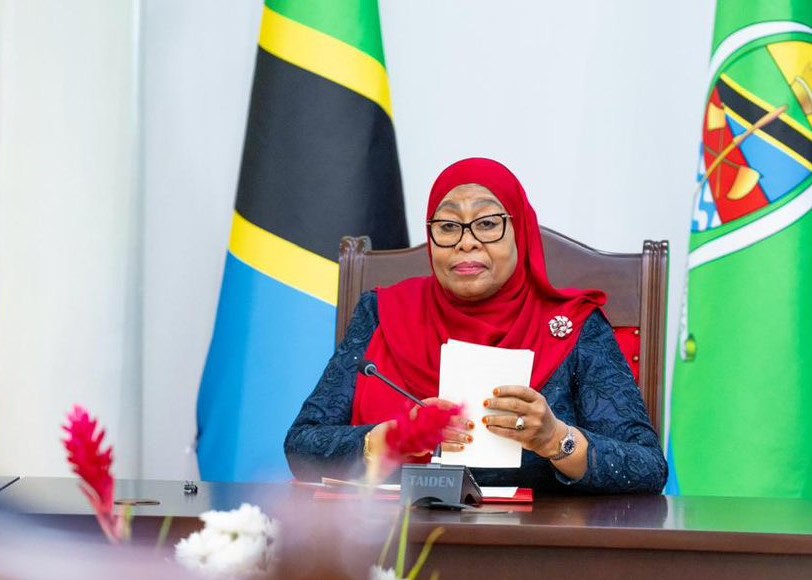
Tanzania’s President Samia Suluhu Hassan has issued a stern warning to activists from neighboring Kenya, declaring that she will not tolerate any interference in her country’s affairs. She emphasized that she would not allow them to “meddle” and incite “chaos” in Tanzania.
Her remarks came after several well-known Kenyan lawyers and human rights activists were barred from attending the trial of opposition leader Tundu Lissu, who is facing charges of treason.
According to the BBC, Kenyan activists were prevented from being present at the court session involving Lissu, which raised concerns among international observers.
“If they have been contained in their own country, they should not come here to interfere. Let’s not give them the chance. They’ve already caused enough turmoil in their own nation,” Samia was quoted.
Human rights organizations are growing increasingly alarmed by the government’s crackdown on opposition figures ahead of Tanzania’s October elections.
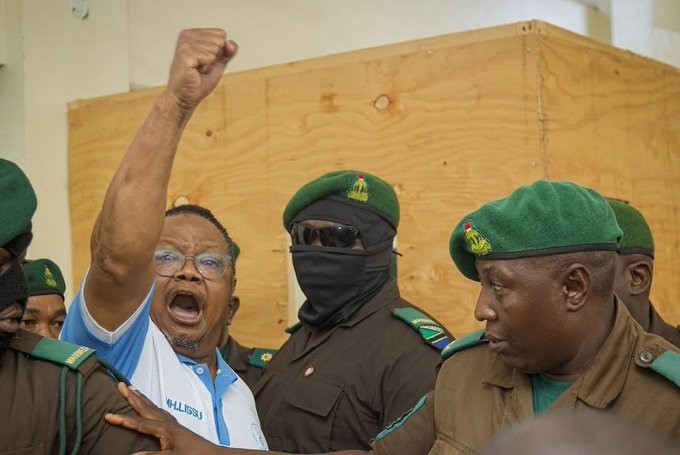
On Monday, Tundu Lissu, leader of the main opposition party Chadema, appeared in court after his arrest last month. Lissu, who raised a clenched fist in defiance, reassured his supporters, saying: “You will be fine. Don’t be afraid.”
Despite a heavy security presence in Dar es Salaam, Tanzania’s largest city, Lissu’s supporters rallied outside the courthouse. The hearing was adjourned to June 2, after the prosecution requested additional time for further investigation.
Previously, the court attempted to hold virtual proceedings, but Lissu’s legal team opposed the move, citing concerns over transparency. Lissu was arrested on April 9 after calling for “no reforms, no election,” demanding significant electoral reforms, and accusing the government of undermining free and fair elections—a claim the government denies.
Lissu faces charges of treason and spreading false information online, allegedly inciting rebellion and accusing the police of electoral misconduct. If convicted, he could face the death penalty.
The arrest has sparked speculation over whether this could mark the end of Lissu’s political journey. His legal team also raised concerns about the heavy police presence around the court, an issue the magistrate said would be reviewed.
When Samia assumed office in 2021 after the death of President John Magufuli, she was widely praised for loosening political restrictions. However, critics argue that Tanzania is now witnessing a return to the type of repression that characterized Magufuli’s administration. The government rejects these accusations.
The Tanzania Human Rights Defenders Coalition (THRDC) reported that Kenyan activist Boniface Mwangi and Ugandan lawyer Agather Atuhaire were detained upon their arrival to attend Lissu’s case. Tanzania’s immigration authority spokesperson, Paul Mselle, said he was unaware of the detentions but would investigate.
On Sunday, former Kenyan Justice Minister Martha Karua was deported from Tanzania along with two colleagues, preventing them from attending the court hearing. Former Kenyan Chief Justice Willy Mutunga and other activists were similarly detained at the airport. However, former Chief Justice David Maraga was allowed to attend the trial and expressed hope for a fair and swift legal process.
During the launch of Tanzania’s new foreign policy in Dar es Salaam on Monday, President Samia reiterated her stance, declaring that she would not allow external forces to disrupt her country’s peace and stability. “We will not allow anyone to come and destroy us,” she asserted, urging authorities to prevent “those who have caused disorder in their own countries” from entering Tanzania.
Addressing criticism that her actions were biased, Samia responded: “What I am doing is protecting my country, which is my primary responsibility.”
Recent developments, including the arrest of more opposition figures and a spate of abductions and killings targeting government critics, have drawn widespread condemnation. Calls for an end to political repression are growing louder, especially after the Chadema party was disqualified from contesting the upcoming elections for refusing to sign a code of conduct required by the electoral commission