


The Royal Academy of Engineering is scaling its impact in Africa by mobilising its network of more than 100 Africa Prize and Leaders in Innovation Fellowships (LIF) alumni to mentor early-stage student founders at engineering universities across Uganda.
Drawing on over a decade of experience training and funding bold innovators worldwide, the Academy is now channeling this expertise directly to pre-revenue engineering students, helping them transform ideas into practical solutions for pressing community challenges. Alumni dedicate one to two hours each week to mentoring students, offering guidance that bridges the gap between academic theory and real-world impact.
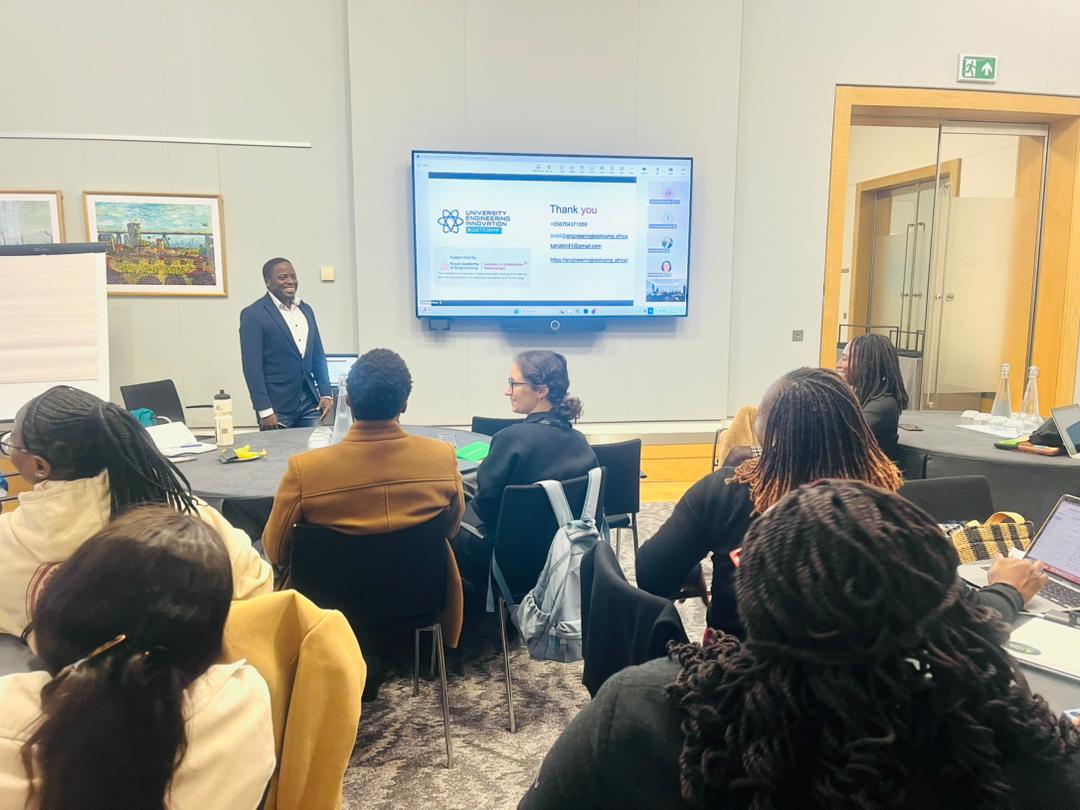
At the heart of this effort is the Engineering Innovation Bootcamp Uganda, a six-week programme designed to equip final-year engineering students with the skills, tools and confidence needed to turn academic projects into market-ready ventures.
Through hands-on training in prototyping, business modelling, pitching and commercialisation, participants are supported by seasoned mentors drawn from the Royal Academy of Engineering’s LIF and Africa Prize alumni community.
“The goal is simple but powerful,” said Anatoli Kirigwajjo, CEO and Co-founder of Yunga Technologies and Africa Prize 2023 winner. “We want students to graduate not just with degrees, but with viable solutions, startups and the mindset to build companies that solve real problems.”
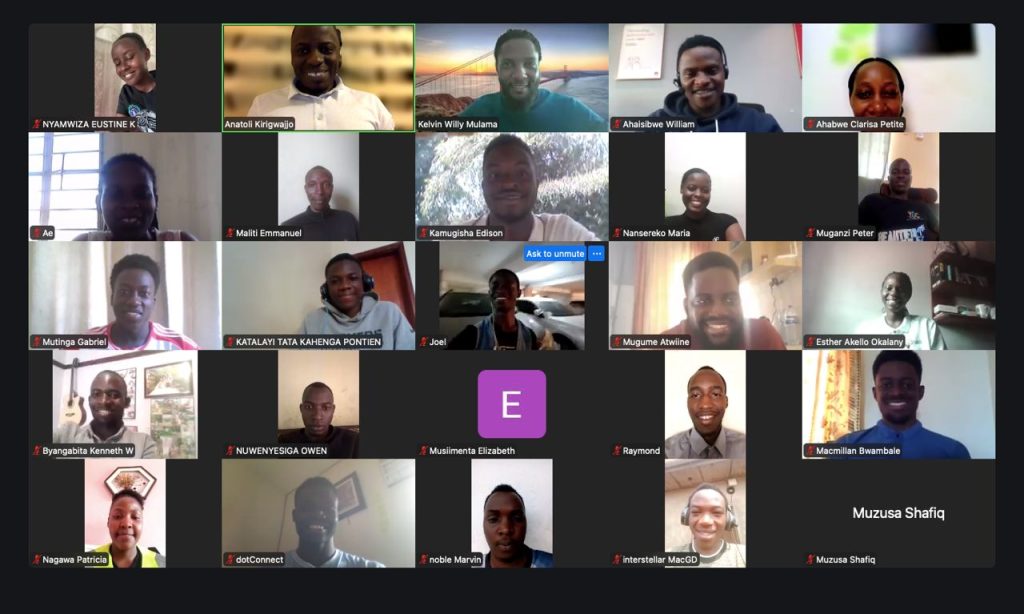
The bootcamp is led by Kirigwajjo alongside Kelvin Mulama, CEO and Co-founder of ShopOkoa and LIF Innovator of the Year 2025, and Catalina Isaza Falla, CEO and Co-founder of Innmetec, LIF alumni and MIT Innovator Under 35 2023. Together, they believe the initiative will significantly expand Uganda’s startup pipeline, with plans to replicate the programme across more universities next year. “If we can start early with students, we change the entire trajectory of engineering careers in the region,” noted Mulama.
The urgency of the programme was underscored during UNESCO Africa Engineering Week and the 9th Africa Engineering Conference, where a critical question was raised: “Why do engineering students, who invest so much time and resources in their education, often end up in casual jobs, unskilled roles or unemployed after graduation in many African countries?”
The bootcamp directly responds to challenges highlighted in the Royal Academy of Engineering’s Engineers for Africa 2025 report, which points to Uganda’s low engineer-to-population ratio, rising unemployment among engineers, outdated curricula, limited practical training and weak links between academia and industry. By focusing on entrepreneurship and industry-relevant skills, the programme bridges the education-to-employment and education-to-entrepreneurship gap, while also strengthening Uganda’s innovation ecosystem and supporting more female-led engineering startups. In doing so, it contributes to Sustainable Development Goals 4, 5 and 9, covering quality education, gender equality, and industry, innovation and infrastructure.
The inaugural cohort attracted strong interest, with 150 ambitious students shortlisted from universities across the country, including Makerere University, Kyambogo University, Mbarara University of Science and Technology, Gulu University, Uganda Christian University, Kampala International University and several others.
After a rigorous selection process, 12 teams will advance to the final round on demo day secluded to take place on 28th January 2026.
Looking ahead, organisers estimate that the first cohort alone could generate up to 500 jobs, with a long-term projection of contributing to 300,000 jobs across Africa by 2030. “This is not just a bootcamp; it’s a catalyst,” said Catalina Isaza Falla. “When students see that innovation and entrepreneurship are real career paths, it changes how they view engineering entirely.”
The Engineering Innovation Bootcamp Uganda marks a bold step toward empowering the next generation of engineers to turn ideas into scalable solutions, positioning students as job creators rather than job seekers, and reinforcing Uganda’s role in Africa’s growing innovation landscape.