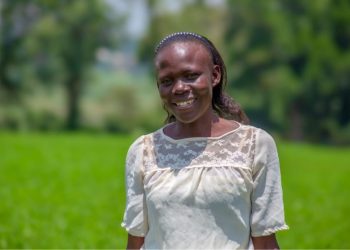



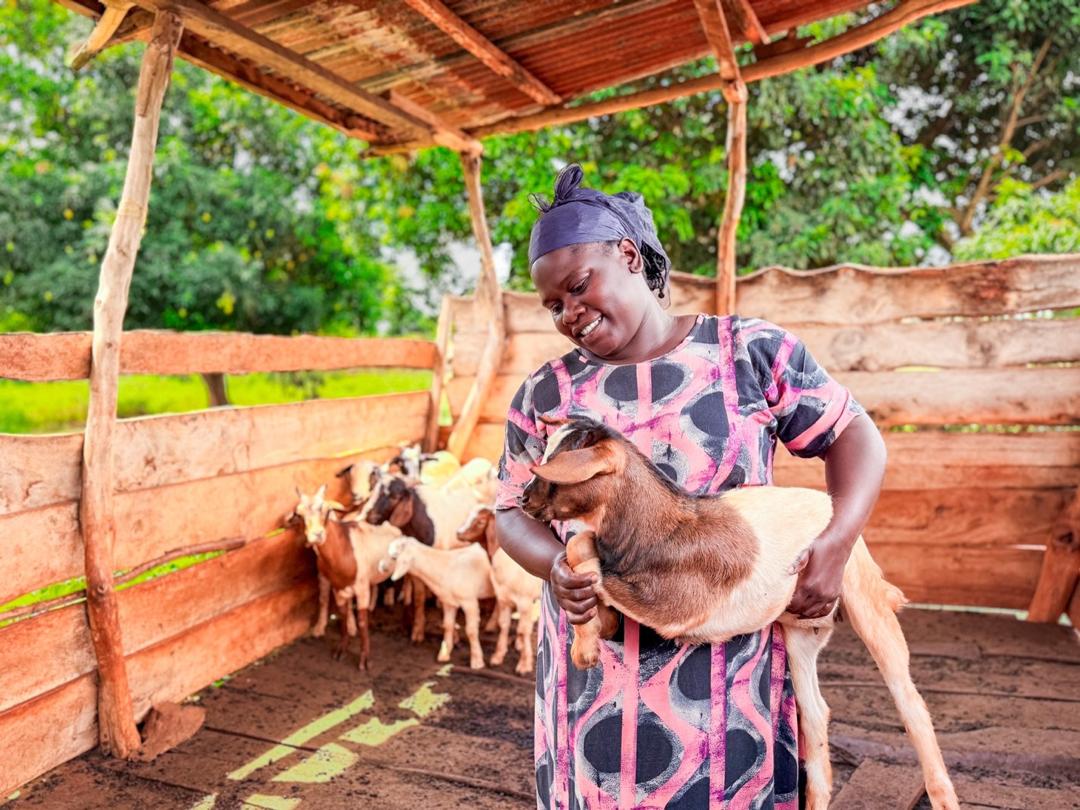
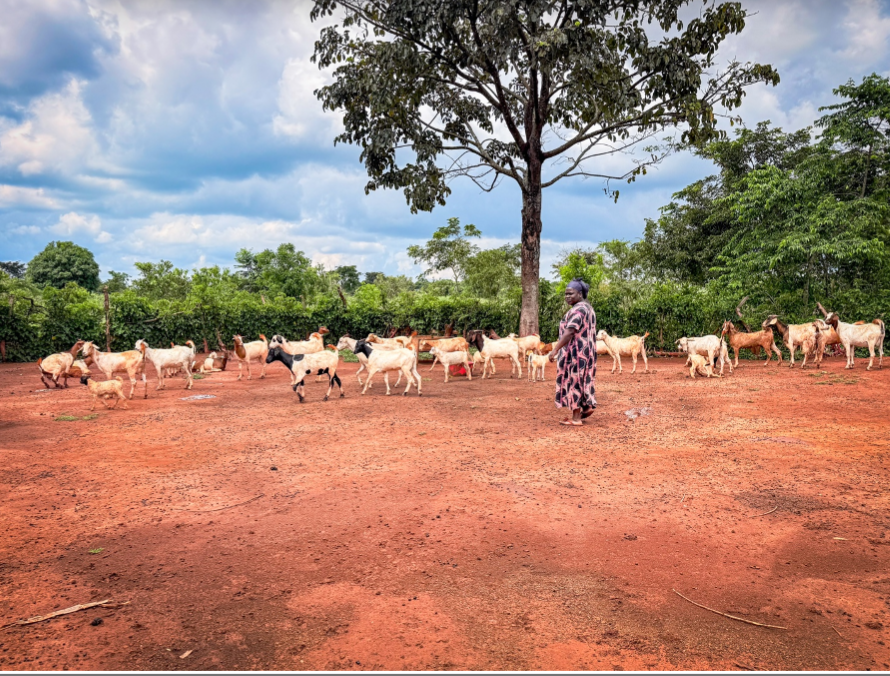
Op-Ed (UGNEWSLINE) – A year ago, I had seven local-breed goats on my farm in Ikumbya, Luuka District. Today, I have 45.
The increase began when my group chose goat rearing as the enterprise we wanted to build. Goats were already familiar to many people in our community, so the choice made sense to us. I was selected as one of two host farmers. The project provided each host with 7 additional goats and a Boer buck, while we received training and support from extension workers. We put what we learned into practice, and our herd grew.
The numbers matter. But the bigger change has been what the experience taught me: farming can be planned, improved and run as a business. It has also changed what I imagine for my future. I have added horticulture to my farm and installed a solar water pump, which helps me grow crops across the year. Agribusiness has become my main source of income.
I am from Busoga (Luuka District), a region too often reduced to a poverty ranking. The latest Uganda National Household Survey puts the poverty rate in Busoga at 18.9 per cent, compared with 16.1 per cent nationally. Those figures matter for planning and accountability. But they do not define the people who live here, and poverty is not a problem confined to one part of Uganda. ubos.org
Uganda counted 45.9 million people in the 2024 census. The Uganda Bureau of Statistics projects the population to reach about 50.3 million by the end of 2026. A young and growing population can be a source of energy and enterprise but only if people can find meaningful ways to earn a living.
Agriculture is part of that opportunity. It is familiar to many young people who grew up in rural communities, and it supports livelihoods across the country. Yet being close to farming is not the same as having a viable agribusiness. Many young people, especially women, have limited access to land. Quality inputs, practical advice, finance and reliable markets can be difficult to reach. A good harvest may still bring little income if farmers cannot store, process or sell their produce on fair terms.
That is why support for young farmers must go beyond distributing inputs or encouraging people to “work hard.” It should connect skills and production with finance, markets and the resources needed to run a business. It should also recognize that young people start from different places. Requiring a contribution can build commitment and ownership, but the contribution must be realistic and should not shut out those with the least money.
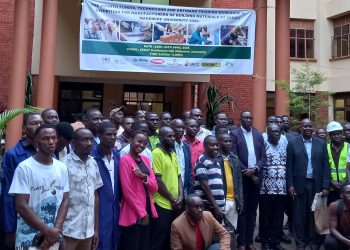
The Stimulating Agribusiness for Youth Employment (SAYE) project takes a group-based approach in Busoga. Young people organize, choose from value chains suited to their areas and contribute towards the inputs they need. The project provides training, extension support and links to business and market opportunities. Its stated goal is to reach 250,000 young people by 2028, with a target of 175,000 entering dignified work through agribusiness. These are ambitions to be measured, not results to assume.
At first, some of us were unsure about joining. We had seen projects arrive with a few items, then leave, while communities waited for the next one. This approach asked us to participate: to join a group, make decisions together and contribute what we could. Group savings and collective effort helped members raise their share. Taking part gave us a stake in the enterprise and a reason to keep learning after the initial support.
That ownership matters, but it cannot replace public investment or responsible project design. Groups need sustained extension services, affordable finance, accessible opportunities for women and people with disabilities, and buyers who offer dependable routes to market. Young farmers also need help to understand costs, manage risks and decide whether a particular value chain can work for them. No single project can address every barrier, and a successful example in one community should be tested in other settings before it is scaled.
Government programmes such as the Parish Development Model and Emyooga, alongside development partner initiatives, can contribute to this work. The challenge is to make support complement what communities are already building: strengthen local groups, invest in market systems, provide advice over time and track whether incomes and work are improving. Reaching people is important; so is knowing whether the opportunity lasts after a project’s support ends.
I have not returned to teaching because my farm now gives me an income and a direction I want to pursue. That is my experience, not a promise that every young person should become a farmer. But it shows what can happen when people have room to choose, learn and invest in an enterprise they believe in.
Young people are often described as a problem to be solved or a population waiting for jobs. Many of us are already looking for ways to build a livelihood. We need practical support that respects our choices, opens access to productive resources and connects effort to real demand.
My goats did not grow because someone handed them to me and walked away. They grew because we made a choice, learned how to care for them and had support while we put that knowledge to work. If Uganda’s programs can combine that kind of local ownership with better finance, land access, skills and markets, agriculture can offer more young people a dignified route into work without pretending that farming alone can end poverty.
By Olivia Namugwere, Luuka District