




EAST RUTHERFORD, New Jersey — Spain returned to the summit of world football on Sunday after defeating defending champions Argentina 1-0 in extra time to lift the 2026 FIFA World Cup, ending a 16-year wait for a second global title and ushering in what many analysts believe is the beginning of a new Spanish era. Ferran Torres struck the decisive goal in extra time after a tense tactical battle, as Spain’s patient possession game finally broke Argentina’s stubborn resistance.
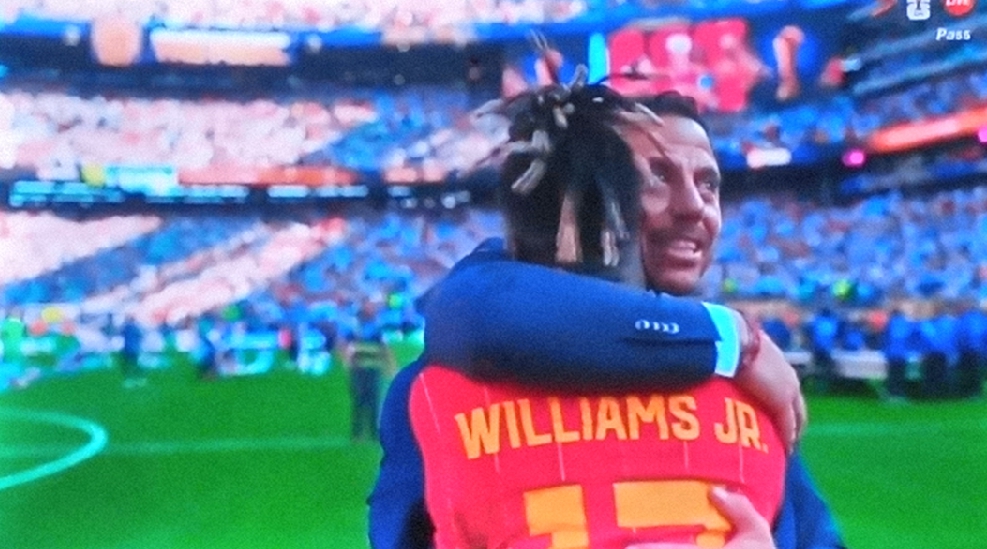
The victory crowned an outstanding tournament in which Spain combined defensive discipline with technical excellence, conceding just one goal throughout the competition while extending an extraordinary unbeaten run.
The triumph places Spain among football’s elite nations with two men’s FIFA World Cup titles, adding the 2026 crown to the country’s historic first success in South Africa in 2010.
It also ends Argentina’s hopes of becoming the first nation since Brazil in 1962 to successfully defend the World Cup.
A journey of triumph
Spain’s relationship with the FIFA World Cup has been one of dramatic highs and painful disappointments.
Their breakthrough came in 2010, when Andrés Iniesta’s unforgettable extra-time goal against the Netherlands delivered Spain’s maiden World Cup title, completing one of the greatest eras in international football following successive UEFA European Championship victories in 2008 and 2012.

The champions’ reign ended abruptly in 2014, suffering a shocking group-stage elimination in Brazil after heavy defeats to the Netherlands and Chile.
In 2018, Spain’s campaign was overshadowed by turmoil after coach Julen Lopetegui was dismissed on the eve of the tournament.
The 2010 champions exited in the Round of 16 following a penalty shoot-out defeat to hosts Russia.
Spain again fell short in 2022 in Qatar, bowing out in the Round of 16 after another penalty shoot-out, this time against Morocco, prompting questions over whether the nation’s possession-based philosophy still had the cutting edge to conquer the world.

Those doubts have now been emphatically answered.
The emergence of a fearless new generation, led by teenage sensation Lamine Yamal alongside established stars including Rodri, Nico Williams and Ferran Torres, transformed Spain into the tournament’s most balanced side, blending technical superiority with ruthless efficiency.
Argentina’s dream shattered
For Argentina, defeat marked the end of an ambitious attempt to retain the trophy won in Qatar four years earlier.
The South Americans entered the tournament carrying the weight of history.
With three World Cup titles, won in 1978, 1986, and 2022, Argentina remains one of football’s greatest nations, behind only Brazil (five), Germany (four) and Italy (four). The Albiceleste also reached the finals of 1930, 1990, and 2014, underlining their remarkable consistency across generations.
In 2026, Argentina once again demonstrated championship pedigree.
They survived a difficult knockout path, defeating Cape Verde, Egypt, Switzerland and England to reach another final, powered by their trademark resilience and the enduring brilliance of Lionel Messi.

But the defending champions finally met a Spanish side that dictated every phase of the contest.
Unable to establish control in midfield and increasingly forced onto the defensive, Argentina resisted for more than 100 minutes before Ferran Torres finally broke the deadlock in extra time, ending the holders’ reign and denying them a fourth world title.
Spain’s victory may represent more than another addition to the record books.
For over two decades, international football has alternated between South American resilience and European tactical evolution.
Spain’s latest triumph suggests the balance has once again tilted toward a technically gifted generation capable of dominating possession without sacrificing defensive solidity.

Unlike their celebrated 2010 side, whose success was built on overwhelming midfield control, the 2026 champions displayed greater versatility, comfortable defending deep, pressing aggressively and striking decisively in transition.
Their ability to adapt to different opponents throughout the expanded 48-team tournament highlighted the evolution of Spanish football rather than simply a revival of its past philosophy.
Spain’s World Cup Record
1930–2006: Never reached a World Cup final.
2010: Champions after defeating the Netherlands 1-0 in extra time.
2014: Eliminated in the group stage.
2018: Eliminated in the Round of 16.
2022: Eliminated in the Round of 16.
2026: Champions after defeating Argentina 1-0 in extra time for a second FIFA World Cup title.
Argentina’s World Cup Legacy
Champions: 1978, 1986 and 2022.
Runners-up: 1930, 1990, 2014 and now 2026.
2026 Campaign: Reached the final as defending champions but were denied consecutive titles by an outstanding Spanish side that controlled the tournament from start to finish.