


FORT PORTAL — Before dawn broke over the green hills of western Uganda, a centuries-old kingdom was preparing for a new chapter.
Inside and around Karuziika Palace in Fort Portal, the final rituals of a royal transition were unfolding after a night of procession, ceremony and symbolism.
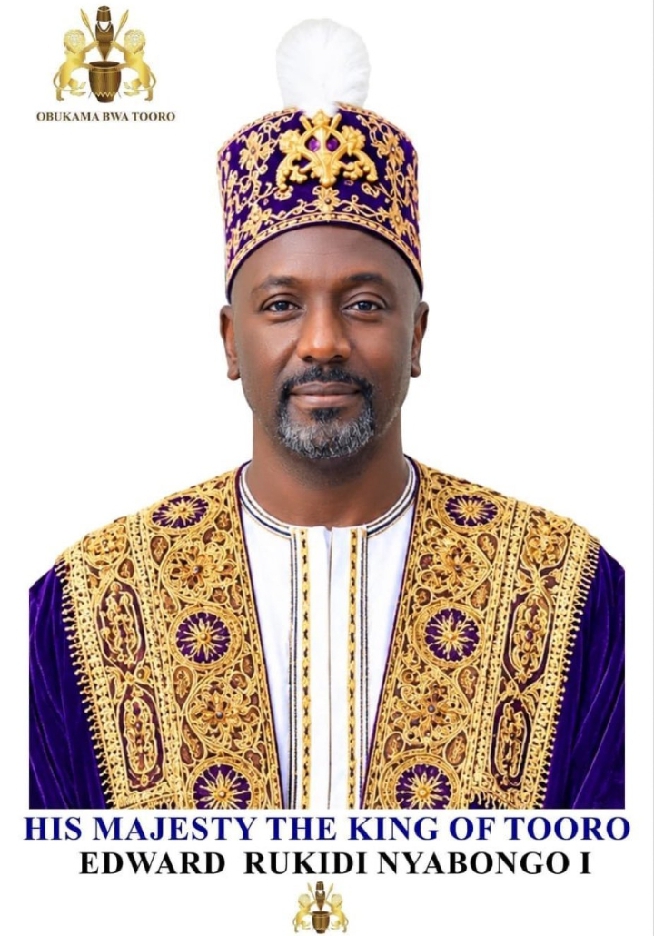
Today, 29 September 2026, Prince Edward Rukidi Kijanangoma is being formally installed as the new Omukama of Tooro, taking the royal name Edward Rukidi Nyabongo I.
The coronation comes little more than a month after the death of his predecessor, King Oyo Nyimba Kabamba Iguru Rukidi IV, whose 34-year reign ended with his death on 27 August at the age of 34.
For Tooro, the ceremony is both a celebration and a moment of transition after weeks of uncertainty over who should inherit one of Uganda’s most prominent traditional thrones.
For the wider world, it offers a rare glimpse into a form of African kingship in which modern public life and ancient royal customs continue to exist side by side.
A kingdom awake through the night
The most important moments of the transition began on Monday evening.
The king-designate was taken to Rwengoma Palace before beginning the traditional journey towards Karuziika, the principal royal residence in Fort Portal.
According to the programme released by the kingdom, the procession was expected to leave Rwengoma at about 22:00, with the journey covering roughly four kilometres. Thousands of people were expected to accompany the royal party, with reed lights forming part of the night-time procession.
The journey was more than a procession.
It represented the movement of the incoming ruler towards the seat of Tooro’s kingship.
At Mugabante, the main entrance to Karuziika Palace, the king-designate encountered one of the most striking elements of the ceremony: a traditional mock battle.
The symbolic contest represents the idea that authority has to be claimed and defended before a ruler can enter the royal compound. Palace officials said the rival figure would eventually withdraw, allowing Nyabongo to proceed into Karuziika.
What followed inside the palace was less visible to the public.
Traditional custodians conducted rites associated with the transfer of royal authority. Some of these practices are not publicly disclosed, reflecting the distinction in Tooro culture between ceremonies performed before the population and rituals reserved for the royal institution and its custodians.
The drums that signal a new reign
Among the most powerful symbols of the transition are Tooro’s royal drums.
Following King Oyo’s death, royal regalia including drums and spears were placed upside down as a sign that the kingdom was in mourning and without a reigning monarch.
The arrival of a new king changes that.
During the transition rituals, the royal drum Butwarane is turned upright. The new ruler is then expected to strike it nine times, a ritual that signifies his assumption of the administrative responsibilities of the kingdom.
The drums are not simply musical instruments.
They are symbols of authority, continuity and the presence of the Omukama.
In that sense, the night-time ritual is a bridge between two reigns: the mourning period following Oyo’s death and the beginning of Nyabongo’s rule.
By the time daylight arrived on Tuesday, the symbolic transfer of power had already been under way for hours.
A queen mother enters the palace
Another important moment came on Monday, when the mother of the incoming king, Yusta Asiimwe Kijanangoma Amooti, entered Karuziika Palace.
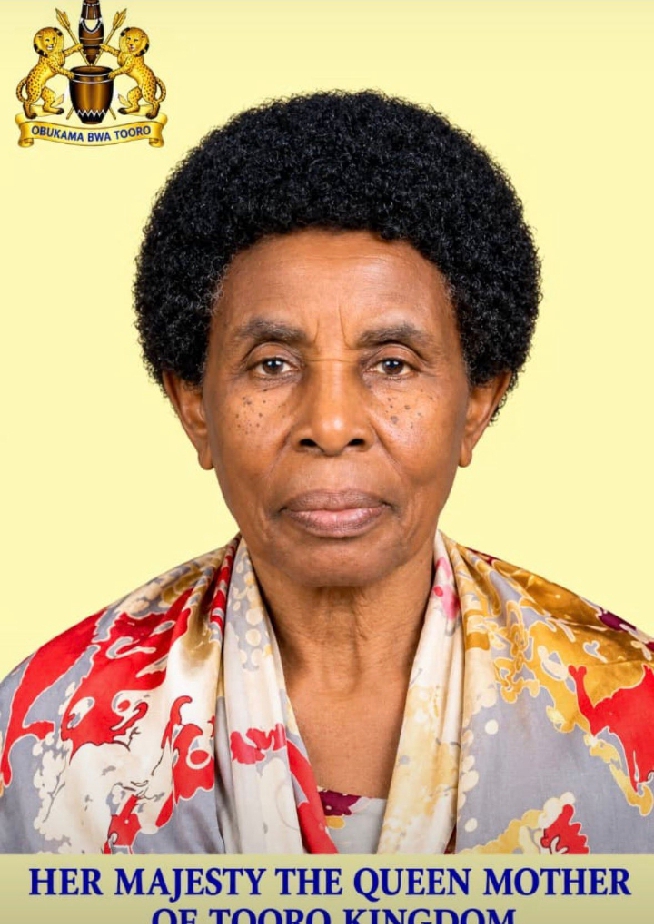
Her arrival was accompanied by members of her family, clan members, friends and people from her home community. She travelled through Fort Portal before reaching the palace, where she was received with ululations and celebrations.
The head of the Babiito royal clan, Prince Charles Kamurasi, formally welcomed her and members of her Abagombe clan.
Her arrival carries its own cultural significance.
The entry of a queen mother into the royal residence is part of the rituals associated with the beginning of a new reign. She is expected to stay at the palace as her son assumes his position.
For residents watching the convoy move through Fort Portal, it was another visible sign that the old royal chapter had ended and another was beginning.
From television studios to the throne
Nyabongo’s journey to the throne is unusual by modern standards.
The 56-year-old incoming king spent much of his adult life away from the ceremonial world of royalty.
He built a career in journalism and broadcasting, working for more than two decades, including at Uganda’s state broadcaster.
For years, Ugandans knew him primarily as a journalist, a man behind the microphone and television desk rather than at the centre of a royal court.
Now his public role has changed completely.
He has been chosen by the Babiito ruling clan to become Tooro’s new Omukama, following the death of King Oyo.
His supporters have presented his background in public communication and national affairs as useful experience as he takes on a cultural leadership role.
Nyabongo has himself spoken of using the relationships built during his journalism career to secure opportunities for the people of Tooro.
A succession dispute shadows the celebrations
Yet the coronation cannot be separated from the controversy surrounding the succession.
King Oyo died without a publicly acknowledged heir, but members of his family said he had left behind a young son and a will identifying the child as his successor.
The claim became the centre of a bitter disagreement.
Queen Mother Best Kemigisa, Oyo’s mother, argued that her late son’s wishes should have been respected. The Babiito succession committee, however, selected Kijanangoma.
The committee said its decision followed Tooro’s customary succession procedures.
The reported heir has not been publicly presented to the kingdom, and the disagreement has remained a sensitive issue around the coronation.
The result is an unusual royal transition: a public celebration taking place alongside unresolved questions within the royal family.
Why Tooro still matters
Uganda’s kings do not exercise constitutional political power.
But their influence remains substantial.
Traditional kingdoms were abolished by the government of Milton Obote in 1967 and restored under President Yoweri Museveni in the 1990s. Their contemporary role is primarily cultural, with kings serving as symbols of history, identity and community rather than as elected political authorities.
Tooro is one of Uganda’s four officially recognised traditional kingdoms.
Its territory covers a large part of western Uganda, an area known for its fertile landscapes, tea plantations, crater lakes and proximity to the Rwenzori Mountains.
Fort Portal, the kingdom’s principal city, has therefore become the stage for a ceremony that reaches beyond the royal compound.
A king for a changing kingdom
Tuesday’s formal coronation includes a church service, presentation of royal regalia, cultural performances and the public ceremony at Karuziika Palace.
President Yoweri Museveni is expected to attend as chief guest, alongside traditional leaders, government officials, religious figures, diplomats and members of the public.
For many of those gathered, however, the ceremony is about more than personalities.
It is about continuity.
King Oyo became one of the world’s best-known child monarchs when he inherited the throne in 1995 at the age of three. He eventually assumed greater responsibility for the kingdom as an adult, becoming one of the most recognisable traditional leaders in Uganda.
His death created a sudden break in that long period of continuity.
Now the royal drums are turning upright again.
The night procession has reached Karuziika.
The symbolic battle has been fought.
The queen mother has entered the palace.
And as Tooro welcomes Edward Rukidi Nyabongo I, an institution that has survived political abolition, restoration and generations of change begins another reign.
For a kingdom rooted deeply in history, the message of the coronation is therefore both ancient and contemporary: the ruler changes, but the kingdom continues.