

KAMPALA, Uganda: Despite the various available water resources, Uganda still struggles to provide reliable clean water to its citizens.
This has mainly been attributed to increased financial constraints, water pollution, climate change effects, and population growth.
To address this dilemma, the Government, through the Ministry of Water and Environment (MoW&E), together with various development partners and Civil Society Organisations (CSOs) involved in water use and conservation, is working to develop a new Integrated Water Resources Management (IWRM) plan to ensure improved water access and sustainability of water resources.
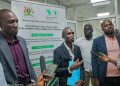
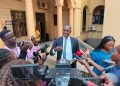
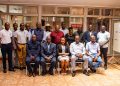
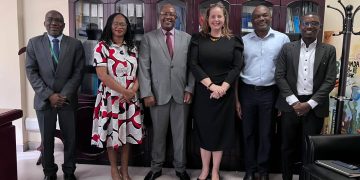
Speaking during a consultative meeting at the Ministry head offices in Luzira, Nakawa Division, Kampala, on March 12, 2026, Eng. Albert Orijabo, Assistant Commissioner at the Ministry of Water and Environment, said that due to the increasing threats, water resource management can no longer be handled by the government alone.
“It has to be undertaken by different stakeholders,” he added, noting that Uganda is already implementing a framework that brings together stakeholders involved in water use and conservation.
He stressed that this approach helps ensure proper management of water resources at both national and local levels, especially as the country faces challenges such as water pollution and population growth, which limit access to safe water.
He further noted that IWRM is crucial for promoting the coordinated development and management of water and related resources in order to maximize economic and social welfare in an equitable manner without compromising the sustainability of vital ecosystems.
He explained that the country is already implementing IWRM, a framework that brings together different stakeholders and partners to manage water resources at the most appropriate level.
“As you are aware, we need water for industry, minerals, and tourism. We need water for everyone’s consumption, including ecosystem services.
But these valuable resources are under significant threat from climate change, human activities, and encroachment on ecosystems. Therefore, management has to be undertaken by different stakeholders at all levels,” Orijabo emphasized.
He stressed that all Ugandans have a role to play in addressing challenges such as encroachment, pollution, and the demand for better services.
He cited climate change impacts as one of the biggest challenges facing the country.
“The floods occurring in the region and prolonged periods of drought show that climate change is real. Its drivers include both natural and human-made factors.
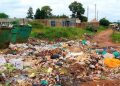
We also face excessive encroachment on ecosystems. People are building in wetlands, and some of the flooding is a result of such encroachment,” he added.
He also noted the challenge of enforcement, saying, “We can’t be everywhere,” and called on communities to work jointly with authorities to combat issues such as poor waste management, pollution, and encroachment.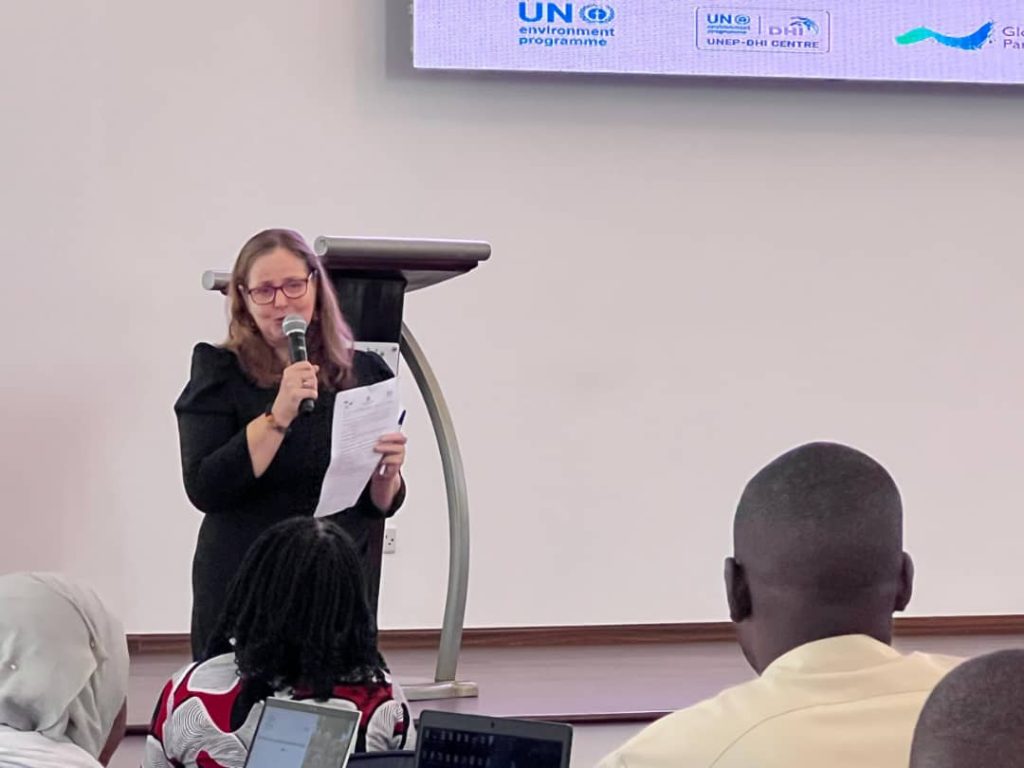 The Country Director of Welthungerhilfe (WHH), one of the key organisers of the meeting, said it is very important to bring everyone on board to address these challenges.
“We are delighted to have supported this important IWRM policy with funding from the German government to bring different stakeholders together,” she added.
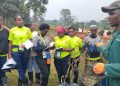
For the past six years, WHH has worked to revive and strengthen catchment communities around the Lokere and Lokok water catchment areas in the Karamoja and Teso sub-regions of Eastern Uganda.
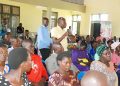
“For this national-level policy, it is part of our role to bring forward the voices and recommendations of people from these districts to ensure they are included in the national policy,” she noted.
Lorna Masika, Interim Regional Coordinator for the Global Water Partnership Eastern and Southern Africa, said the partnership aims to support Uganda in achieving the Sustainable Development Goals (SDGs) while strengthening climate change resilience.
“What is happening is that SDG 6.5.1 is being monitored and reported on. The challenges have been identified, and we have now developed a new action plan to bridge those gaps,” she said.
“Once it is costed, we will know how much funding is needed to address the gaps and achieve the SDG targets,” she added.