



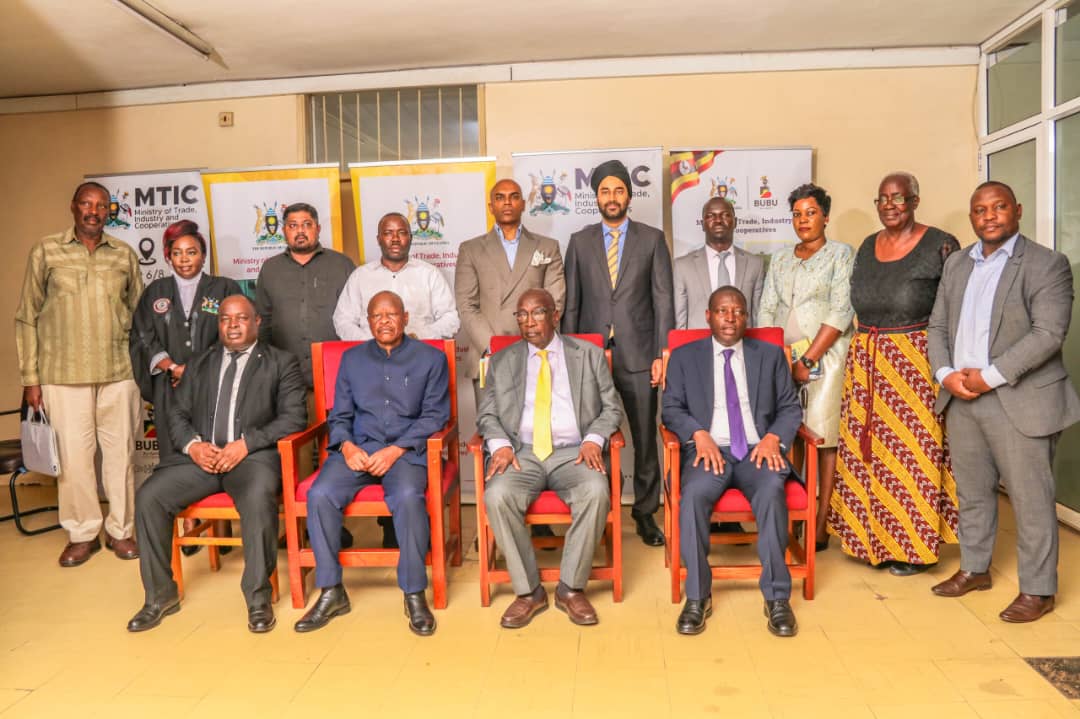
Kampala, Uganda — Uganda has officially inaugurated its first-ever Sugar Industry Stakeholders’ Council, marking a major milestone in the country’s efforts to streamline, regulate, and promote growth within the sugar sector.
Presiding over the inauguration ceremony, Hon. Francis Mwebesa, the Minister of Trade, Industry and Cooperatives, expressed gratitude to God for guiding him through the “enormous challenges” faced during the process of appointing the Council members.
“I have appointed the Council in accordance with Section 3(2) of the principal Act, as amended under Section 4 of The Sugar (Amendment) Act No. 6 of 2025,” Hon. Mwebesa said. “The Council carries significant responsibilities in the development of the sugar industry, including licensing, pricing, market access, innovation, and dispute resolution.”
 Council’s Key Mandate
According to the amended law, the Council will perform a broad range of 18 functions. Among the most critical are:
- Reviewing applications for licensing and expansion of sugar and jaggery mills.
- Preparing a National Sugar Industry Development Master Plan for government adoption.
- Establishing equitable pricing mechanisms for sugarcane and fair profit-sharing between farmers and millers.
- Representing Uganda’s sugar industry at regional and international fora.
- Promoting innovation and technology transfer in the sector.
- Mediating disputes within the industry to foster harmony and competitiveness.
Hon. Mwebesa emphasized that the Council must exercise its delegated powers “judiciously and diligently,” noting that members represent the interests of both sugarcane farmers and millers. He further clarified that only four out-grower representatives and three miller representatives could be appointed at this stage.
 The newly appointed Council will serve a two-year term, after which new members will be considered.
Cabinet has directed the Ministry of Trade, Industry, and Cooperatives to submit quarterly progress reports on the Council’s work to ensure continuous policy guidance. The Minister also instructed the Council to prioritize assessment of stalled projects affected by past court orders and to promote competitiveness while preventing monopolistic practices in the industry.
Sector Performance and Outlook
Speaking at the same event, Hon. David Bahati, the Minister of State for Trade, Industry and Cooperatives (Industry), commended the progress of Uganda’s sugar sector, which now produces 700,000 metric tons annually — 450,000 tons for local consumption and 250,000 tons for export.

“The sugar industry now directly employs over 20,000 Ugandans and indirectly supports more than 150,000,” Hon. Bahati noted. “It contributes approximately UGX 500 billion in tax revenue and accounts for 5% of Uganda’s GDP — a significant milestone in our industrial growth journey.”
Hon. Bahati highlighted industrial sugar production as the next key frontier for value addition, aiming to reduce Uganda’s dependence on imported industrial-grade sugar used by local manufacturers.
He also observed that the absence of the Council in the past had constrained the ministry’s ability to act decisively on various sector challenges. With the establishment of the Council and the amendment of the Sugar Act, the government has now fulfilled a major policy commitment to the sector.
“These achievements align perfectly with the government’s strategy to protect economic gains and advance our tenfold industrial growth program,” Hon. Bahati said.
A New Era for Uganda’s Sugar Industry
The inauguration of the Uganda Sugar Industry Stakeholders’ Council signals a new era of collaboration between farmers, millers, and government. With a formal structure now in place to guide planning, licensing, and equitable revenue sharing, stakeholders are optimistic that Uganda’s sugar sector will continue to expand — not only in production but also in efficiency, innovation, and export competitiveness.