


How to contribute
Donations can be made to:
Account Name: Uganda Law Society
Bank: Standard Chartered Bank Uganda Limited
Account No.: 0102010622409
SWIFT: SCBLUGKAXXX
Branch: Kampala Main Branch
Reference: SDF-[Your Name/Organisation]
Mobile Money payments are accepted via SchoolPay using MTN _165_80# and Airtel _185_6*2# with SchoolPay Account Number 1011780026.
The fund will be subject to independent audit and regular public reporting, ULS said.
KAMPALA, Uganda – The Uganda Law Society (ULS) has today launched the Sovereignty Defence Fund, a UGX 2.301 billion [about $630,000] legal and advocacy initiative aimed at challenging the recently enacted Protection of Sovereignty Act, 2026.
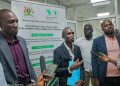
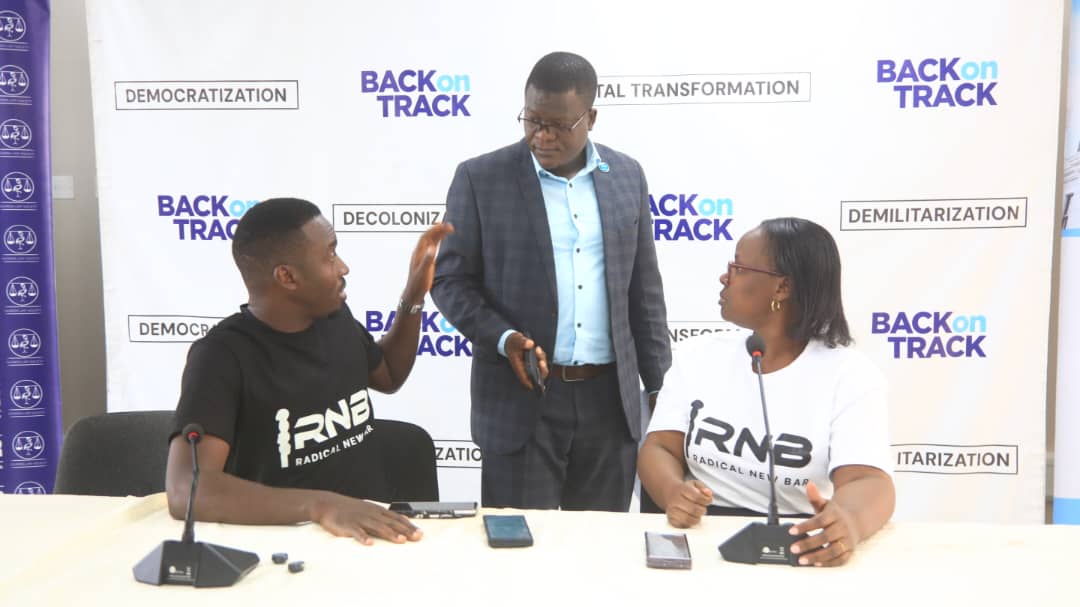
The fund was announced at ULS House in Kampala by ULS Vice President Anthony Asiimwe alongside senior officials of the Bar. According to the Society, the money will support public awareness campaigns, constitutional litigation, advocacy efforts and legal aid for individuals affected by the law.

Parliament passed the legislation on 5 May 2026 before it later received presidential assent. ULS argues that although the law is presented as a measure to protect national sovereignty, it instead threatens constitutional freedoms and democratic participation.
“Sovereignty belongs to the people. So must its defence,” the Society said in a statement issued on Wednesday. “We cannot watch this happen in silence.”
ULS warned that the law introduces severe criminal penalties tied to broadly defined offences, creating what it described as a chilling effect on civil liberties, media work and international engagement.
“By the standard our own Constitution sets in Article 43(2)(c) — that any limitation on a fundamental right must be acceptable and demonstrably justifiable in a free and democratic society — these penalties are plainly disproportionate,” the Society stated. “They are designed not to deter narrow wrongs, but to chill broad freedoms.”
The Bar said ordinary Ugandans could face scrutiny for activities previously considered lawful, including journalism, receiving donor support, or sending money to relatives from abroad.
“A son in London sending school fees to his sister in Mbale could be pulled into a foreign agent investigation,” the statement said. “A pastor in Arua, a teacher in Gulu, a youth-group convener in Mukono — anyone in entirely lawful international association — could find their conduct reframed as a crime against the State.”
ULS also raised concerns about the potential economic impact of the law, warning that diaspora remittances, donor-funded programmes and foreign investment could suffer due to legal uncertainty.
“We have seen laws of this design in other parts of the world,” the Society said. “They begin narrow. They never stay narrow.”
The UGX 2.301 billion fund will finance nationwide civic education campaigns, coalition-building with civil society and diaspora groups, high-level advocacy targeting both local and international institutions, as well as strategic constitutional litigation and legal support for journalists, civil society leaders and affected citizens.
ULS Board Secretary Sali Babu said the initiative was intended to defend the constitutional rights of Ugandans rather than benefit the Society financially.
“This money is not going to the coffers of ULS but to be used to defend the sovereignty of the people of Uganda,” Babu said. “Sovereignty belongs to the people, and so does its defence.”
He called on individuals, organizations and Ugandans abroad to contribute toward the campaign.
ULS added that the fund would be independently audited and subject to regular public accountability reports.
“The window is closing fast,” the Society said. “If you believe in fair justice, a free press, and a predictable environment for business, civil society and family life, please stand with the Uganda Law Society today.”
The statement was issued at ULS House in Kampala on 14 May 2026 and signed by ULS President Isaac K. Ssemakadde.