


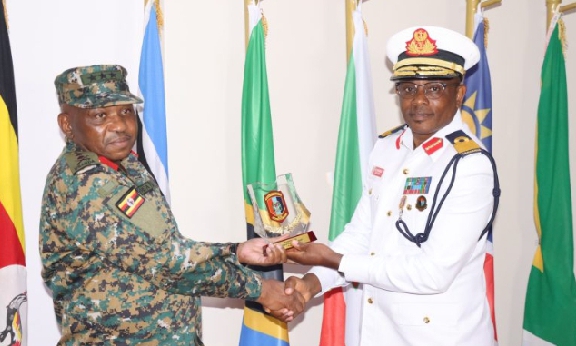
Uganda has hosted a high-level delegation from Tanzania’s National Defence College (NDC), marking a significant step in strengthening regional military cooperation and advancing strategic dialogue on national security across East Africa.
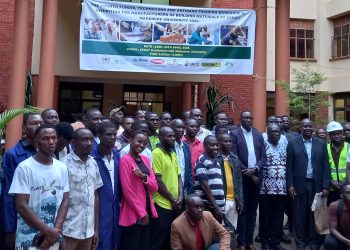
The 19-member delegation, drawn from Tanzania’s NDC Course 14 for the 2025/26 academic year, arrived in Kampala for a field training exercise aimed at deepening their understanding of security dynamics and strategic policymaking.
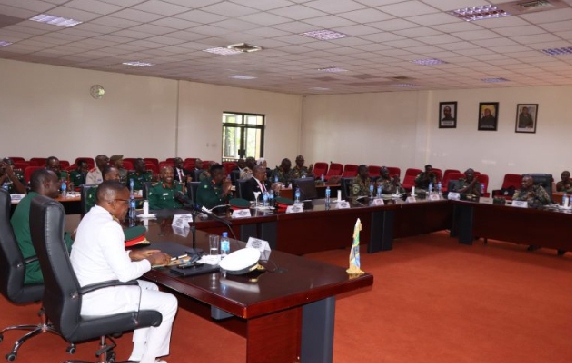
Hosted at the Chieftaincy of Defence Intelligence and Security headquarters in Mbuya, the visit brings together officers not only from Tanzania but also from across the continent, including Zambia, South Africa, Namibia, Sierra Leone, and Zanzibar.
The NDC programme, which spans 47 weeks and includes 72 participants, is designed to shape senior military and civilian leaders capable of addressing complex security challenges.
Its curriculum emphasizes strategic thinking, equipping participants with the tools needed to influence high-level policy decisions in an increasingly interconnected security environment.
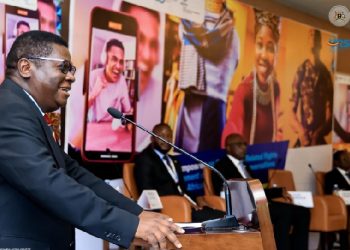
Welcoming the delegation on behalf of Uganda’s Chief of Defence Forces, General Muhoozi Kainerugaba, Chief of Joint Staff Lieutenant General Jack Agonza Bakasumba highlighted the deep historical ties between Uganda and Tanzania.
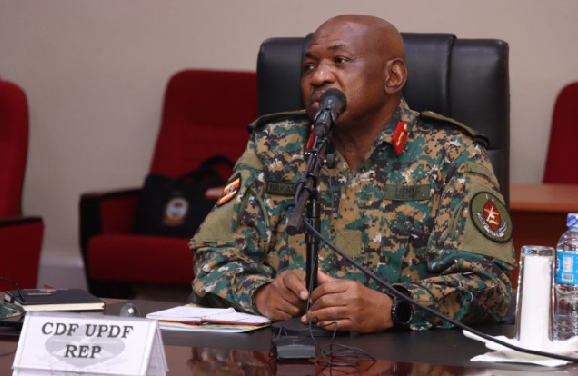
He traced the evolution of Uganda’s military from its early post-independence days to the modern Uganda Peoples’ Defence Forces, underscoring the army’s growing capacity and regional role.
Bakasumba pointed to Uganda’s active involvement in peacekeeping missions beyond its borders, including operations in Somalia, the Democratic Republic of Congo, and South Sudan.
He stressed that such engagements reflect a broader philosophy of “exporting peace,” often undertaken at the request of regional leaders and supported by political will at the highest level.
He also emphasized the importance of pan-African cooperation, noting that both Uganda and Tanzania share a legacy of mutual support, including Tanzania’s role in Uganda’s liberation from Idi Amin’s regime.
Today, that cooperation continues through joint security efforts and shared training initiatives, with Uganda offering military training to several African nations at no cost.
Addressing the gathering, Commodore Baganchwera Transeas Rutambuka, head of the visiting delegation, praised Uganda’s hospitality and reaffirmed the importance of collaborative approaches to security.
He noted that modern threats are increasingly complex, spanning economic, environmental, technological, and social dimensions, and require integrated responses from multiple sectors.
The delegation’s visit is guided by the theme “Harnessing Natural Wealth for Sustainable Growth: Balancing Oil, Agriculture and Ecotourism,” reflecting a broader recognition that economic stability and resource management are closely tied to national and regional security.
Presentations during the tour highlighted Uganda’s relative stability and its commitment to regional integration within the East African Community. However, officials also acknowledged ongoing challenges, including terrorism linked to the Allied Democratic Forces in eastern Congo, cybercrime, cross-border insecurity, and the pressures of hosting a large refugee population.
Speakers underscored that no single country can effectively address such challenges in isolation, reinforcing the need for deeper regional collaboration. Both Ugandan and Tanzanian representatives expressed commitment to strengthening frameworks that promote integration, stability, and shared prosperity.
The visit concluded with an exchange of mementos and renewed pledges to expand cooperation in areas such as intelligence sharing, climate change response, disaster management, and aviation security, signaling a continued partnership grounded in shared history and common strategic interests.