


Uganda’s Ministry of Agriculture, Animal Industry and Fisheries (MAAIF) has officially declared June 18 to September 18, 2025, as the harvest window for Season A of the country’s vanilla crop.
Speaking at the Uganda Media Centre in Kampala, State Minister for Agriculture, Maj. (Rtd) Fred Bwino Kyakulaga, said the country anticipates harvesting approximately 380 metric tonnes of vanilla this season.
This projection accounts for the depletion of carry-over stocks from 2023 and 2024, following a record 604 metric tonnes exported last year.

“This performance reflects improvements in farming practices, expanded acreage, and better coordination across the value chain,” Kyakulaga noted.
Despite the progress, the minister acknowledged ongoing challenges such as premature harvesting, poor post-harvest handling, theft, illegal trade, and slow adoption of traceability tools.
To address these issues, the ministry, working with the Association of Vanilla Exporters of Uganda (VANEX), Catholic Relief Services (CRS), district local governments, Makerere University, and other stakeholders, has rolled out several interventions.
These include: enforcing strict harvest timelines, licensing and registering all vanilla actors, expanding training for farmers and extension officers, implementing a digital traceability system, and and Enhancing maturity assessment using five scientific methods: physical observation, pollination data, vanillin and moisture content analysis, thermal time, and stakeholder validation
He said these efforts have significantly enhanced Uganda’s reputation for high-quality vanilla, now averaging over 4% vanillin content, among the highest globally.
Market Position & Profitability
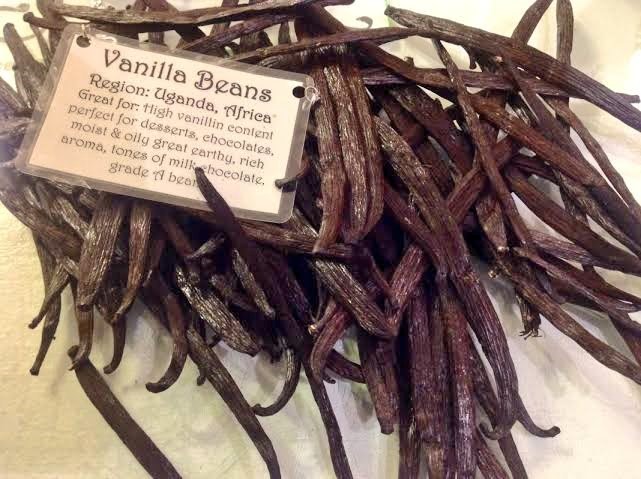
Kyakulaga emphasized the importance of adhering to international quality standards: Moisture content: Grade A (30%), Grade B (20%); Bean length: Grade A beans should be ≥15 cm and flexible; Preferred varieties: Planifolia and Tahitensis; and Color: Deep black beans are favored in premium markets.
He noted that at a market price of shs8,000 per kilogram, vanilla remains profitable, and a farmer with one acre yielding 1,800 kg can earn shs25 million annually, after deducting production costs.
The minister expressed optimism that Uganda is well-positioned to benefit from a global vanilla price recovery in the 2025–2026 cycle, particularly as international buyers seek alternatives to Madagascar’s unstable supply.
Kyakulaga emphasized that only fully mature beans should be harvested and warned of penalties for premature harvesting.
He said the ministry staff, along with district officials and agricultural police, are tasked with enforcing the harvest window and preventing illegal trade.
“Strict enforcement is key to protecting Uganda’s vanilla sector,” he said, urging farmers to sell only to licensed buyers and traders to obtain proper registration.
Driving economic transformation
Vanilla is now one of Uganda’s top high-value exports.
In 2024, the country exported 604 metric tonnes worth $16.6 million, up from 266 metric tonnes in 2023, solidifying Uganda’s position as the world’s second-largest vanilla producer for the second consecutive year (Bank of Uganda, 2024).
“Vanilla offers a golden opportunity for economic transformation,” Kyakulaga said. “With continued collaboration, sound policy, and farmer commitment, Uganda can become a top global supplier of premium, traceable vanilla.”
He highlighted the government’s broader agricultural vision: transitioning from subsistence farming to commercial agriculture, with vanilla as a key driver.
He further noted that the ministry’s key initiatives to strengthen the vanilla sector include: establishing a dedicated Vanilla Desk for policy coordination; supporting the creation of 15 district ordinances regulating quality and post-harvest practices; launching a multi-stakeholder platform that includes VANEX, CRS, academia, and the private sector; promoting digital traceability systems; and conducting national maturity surveys and farmer training programs.
He stressed that through the CRS-led Vines Project and VANEX’s leadership in branding and marketing, Uganda has enhanced traceability and governance across the value chain.
Currently, vanilla is cultivated in 38 districts including Mukono, Kayunga, Buikwe, Jinja, Mayuge, Sironko, Wakiso, Masaka, Mpigi, Mubende, and Kabarole.
He said new districts such as Kamwenge, Kitagwenda, Rukungiri, and Kanungu are also showing strong potential for expansion.
The major licensed buyers include: Esco Uganda Ltd, UVAN Ltd, Tambisa Uganda Ltd, Tuoton Uganda Ltd, Natural Extracts Industries Ltd (NEI), Modern Agro Spices Ltd, Coetzee Organic, Enimiro Products Ltd, Nillavan Ltd, Kastus Investments Ltd, Embe Beverages Ltd, and Kilembe Vanilla Exporters.
The minister urged farmers to avoid selling to unlicensed buyers and called on all actors to register with their district authorities.
Market trend
Uganda’s vanilla is increasingly sought after in major markets: U.S.: 42% of Uganda’s exports, France: 18.8%; and Germany: 11.8%.
Over the past five years, Uganda’s market share has grown from 3% to 12% in the U.S., and from 1% to 10% in the EU.
However, Kyakulaga warned that vanilla remains a volatile crop.
He said global prices have dropped to UGX 8,000–10,000/kg due to supply gluts and climate shocks in Madagascar, prompting some farmers to consider shifting to crops like cocoa and coffee.
“Despite price swings, the sector remains resilient,” he said. “Record exports in 2024 demonstrate renewed confidence driven by professionalization, regulation, and strategic partnerships.”