


Uganda’s aviation industry is closing 2025 on a high note, marked by infrastructure expansion, new international routes, stronger safety systems and growing global influence, according to the Uganda Civil Aviation Authority (UCAA).
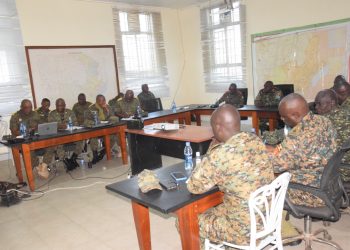
Speaking at the stakeholders’ engagement breakfast on the state of the sector, UCAA Director General Fred K. Bamwesigye said the forum was intended to review milestones achieved over the year, assess performance against earlier plans, outline priorities for 2026 and gather stakeholder feedback to support continuous improvement.
He noted that Uganda’s aviation mandate remains anchored in promoting safe, secure, regular and efficient air transport while advising government on policy, international conventions and legal instruments.
This includes regulating air transport, managing and developing airports, and providing air navigation and traffic services nationwide.
Traffic performance at Entebbe International Airport between January and November showed steady growth, supported by an expanding airline footprint.
Uganda is now served by 19 international scheduled carriers, alongside 27 licensed operators.
During the year, UCAA granted a new operating licence to Arasus Air and renewed licences for three operators.
The market also welcomed several new routes, including Fanjet Express flights between Nairobi and Entebbe, Flynas services linking Riyadh to Entebbe, and Uganda Airlines’ landmark launch of direct flights to London Gatwick in May. Malawi Airlines and Safarilink both entered the Entebbe market in December, strengthening regional connectivity.
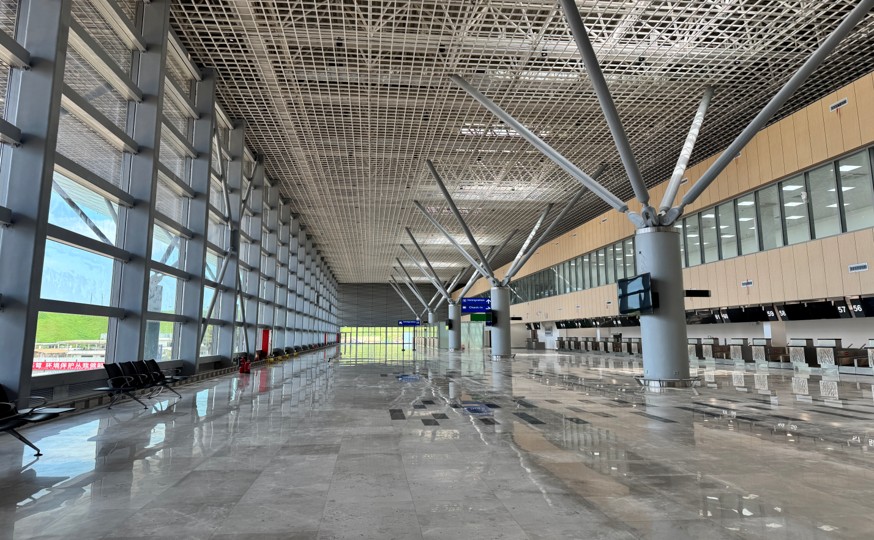
Capacity at Entebbe is set for a major boost following completion of a new 20,000-square-metre passenger terminal building.
The facility adds three aerobridges, bringing the total to five, along with 24 new check-in counters and 14 self-check-in units.
Once opened in phases beginning January 2026, the terminal will raise Entebbe’s annual passenger handling capacity from two million to at least 3.5 million.
Behind the scenes, UCAA and government have invested heavily in modernising navigation and surveillance systems. New and upgraded navigation aids have been installed at Entebbe, Soroti, Kasese, Hoima and Gulu, with further upgrades planned for Kisoro and new installations underway in Arua.
Air-to-ground communication has been strengthened through a VHF extended-range radio network covering key locations, significantly improving coverage within the Entebbe Flight Information Region.
Additional phases are being implemented to eliminate remaining blind spots.
Airspace safety is also being enhanced through upgrades to the Entebbe radar system in the 2025/26 financial year, followed by phased acquisition of a state-of-the-art surveillance system between 2026/27 and 2029/30. This will include a backup based on Automatic Dependent Surveillance-Broadcast technology to guarantee service continuity.
Upcountry aerodromes have not been left behind. Improvements during the year included installation of portable airfield lighting at Soroti for night training, enhanced security screening equipment at Arua, new taxiway links and fencing at Soroti, major re-gravelling works at Pakuba and Moroto, and expanded car-parking facilities at Arua.
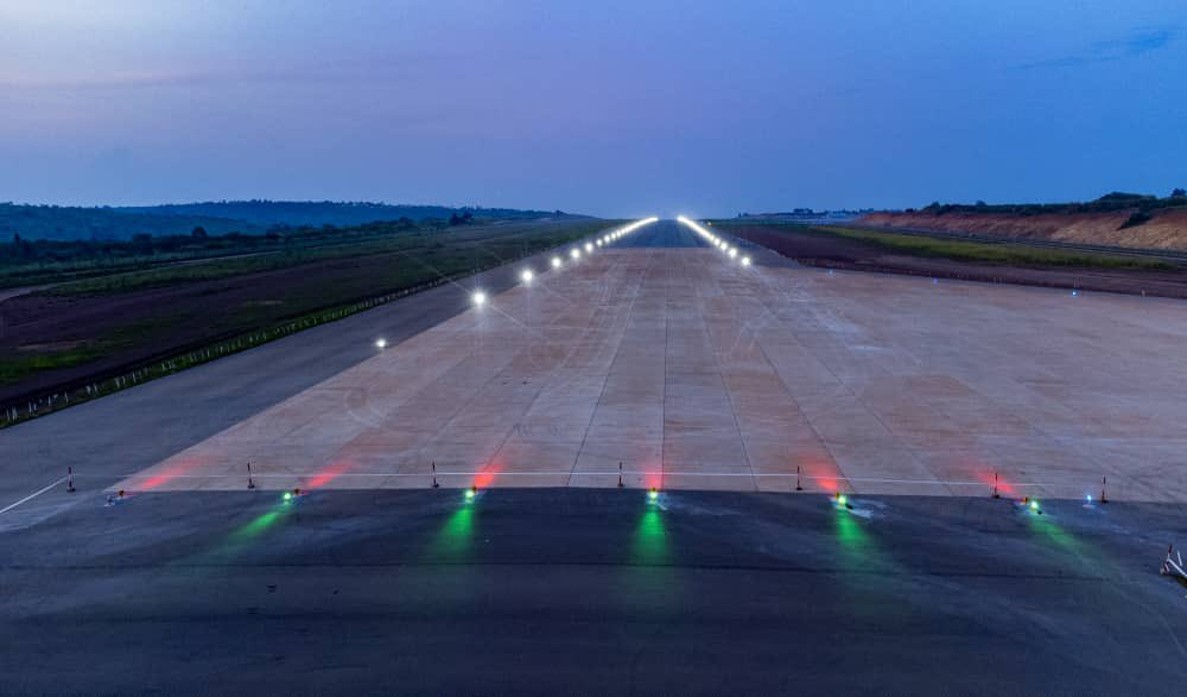
At Jinja’s Kimaka Aerodrome, works on the runway, taxiway and apron are more than 70 percent complete, with commissioning expected by April 2026.
Uganda also strengthened its regional and international aviation standing by hosting key meetings and exercises. These included the 48th East African Consultative Meeting on Facilitation of Air Transport, which focused on ICAO standards, efficiency in passenger and cargo processing, and regional connectivity.
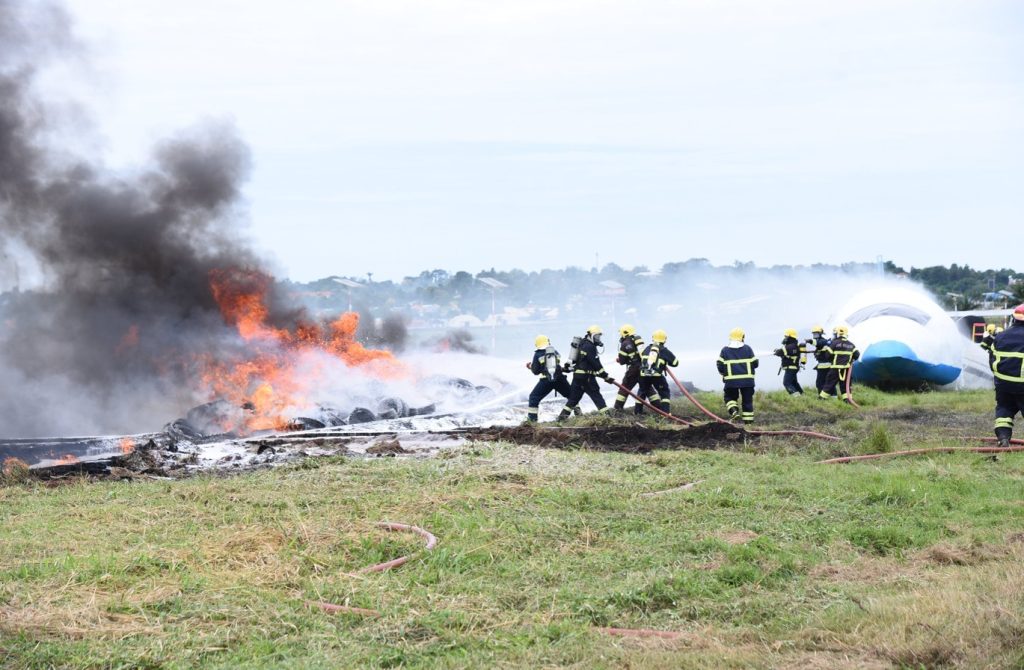
Entebbe International Airport successfully conducted a full-scale emergency exercise to test inter-agency readiness, while Kampala hosted the IFATSEA regional meeting, where UCAA’s Eng. Richard Sembatya presented on the evolving role of aviation safety engineers in the era of artificial intelligence.
The year was also marked by symbolic milestones. Emirates celebrated 25 years of uninterrupted service to Uganda, while Uganda was elected to the ICAO Council for the 2025–2028 term, securing 155 out of 185 votes cast.
The election places Uganda at the heart of global aviation decision-making and reflects growing confidence in the country’s aviation governance.
Sustainability emerged as a defining theme for the future. A feasibility study on Sustainable Aviation Fuel confirmed Uganda’s strong potential to produce SAF using its biomass resources, with technical potential estimated at hundreds of millions of litres annually.
Uganda’s early voluntary participation in ICAO’s CORSIA scheme and plans to develop a national SAF business case underscore its ambition to become a regional leader in green aviation and decarbonisation.
Looking ahead, the sector is preparing for rapid growth and major events.
Plans are advancing to introduce an automated system to manage the rising number of drone operations, while large-scale airport developments are underway or planned in Hoima, Arua, Kasese and Gulu.
These projects are being driven by tourism growth, regional trade and the need to support the Africa Cup of Nations in 2027.
Entebbe’s 20-year master plan will be launched in 2026, alongside plans for an international air show and major aviation conferences to be hosted in Uganda.
Despite the momentum, challenges remain. Funding constraints continue to slow improvements at upcountry aerodromes, land shortages limit expansion at Entebbe and other airports, and government debt to the aviation sector has risen. Bamwesigye emphasized that aviation must be mainstreamed as a strategic national priority, given its deep linkages to tourism, trade, investment and wider economic growth.
As Uganda’s skies grow busier and its ambitions soar, the industry’s trajectory suggests a sector positioning itself not only as a regional hub, but as an influential voice in shaping the future of African and global aviation.