



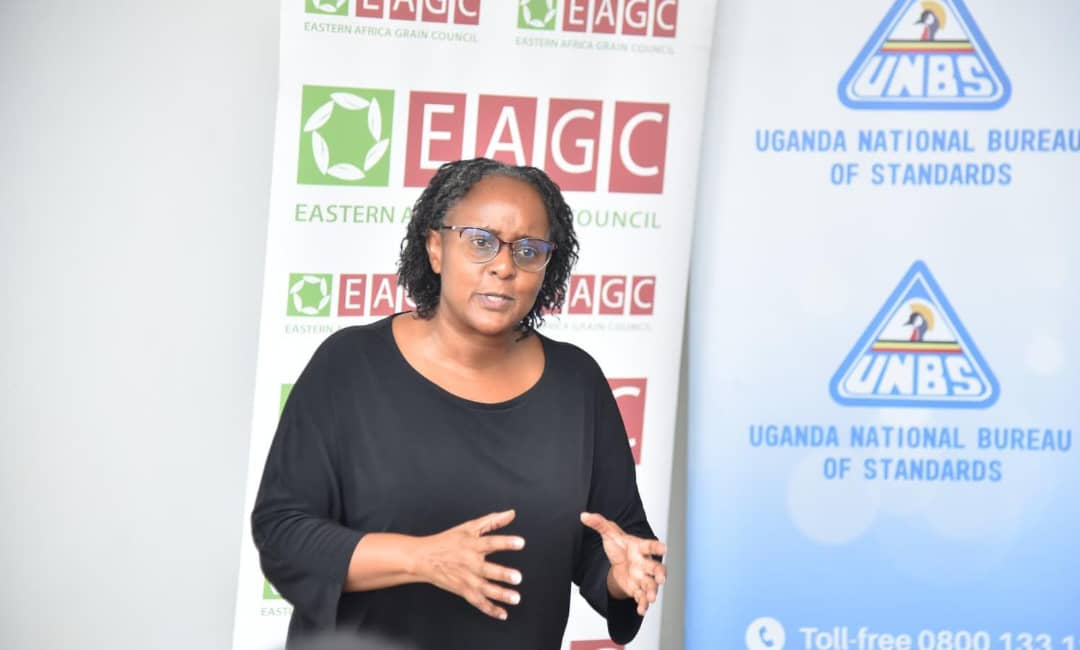
Kampala, Uganda – The Uganda National Bureau of Standards (UNBS), in collaboration with the Eastern Africa Grain Council (EAGC), has launched a specialized training program for Micro, Small, and Medium-sized Enterprises (MSMEs) focused on grain handling, testing, and grading. The initiative aims to improve grain quality management and food safety across the region.
The training aligns with UNBS’s new value proposition of growing quality MSMEs through mentorship and capacity building. By equipping local enterprises with essential knowledge and skills, the program seeks to ensure consumer protection, promote fair trade, and boost the competitiveness of Ugandan grain products in regional and international markets.
Speaking at the training held at the UNBS headquarters in Bweyogerere, Ms. Patricia Bageine Ejalu, Deputy Executive Director for Standards at UNBS, emphasized the importance of quality in Uganda’s grain sector.
“Grain and grain products are among the most widely consumed food items in Uganda. Every player—from farmers and grain aggregators to flour processors—has a duty to uphold safety and quality standards. When producing food, you hold people’s lives in your hands,” Ejalu said. “Soon, no grain product will be allowed in or out of the country without a quality mark (Q-mark) and a Sanitary and Phytosanitary (SPS) permit.”
Paul Ochuna, EAGC Country Manager for Uganda, described the training as timely and strategic.

“With growing demand from regional markets, meeting quality and safety standards is no longer optional—it’s critical. By equipping MSMEs and quality officers with hands-on skills, we’re reducing post-harvest losses, enhancing Uganda’s market competitiveness, and unlocking trade opportunities worth hundreds of millions of dollars,” Ochuna said.
According to the EAGC, over 40% of grain in the region is lost due to poor handling. In Uganda alone, this accounts for annual losses exceeding USD 45 million—undermining food security and limiting access to key markets such as Kenya, South Sudan, and Rwanda.
The joint initiative underscores the strong commitment between the public and private sectors to improve the quality and safety of grain and grain products throughout the value chain.