


KAMPALA, UGANDA — The Uganda Women Entrepreneurs Association Limited (UWEAL) is seeking to move women entrepreneurs beyond business development into investment and asset ownership once construction of the logistics hub is complete.
The Namanve Logistics Hub, is being developed by UWEAL an aim of creating hub where women can come together aggregate their produce like grains using the facilities in the hub like warehouses so as to get a bigger market.
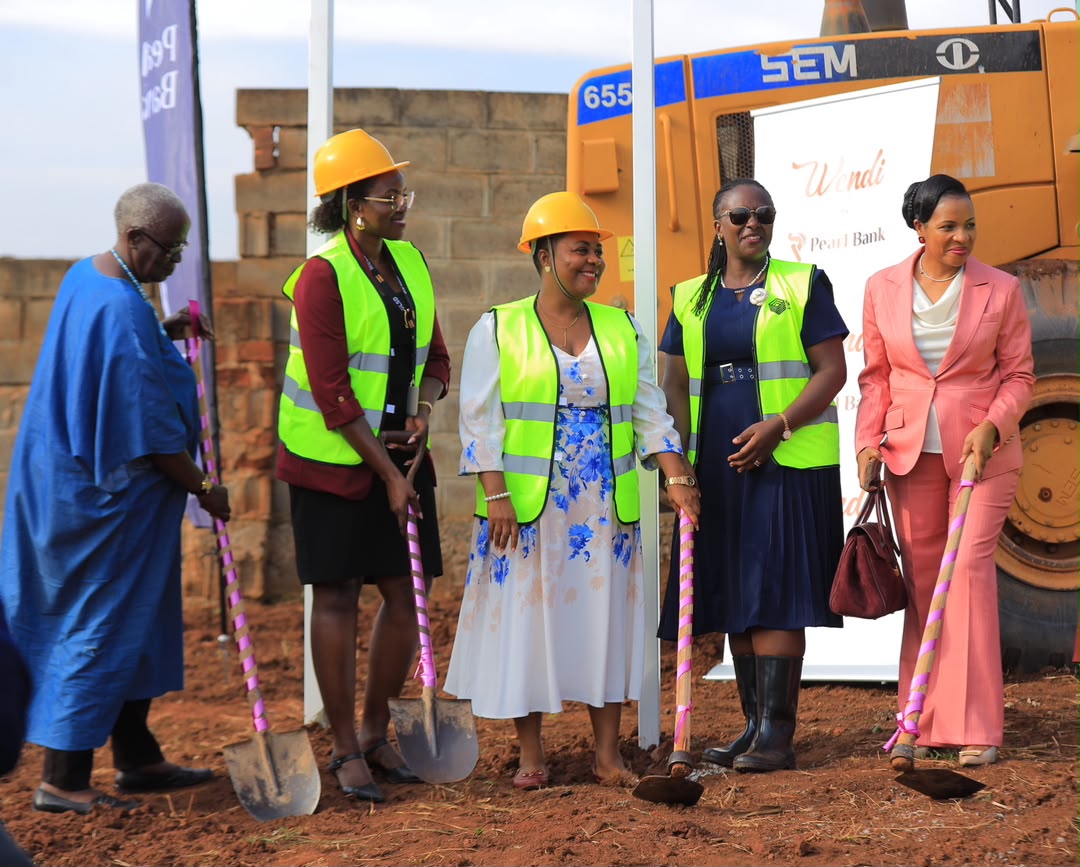
Speaking at the project’s groundbreaking ceremony on Tuesday, Minister of State for Gender, Labor and Social Development Mary Kuteesa said the initiative represents a new chapter in Uganda’s efforts to economically empower women.
“For a long time, much of our work in women’s economic empowerment has concentrated on training women, improving their businesses and connecting them to opportunities. All of that remains important. But we must now ask: what comes next?” Kuteesa said.
Kuteesa commended UWEAL for establishing its investment company, describing it as an evolution from an Organisation largely focused on capacity building, mobilization and advocacy to one that can also promote investment and women’s wealth creation.
She stressed that the Namanve project should be viewed as a commercial investment rather than philanthropy, allowing women to pool capital, invest in viable projects and earn returns while creating opportunities for other women.
The minister said the logistics hub demonstrates that profitability and social impact can be pursued together through investments that create jobs, strengthen women-owned enterprises and expand women’s participation in Uganda’s economy.
She urged successful women entrepreneurs, professionals, executives, women in the diaspora and others with savings and capital to consider investing in opportunities developed through UWEAL Investment Company.
Push to Create Women Investors
Kuteesa said government efforts to empower women goes beyond financial inclusion and create pathways for women to accumulate capital, own shares and productive assets, and participate in investment opportunities.
“Today, we are not simply breaking ground for a building. We are launching an investment opportunity, recognizing women investors and beginning the creation of an asset intended to generate economic value,” she said.
She urged UWEAL to use the project as a foundation for building a wider portfolio of investments that combine commercial returns with women’s economic empowerment.
Hub to Connect Women’s Businesses to Markets
UWEAL Board Chairperson Elizabeth Kasenene said the logistics hub is intended to address a major challenge facing women entrepreneurs: moving from production to efficient storage, processing, aggregation and access to markets.
She said women across Uganda produce agricultural and manufactured goods but often lack the infrastructure needed to expand their businesses.
“A woman may produce grain in Gulu, coffee in Bugisu, dairy products in the cattle corridor, crafts in another district, or manufactured products in Kampala — but she still requires somewhere to aggregate, store, package and connect those products to markets,” Kasenene said.
She said the Namanve facility is intended to be more than a warehouse, with plans for logistics and warehousing, aggregation, market linkages and, where appropriate, common-use facilities where women can access shared processing, packaging and production infrastructure.
Kasenene said such facilities could help women-owned micro and cottage enterprises bridge the gap towards industrialization without immediately investing in expensive machinery and factories.
“A woman should not fail to grow simply because she cannot immediately afford an entire factory. We can provide the bridge,” she said.
UWEAL Plans Enterprise Hubs Across Uganda
Kasenene said UWEAL’s long-term ambition is to establish enterprise and logistics hubs in districts where the association has chapters, with each facility tailored to the economic activities of its region.
She said hubs in grain-producing areas could focus on aggregation and storage, while others could provide processing, cold storage, packaging, logistics and market-linkage services.
However, she emphasized that the facilities must be commercially sustainable so they can continue operating and creating value beyond the lifespan of donor-funded projects.
“Our ambition is therefore not to stop here. We envision UWEAL enterprise and logistics hubs across the districts where our Chapters operate,” she said.
Kasenene also called on the government to support the development of common-use facilities, connect UWEAL hubs to government programs and create market opportunities for women producers.
She urged government institutions to consider sourcing agricultural and other products from organized women producers where they can demonstrate adequate volumes, quality, traceability and consistency.