


KAMPALA, Uganda — Uganda Women’s Network (UWONET) has released new research findings highlighting the contribution of key government economic empowerment programs in reducing the burden of unpaid care and domestic work among women in Uganda.
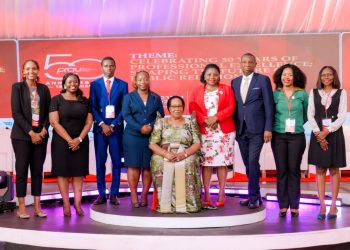
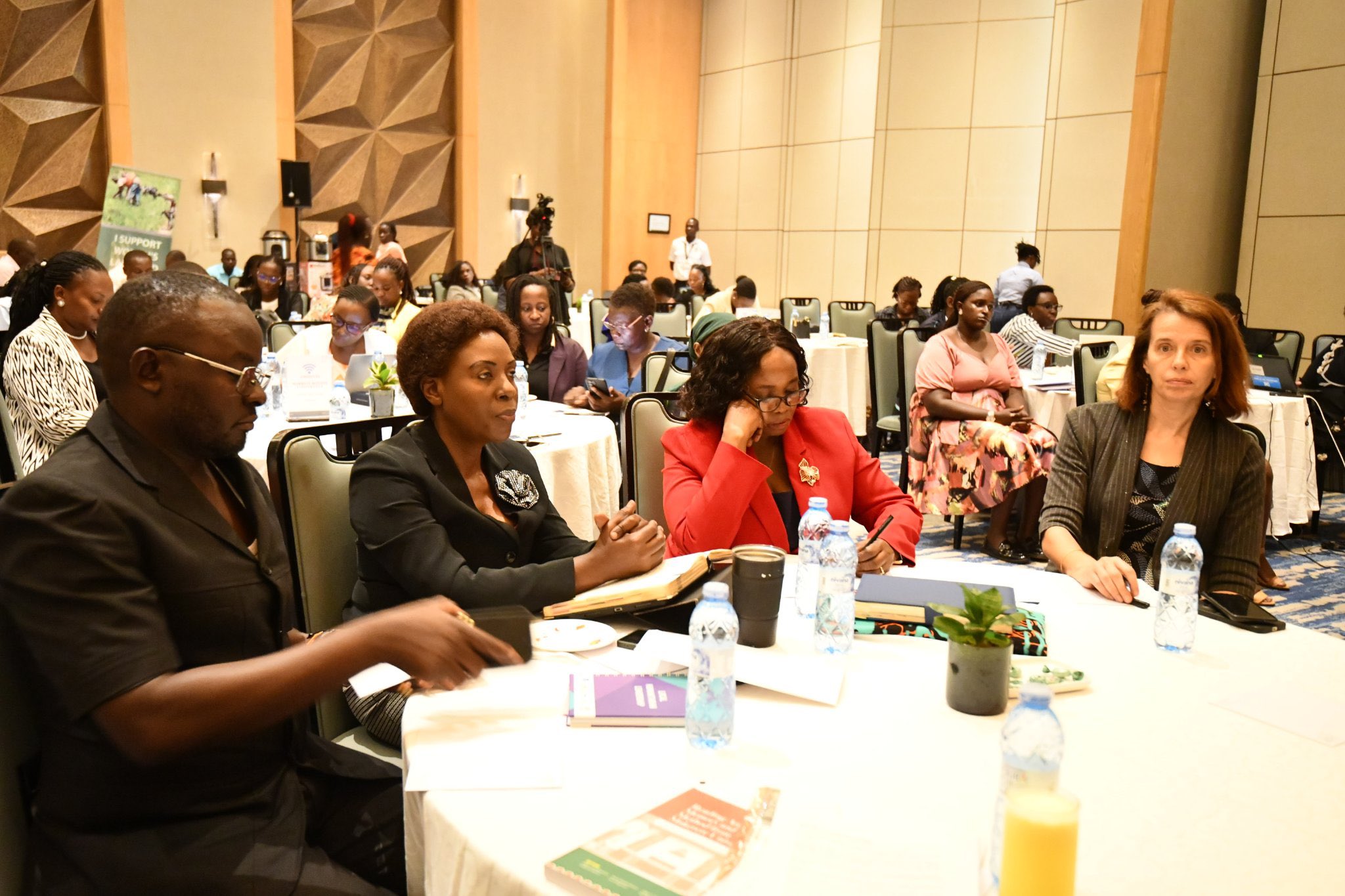
The findings were unveiled during a national research symposium on unpaid care and support work held in Kampala, where government officials, civil society organizations, researchers, development partners, and women’s rights advocates gathered to discuss the invisible labor carried by women and girls and its impact on national development.
Speaking during the symposium, Suzan Achien, Coordinator for Women’s Rights and Access to Justice at Uganda Women’s Network, said the study assessed three major government initiatives — the Parish Development Model (PDM), the Generating Growth Opportunities and Productivity for Women Enterprises (GROW) Project, and the Uganda Women Entrepreneurship Program (UWEP).
According to Achien, the research sought to examine how these programs are helping women balance economic participation with unpaid domestic responsibilities such as childcare, cooking, fetching water, collecting firewood, and caring for households.
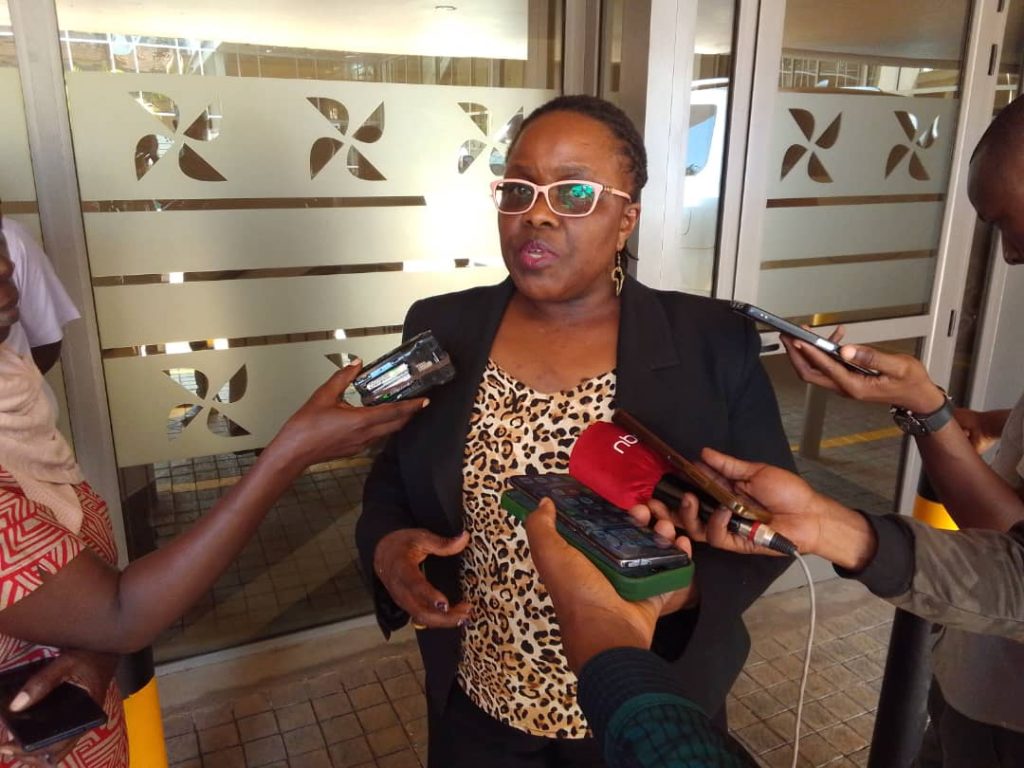
“Economic empowerment for women is intended to place them in spaces where they can participate economically by enhancing their business knowledge, entrepreneurship skills, and financial inclusion,” Achien said.
She noted that although women are increasingly encouraged to participate in economic activities and government programs, domestic responsibilities continue to consume much of their time, limiting their participation in productive work.
“Sometimes women are invited to participate in barazas at sub-county levels, but because they have to cook, clean, or walk long distances to fetch water, they may fail to attend sensitization meetings,” she explained.
PDM Recognized for Supporting Women’s Economic Participation
The study found the Parish Development Model to be highly responsive to women’s economic needs due to the 30 percent allocation specifically reserved for women beneficiaries.
Achien said the program has enabled more women to access financial resources for economic empowerment, thereby improving their participation in income-generating activities.
“The Parish Development Model was found to be very successful because of the quota provided to women so that they can have resources for economic empowerment,” she said.
The report also noted that government investments in social services such as access to safe water have significantly reduced the burden of unpaid care work, especially in rural communities where women and girls traditionally spend hours fetching water.
“When water is closer to households, domestic work becomes easier because women do not have to spend long hours walking long distances,” Achien added.
GROW Project Praised for Addressing Harmful Social Norms
The GROW Project was commended for its deliberate efforts to address harmful social norms and gender stereotypes that limit women’s economic empowerment.
According to the findings, the project includes components aimed at changing community attitudes, beliefs, and practices regarding women’s participation in economic activities.
Achien said one of the project’s major interventions is the promotion of childcare support infrastructure such as daycare centers in markets and business spaces, enabling women entrepreneurs to work without worrying about the safety of their children.
“The GROW Project is promoting care-supporting infrastructure and services, especially childcare centers, where women can safely leave their children while attending to their businesses,” she said.
She also warned that harmful cultural perceptions surrounding women’s financial independence continue to fuel gender-based violence in some households.
“One of the unintended consequences we are seeing is gender-based violence because some people still believe that money in women’s hands destroys relationships,” Achien said.
She called for deliberate efforts to scale up social norm transformation campaigns targeting both men and communities to support women’s economic participation.
UWEP Helps Women Reduce Labor Burden
Although the Uganda Women Entrepreneurship Program was found not to have deliberate unpaid care work interventions, the research revealed that women beneficiaries have used the financial support received through the program to reduce domestic labor burdens.
According to Achien, many women reported using the funds to hire farm workers and domestic helpers, while others invested in labor-saving technologies such as ox-ploughs and solar dryers.
“Women said that because they received financial support, they could hire additional farm workers or domestic helpers, reducing the workload they previously handled alone,” she explained.
The report further revealed that technologies such as solar dryers have significantly reduced the labor-intensive process of food preservation in rural communities.
Government Commits to Strengthening Care Support Investments
Speaking at the symposium, Dr. Angella Nakafeero, Commissioner for Gender and Women’s Affairs at the Ministry of Gender, Labour and Social Development, acknowledged that women and girls continue to bear a disproportionately heavy burden of unpaid care work in Uganda.
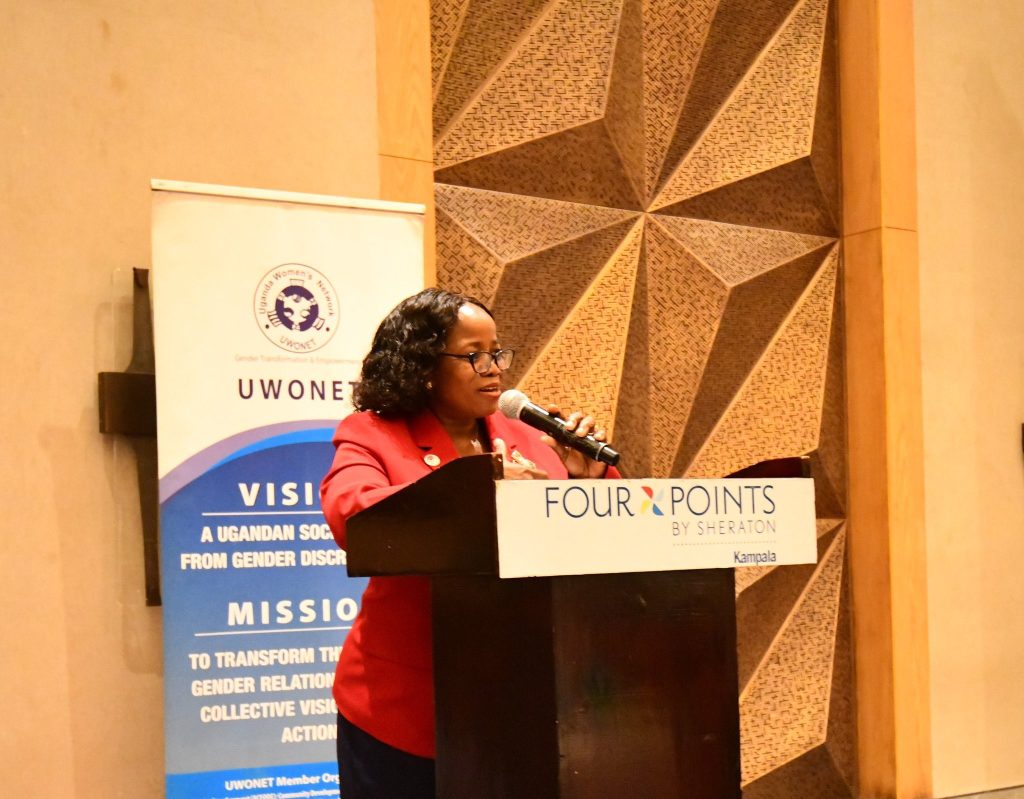
“The research findings are very revealing. Women and girls are doing much more unpaid care and support work compared to men and boys,” Dr. Nakafeero said.
She emphasized that excessive unpaid care work limits women’s productivity, economic participation, and access to opportunities.
“More time spent on unproductive work reduces the time available for productive work and ultimately affects income generation,” she noted.
Dr. Nakafeero highlighted several government investments aimed at reducing unpaid care burdens, including expanded access to clean water, increased health facilities, clean cooking energy, and agricultural technologies.
“We no longer walk 10 kilometres to fetch water. Increasingly, communities are accessing safe water closer to their homes,” she said.
She also pointed to the growing use of clean energy technologies such as gas and biogas, which reduce women’s exposure to indoor air pollution caused by firewood cooking.
The commissioner further acknowledged that caregiving responsibilities for sick family members still disproportionately fall on women, calling for increased investments in caregiving infrastructure and social services.
UWONET Calls for More Research and Policy Action
Meanwhile, UWONET Executive Director Ritah Aciro said the organization’s partnership with Oxfam in Uganda through the “We Care” program has helped move unpaid care work from private household discussions to the center of public policy debate.
“The We Care program has enabled us to generate local evidence that Ugandans can relate to. It has moved unpaid care work from the margins into public and policy discourse,” Aciro said.
She applauded members of Parliament, ministries, and development partners who have become champions of unpaid care work advocacy in Uganda.
Aciro, however, noted that significant data gaps still exist, especially regarding the economic cost of unpaid care work and its impact on women’s productivity and national growth.
“There is still need for periodic national assessments of government investments in care-supporting services, infrastructure, and social protection,” she said.
She called for greater integration of unpaid care concerns into national planning, budgeting, taxation, transport, and health policies.
Oxfam Urges Greater Recognition of Care Work
Francis Odokorach, Country Director of Oxfam in Uganda, described unpaid care work as the invisible labor that sustains families, communities, and economies.
He noted that although care work is essential globally, it remains poorly paid or entirely unpaid in many societies.

“Without care work, communities and economies cannot function, yet globally it remains undervalued and underrecognized,” Odokorach said.
He said research conducted by Oxfam in Uganda and other countries revealed that women and girls continue to perform significantly more unpaid care activities than men and boys.
Odokorach emphasized that evidence generation is critical in making unpaid care work visible, strengthening advocacy, influencing policy, and guiding investments.
Key Recommendations
The study recommended that government programs become more deliberate in integrating care-sensitive approaches during planning and implementation.
Researchers stressed that unpaid care and domestic work is multifaceted and requires coordinated interventions across multiple sectors including water, health, transport, energy, education, and social protection.
The report also called for stronger social norm transformation initiatives aimed at encouraging men to share domestic responsibilities and support women’s economic empowerment.
Participants at the symposium further urged government and development partners to increase financing toward care-supporting infrastructure and services, including childcare facilities, clean water access, healthcare, and labor-saving technologies for women.
The symposium concluded with calls for continued collaboration between government, civil society, researchers, and development partners to ensure unpaid care work is recognized, reduced, redistributed, and valued as a critical pillar of Uganda’s social and economic development.