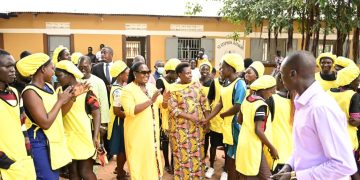



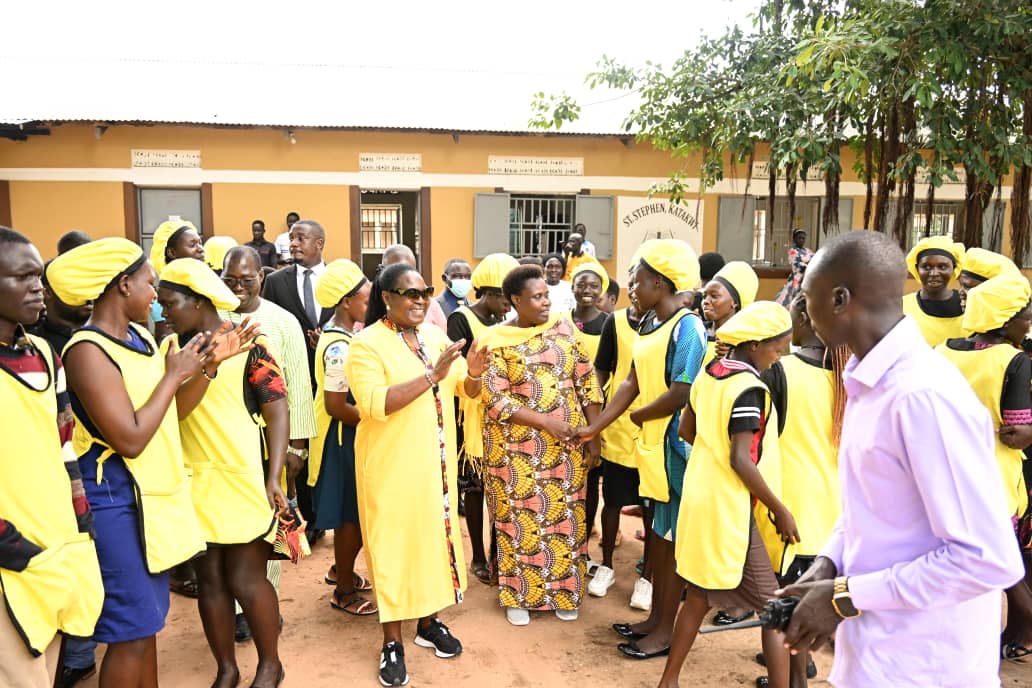
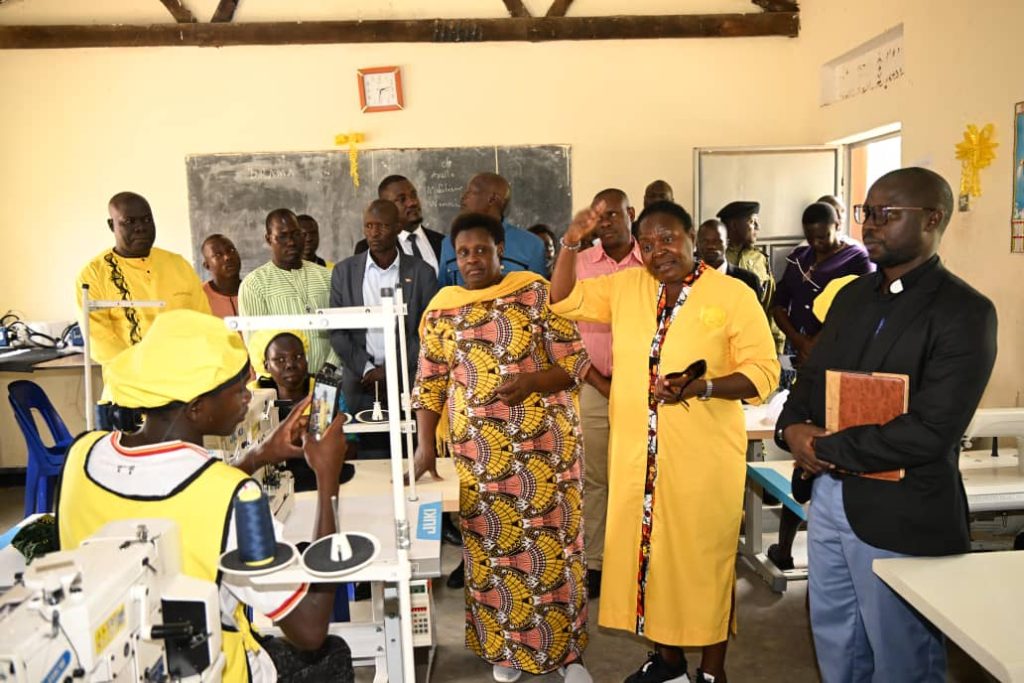
Katakwi District– Vice President Maj. Rtd. Jessica Rose Alupo Epel has officially commissioned the St. Stephen Katakwi Textiles Skills Development Centre, a new hub aimed at equipping youth—particularly girls—with practical skills in fashion, design, and craftsmanship.
Originally initiated by St. Stephen Catholic Parish in Katakwi, the centre has since been taken over by the Uganda Industrial Research Institute (UIRI), ensuring government support and sustainability.
Rev. Fr. Olivier Wayesu, the parish priest, noted that the project was born out of the urgent need to address youth unemployment caused by a lack of vocational skills.
Speaking at the inauguration, Vice President Alupo commended the Catholic Church for its role in community development and urged the parish leadership to open the centre’s doors to children from all religious backgrounds.
She emphasized the importance of inclusive education and praised the collaboration between the church and government in promoting skills training.
Alupo also directed UIRI to provide additional equipment, including weaving machines and salon tools, to bolster the centre’s capabilities.
She called on the Uganda National Bureau of Standards (UNBS) to ensure that the centre’s products meet national quality standards, which would help make them competitive on the market.
In support of the initiative, Minister of State for Youth and Children Affairs, Hon. Baalam Barugahara, applauded the Catholic Church for tackling youth unemployment through skills development.
He donated computers to the centre to support ICT training and improve record-keeping.
Meanwhile, Minister of Energy and Mineral Development, Hon. Dr. Ruth Nankabirwa, contributed 100 bags of cement for the centre’s expansion and pledged to connect it to a stable electricity supply.
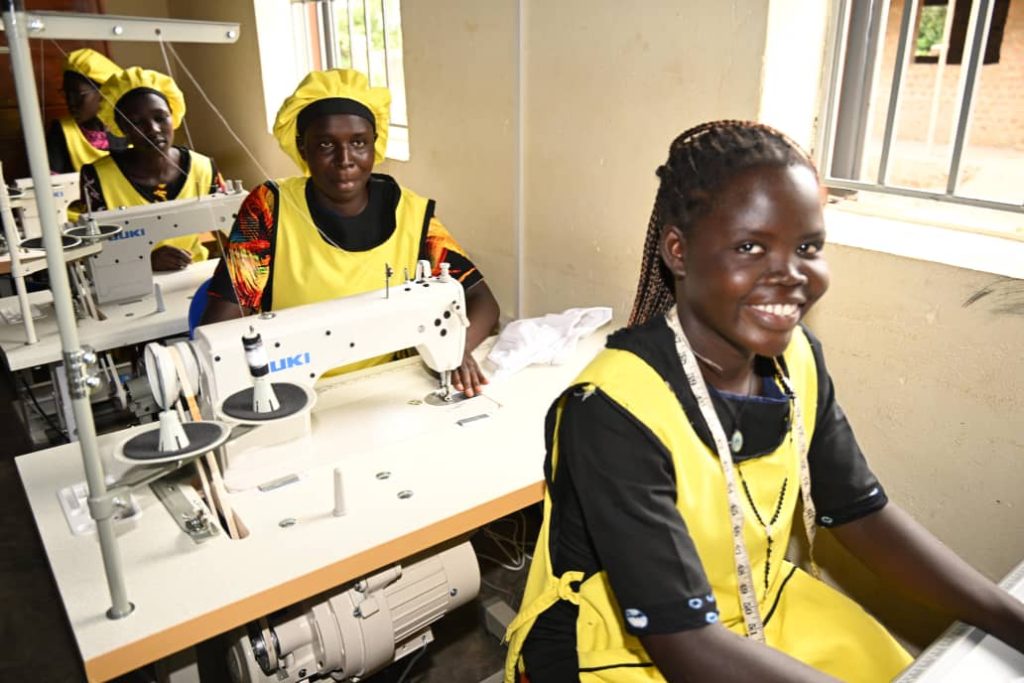
The centre offers training in a range of vocational skills, including welding, metal fabrication, tailoring, and fashion design. According to Solomon Kiiza, UIRI’s manager for textiles, materials, and polymers, the facility will also support the production of school uniforms, sweaters, and other garments—boosting local industry and self-employment.
The centre is expected to generate employment, stimulate the local economy, and provide young people with a sustainable source of income.