


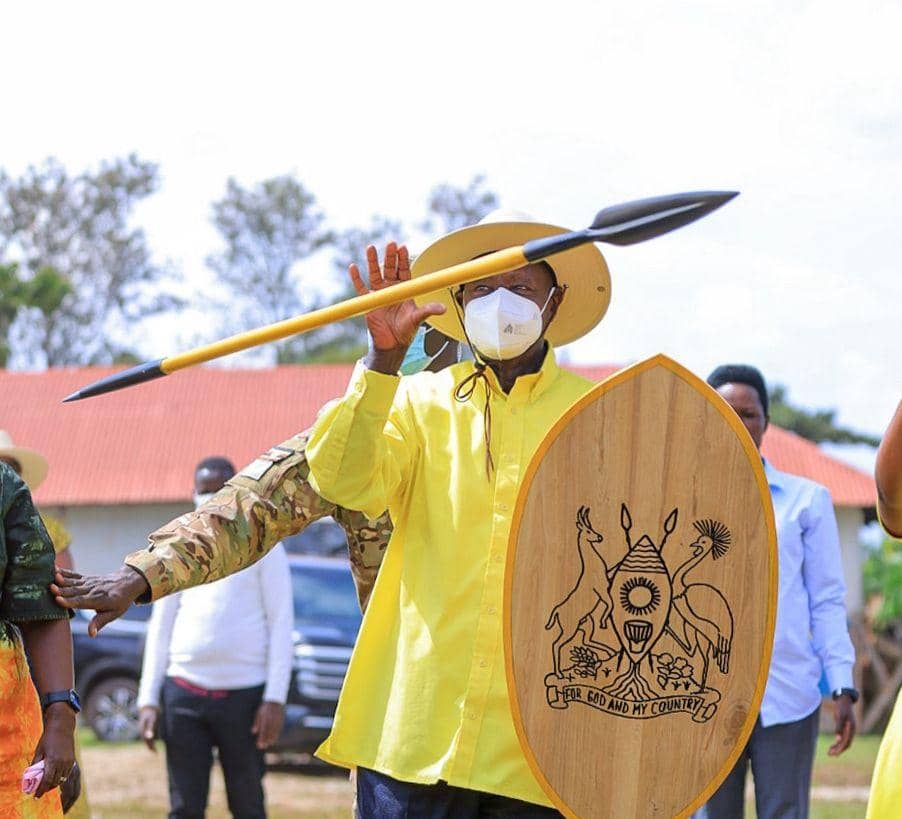
President Yoweri Museveni heads into Kyenjojo with overwhelming political capital, a strong service-delivery record and a voter base that has consistently rewarded him at the polls.
With expanded infrastructure, massive investment in household income programmes and visible improvements in social services, the district is poised to once again give the NRM flagbearer a commanding victory.
Kyenjojo’s numbers alone tell a compelling story. The district now has 242,031 registered voters an increase of more than 27,000 since the last election.
In 2021, Museveni secured a landslide 85.8% of the vote, leaving the opposition with a distant 11.7%.
With the NRM’s footprint deepening in all sub-counties, the party enters the 2026 race with a clear advantage.
The Parish Development Model has been one of the most visible drivers of support. Across Kyenjojo’s 167 parishes, government has disbursed more than Shs 51.6 billion, reaching 51,799 households—nearly 40% of all families in the district.
For many rural farmers, this capital injection has been their first opportunity to expand production and enter the money economy. Alongside the PDM, Kyenjojo’s 54 Emyooga SACCOs, with more than 25,000 members, have received Shs 2.76 billion, directly touching families and organized groups and further cementing the belief that Museveni’s economic agenda still drives tangible transformation.
The district’s education sector continues to benefit from government investment. With 128 government primary schools catering to more than 78,000 pupils and 11 government secondary schools enrolling 7,858 students, access to education has steadily grown.
Government’s plan to complete three new Seed Secondary Schools is set to close gaps in underserved sub-counties.
Once completed, they will reduce the number of sub-counties without a government secondary school from 20 to 17, strengthening Museveni’s development scorecard in the sector.
Kyenjojo’s health infrastructure has also expanded, with the district already hosting a hospital, a HCIV and 16 HCIIIs.
Thirteen sub-counties are well served with a major health facility. The next phase of government investment will strengthen this coverage even further, with new HCIIIs planned in Nyantungo, Kifuka, Kyembogo, Kyamutunzi, Batalika and several other sub-counties and town councils.
These projects respond directly to the community’s longstanding need for accessible, reliable healthcare.
Access to clean water remains one of the strongest markers of government presence in rural communities. Kyenjojo now has safe water coverage of 68%, following the drilling of 20 new boreholes, the rehabilitation of 22 others, and the completion of several piped water systems across the district.
These include major systems in Kyenjojo–Katooke, Kaihura, Kanyengaramire, Kyamutunzi and Rugombe, as well as the solar-powered water system in Kigugu.
Tens of thousands of residents have directly benefited, with ongoing works such as the Mahasa–Kawaruju water supply system promising even broader coverage.
Electricity access has further boosted local confidence in the NRM.
Kyenjojo is now connected to the national grid, and government has pledged to extend power to the remaining six sub-counties, including Kanyegaramire, Bufunjo, Kyarusozi and Kisojo.
For communities awaiting connection, this commitment is a powerful motivator and a signal of continued development.
From economic empowerment to water, education, health and energy, Museveni’s development footprint in Kyenjojo is unmistakable. The district’s transformation, visible in every parish, village and trading centre has shaped a strong political sentiment that the NRM delivers where it matters most. With increased voter numbers, expanded polling stations and a track record that touches nearly every household, Kyenjojo’s support for Museveni is primed not just to sustain the 2021 dominance, but to surpass it.