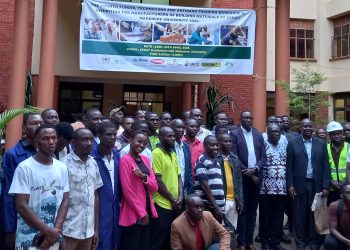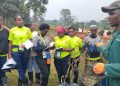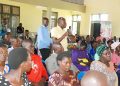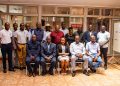




Kampala,Uganda– A total of 1,300 candidates turned up for aptitude tests to fill 31 job vacancies at the Office of the Auditor General (OAG). The exercise was conducted at Makerere University’s School of Computing and Information Technology. It was overseen by the Selection Systems Department from the Public Service Commission, supported by a team from the OAG.
The aptitude tests were aimed at filling two Information Technology Officer trainee positions, 28 Auditor trainee positions, and one Office Assistant position. The process followed an external advertisement by the OAG in accordance with Section 9(2) of the National Audit Act, Cap 170, Regulation 14 of the National Audit (Terms and Conditions of Staff) Regulations, 2011, and Chapter 2.3 of the OAG Human Resource Manual 2024. The call for applications had attracted a total of 1,474 applicants.
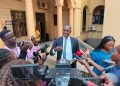
According to David Ochieng, Assistant Commissioner in charge of exams in the Selection Systems Department at the Public Service Commission, the exercise was successfully managed. Ochieng, who oversaw the aptitude tests, noted that there were no power or internet outages, no cases of malpractice, and that all candidates were disciplined and worked without interruption. He described this as a great success in terms of exam administration.
Ochieng further stated that the Commission will now compile a report ranking candidates by performance across the different job categories—Auditor trainees, IT Officers, and Office Assistants. The ranked list will be submitted to the Appointments Board of the Office of the Auditor General, with candidates presented in order of merit. The Commission will also recommend a selection ratio to guide the next step that the OAG will undertake.

The Office of the Auditor General (OAG) is the Supreme Audit Institution (SAI) of Uganda, mandated under Article 163 of the Constitution of the Republic of Uganda to audit and report on the public accounts of Uganda and of all public offices. This includes the courts, central and local government administrations, universities and public institutions of similar nature, as well as any public corporations or other bodies or organizations established by an Act of Parliament.
The Public Service Commission, on the other hand, is an independent statutory body established under Article 165 of the 1995 Constitution of the Republic of Uganda. Its key functions, outlined in Article 166, include, among others: appointing, confirming in appointment, promoting, and exercising disciplinary control over persons holding office in the public service, as provided under Article 172 of the Constitution.