



KAMPALA: President Museveni has urged judicial officers to prioritise Alternative Dispute Resolution (ADR) mechanisms as a practical solution to the Judiciary’s long-standing case backlog.
“Courts should not be the first stop for every dispute. Judges must actively manage cases and guide parties toward appropriate resolution mechanisms. This reduces pressure on the Judiciary and allows courts to focus on serious and complex matters,” Museveni said.
He noted that the Constitution recognises ADR by providing for traditional and cultural leaders in the administration of justice.
“The promotion of Alternative Justice Systems (AJS) is not a step backward; it is a step inward towards a justice system that is more accessible, more understandable, and more meaningful to the ordinary Ugandan. When our people see themselves in the justice system, they trust it more. And a trusted judiciary is a strong judiciary,” he said.
Museveni emphasised that Uganda has long traditions of resolving disputes through dialogue and reconciliation, urging judicial officers to strengthen the use of ADR and AJS, improve case management in complex matters, ensure sentencing consistency, embrace technology, and demonstrate strong judicial leadership.
“These are practical tools for improving performance and restoring public confidence,” he said.
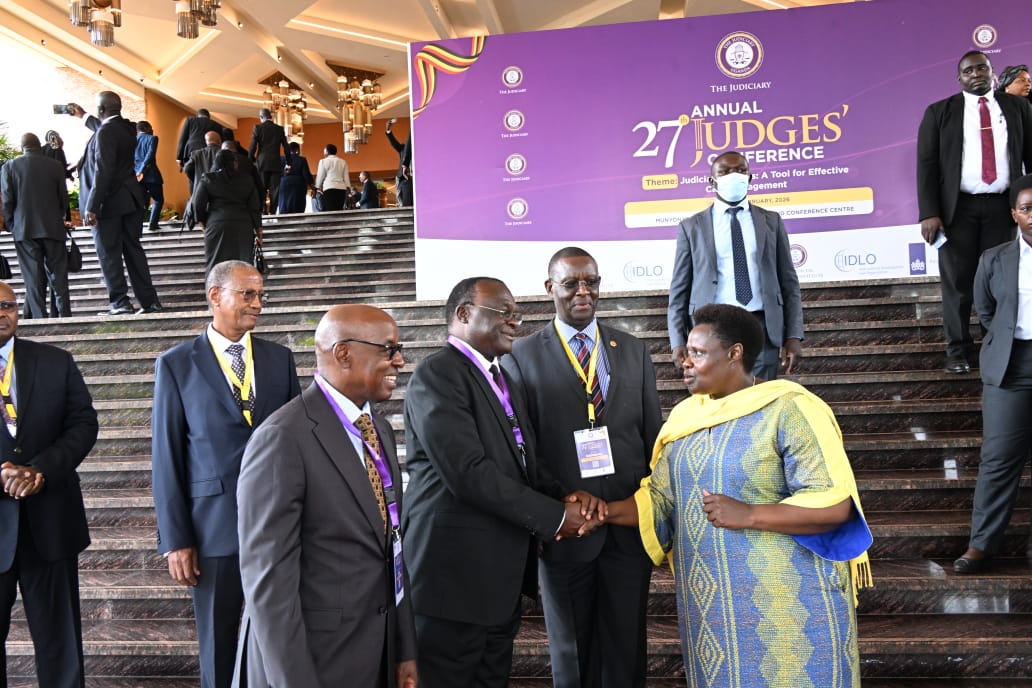
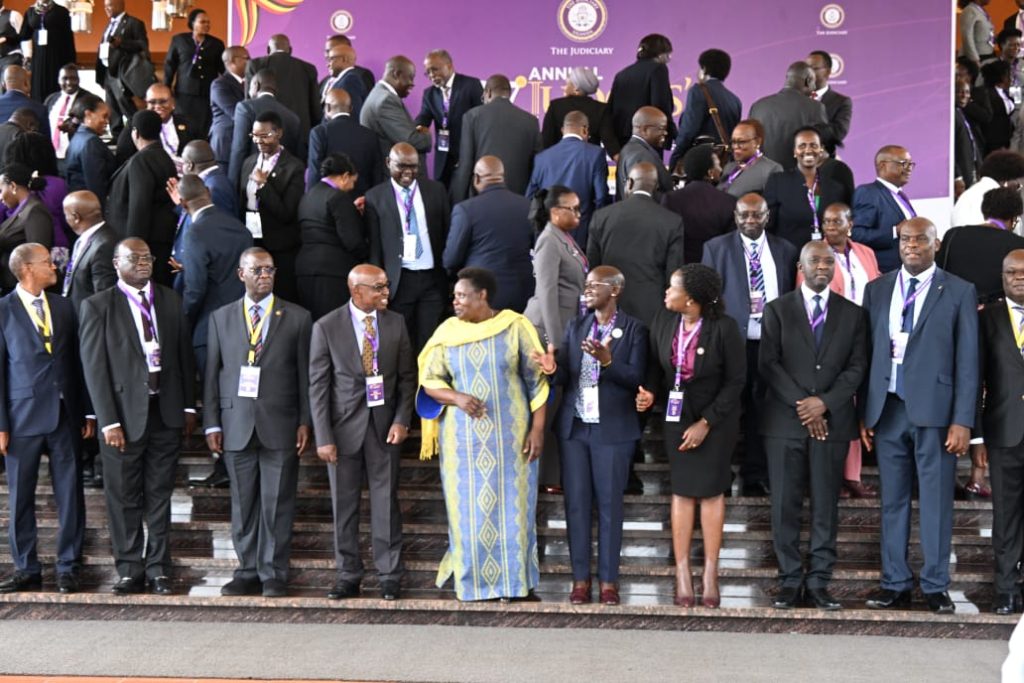
The President’s remarks were delivered on his behalf by Vice President Maj. (Rtd) Jessica Alupo during the opening of the 27th Annual Judges’ Conference at Speke Resort Munyonyo on Monday, February 2, 2026.
According to the 2025 Judiciary National Court Case Census Report, 46,542 out of 167,353 unresolved cases are classified as backlogs. A case is considered a backlog if it has remained in the judicial system for two years or more.
Museveni underscored that a strong, independent and efficient Judiciary is indispensable to democracy, peace and national development, as it underpins investor confidence, protects rights, resolves disputes and maintains social order.
“This is why we continue to support judicial infrastructure expansion, staffing, training and institutional reform even as we demand discipline, integrity and accountability,” he said.
He added that the NRM Manifesto is anchored on building a stable, disciplined and productive society governed by strong and effective institutions. Under the National Development Plan V, government has prioritised human capital development, public sector efficiency and institutional performance as drivers of socio-economic transformation, with the Judiciary playing a central role.
Museveni said it is within this context that the theme of this year’s conference “Judicial Wellness: A Tool for Effective Case Management” is particularly relevant.
“Judicial wellness is not a peripheral concern; it is a strategic governance issue. A healthy, organised and well-led Judiciary is a productive Judiciary, one that clears cases faster, manages pressure better and delivers predictable justice,” he said.
He cited the 1995 Constitution, which provides that judicial power is derived from the people and must be exercised in their name, in accordance with their values and for their benefit.
“Justice must therefore be accessible, timely, impartial and respectful,” he said, noting that this constitutional promise cannot be fully realised if judicial officers are overwhelmed, exhausted or unsupported.
The President reminded judges that effective justice systems are at the heart of every democratic country, stressing that no nation can be stable, prosperous or sovereign without an efficient system of justice.
“When we took responsibility for leadership in 1986, Uganda had suffered institutional breakdown, impunity and disorder. One of our central tasks was to restore authority, discipline and respect for the law,” he said.
Museveni warned that delays in justice erode public trust and economic confidence.
“Our people should experience justice not in legal theory, but in the time taken to resolve disputes, the cost involved and the certainty of outcomes. When cases delay, citizens lose confidence, investors hesitate and social tensions rise. Justice delayed is justice denied,” he said.
He added that backlogs are not caused by laws alone, but by systems, organisation, leadership and human capacity, noting that judicial fatigue contributes to delays and dissatisfaction.
“The strength of our justice system ultimately depends on the physical, mental and ethical wellbeing of those entrusted with judicial power,” he said.
Museveni commended the outgoing Chief Justice, Alphonse Owiny-Dollo, for his dedicated service and reforms, particularly the re-engineering of ADR and AJS, which laid a firm institutional foundation for mediation, reconciliation and community-based justice.
“These reforms strengthened access to justice, reduced pressure on formal courts and advanced the Africanisation of justice by promoting approaches rooted in our values and traditions,” he said.
He congratulated the new Chief Justice, Dr. Flavian Zeija, and expressed confidence that the Judiciary would consolidate reforms, enhance efficiency and integrity, and strengthen public confidence.