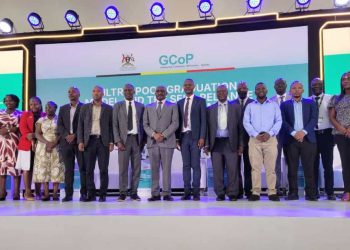



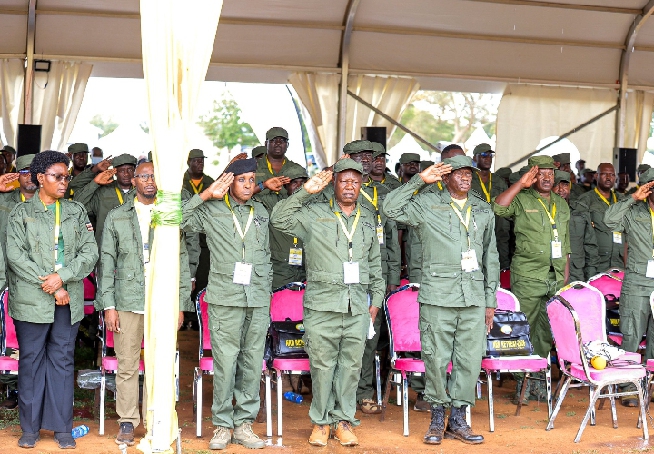
In the hills of Kyankwanzi, at a secluded leadership institute far from the bustle of Kampala, the President of Uganda Gen (Rtd) Yoweri Museveni addressed a new generation of lawmakers with a message that resonated far beyond Uganda’s borders.
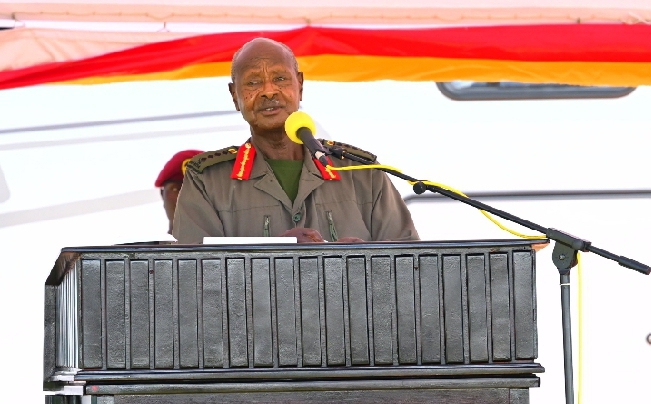
His warning to newly elected Members of Parliament about corruption and indiscipline was framed not just as domestic advice, but as part of a broader struggle familiar to many nations navigating the difficult path between political power, public trust, and economic strain.
Uganda, like a number of countries in the Global South, finds itself at a delicate crossroads.
Years of ambitious infrastructure investments and borrowing have expanded the country’s debt burden, placing increasing pressure on public finances.
While these loans have funded roads, energy projects, and modernization efforts, they have also intensified scrutiny from international lenders and citizens alike, particularly as concerns persist about how effectively public resources are managed.
Against this backdrop, the President’s remarks took on added urgency: corruption is no longer just a governance issue, but a factor that directly shapes the country’s economic credibility and future stability.
Museveni, who has ruled Uganda for decades and remains a central figure in its political life, congratulated the legislators aligned with the ruling National Resistance Movement while cautioning that electoral victory is only the beginning of a far more demanding test.
He described leadership as a transition from passive participation to active stewardship, urging the lawmakers to act as custodians of the party’s ideology and the country’s long-term vision.
Yet his speech unfolded under the shadow of a recurring paradox that observers of Uganda, and indeed many other countries, have long noted: the persistent gap between anti-corruption rhetoric and lived reality.
Over the years, Uganda has faced repeated allegations of graft within public institutions, with watchdog groups and international partners frequently pointing to leakages in public spending, patronage networks, and weak enforcement mechanisms.
These systemic challenges have, in turn, affected service delivery, from healthcare to infrastructure, reinforcing public frustration.
By calling corruption a “moral failure” and even a form of cowardice, Museveni framed the issue in deeply personal terms, seeking to shift it from abstract policy to individual responsibility.
His appeal echoed a global narrative often heard in reformist circles, that integrity in public office is not only about laws and institutions, but about the ethical choices of leaders themselves. Still, in Uganda’s case, critics argue that meaningful change depends less on speeches and more on structural reforms that ensure accountability at all levels of government.
The President also emphasized discipline as an essential ingredient of governance, warning that even well-designed policies collapse without leaders capable of self-restraint and focus.
This message aligns with a broader international concern: that governance failures are often less about lack of plans and more about execution, consistency, and institutional culture.
Beyond governance, Museveni sought to anchor his message in economic transformation.
He pointed to agriculture, small industries, services, and technology as engines of growth, reflecting Uganda’s aspiration to transition from a largely agrarian economy to a more diversified and resilient one.
Yet this ambition, too, is shaped by global forces, fluctuating commodity prices, shifting investment flows, and the realities of debt servicing, all of which constrain how quickly such transformation can occur.
His warning against sectarianism, politics driven by ethnicity or religion, added another layer to the address, touching on a theme that resonates across many regions.
In countries where social divisions intersect with political competition, national cohesion often becomes both a goal and a challenge, particularly when economic pressures intensify.
As the retreat unfolded, bringing together senior officials including Jessica Alupo and Anita Among, the gathering symbolized more than party consolidation.
It reflected a moment of recalibration for a country balancing its domestic priorities with international expectations.
In this setting, Museveni’s message could be read as both a warning and an appeal: that Uganda’s future, like that of many nations confronting debt pressures and governance challenges, will depend not only on economic strategy, but on whether its leaders can close the enduring gap between promise and practice.