


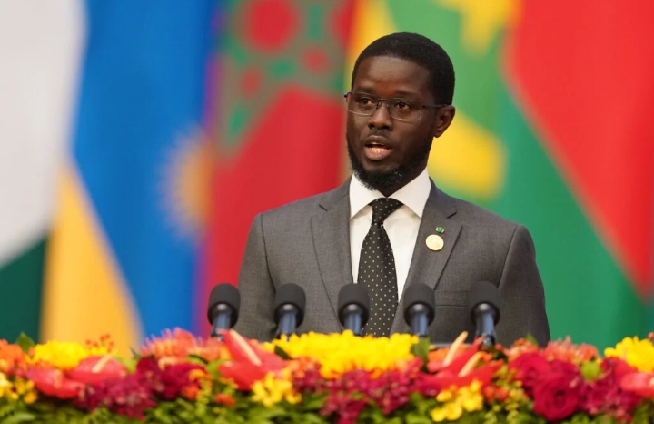
President Bassirou Diomaye Faye and Ousmane Sonko were once regarded as inseparable partners who reshaped Senegalese politics. Years before taking office, the two men built the PASTEF movement on promises of fighting corruption, strengthening democratic institutions, and reclaiming Senegal’s natural resources from foreign influence. During years of political persecution, imprisonment, and electoral uncertainty, they relied on each other’s loyalty to survive.
When Bassirou Diomaye Faye won the presidency, many believed Ousmane Sonko, his longtime political mentor and ally, would remain the government’s most influential figure as Prime Minister. Together, they pledged to rewrite the political rules that had governed Senegal for decades.
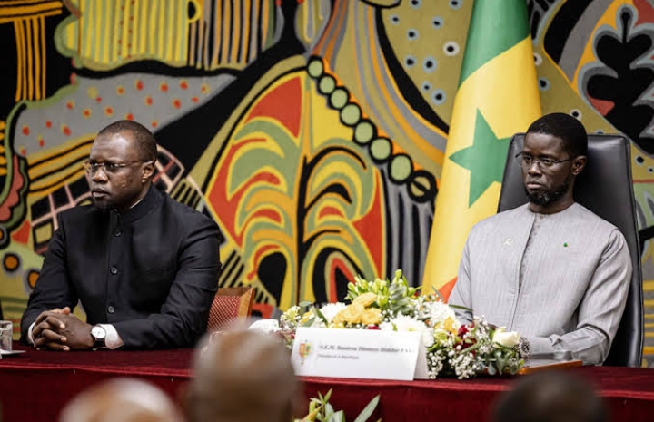
Behind closed doors, however, tensions quietly emerged.
President Faye increasingly sought to present Senegal as a stable partner for international investors, the African Union, the Economic Community of West African States (ECOWAS), the United Nations, the European Union, and international financial institutions.
He favored gradual constitutional reform and careful negotiations over oil, gas, fisheries, and critical mineral agreements.
Sonko believed the pace was too slow.
He argued that powerful foreign interests continued to benefit from contracts signed under previous governments and that Parliament, not the exercise greater oversight over every agreement involving Senegal’s strategic resources.
The relationship reached its breaking point when President Faye dismissed Sonko as Prime Minister following months of disagreements over governance, cabinet appointments, and constitutional reforms.
Many observers assumed Sonko’s political influence had ended.
Instead, lawmakers loyal to PASTEF elected him President of the National Assembly, making him Speaker of Parliament and placing him at the center of a new power struggle.
As Speaker, Sonko introduced constitutional reforms designed to strengthen Parliament’s authority, require legislative scrutiny of natural resource agreements, expand parliamentary investigations, and establish a new Constitutional Court.
Supporters argued the reforms would deepen democracy by preventing excessive presidential authority.
Opponents claimed the proposals were designed to weaken President Faye while allowing Sonko to dominate Senegal’s political institutions through Parliament.
The constitutional confrontation soon attracted international attention.
Diplomats from the United States, France, China, Russia, Türkiye, and Gulf states closely monitored developments, recognizing Senegal’s strategic importance as one of West Africa’s most stable democracies and an emerging energy producer.
International energy companies delayed major investment decisions while awaiting political certainty.
Regional leaders within ECOWAS quietly encouraged dialogue, concerned that prolonged institutional conflict in Senegal could unsettle democratic governance across West Africa.
As Parliament debated the reforms, opposition parties organized demonstrations outside the National Assembly under the slogan, “Hands Off Our Constitution.” Security forces dispersed crowds with tear gas, and several opposition leaders were detained, further increasing political tensions.
President Faye announced that such significant constitutional changes should ultimately be decided by the Senegalese people through a national referendum.
Speaker Sonko countered that Parliament already possessed the democratic legitimacy to approve reforms reflecting the will of the electorate.
What had begun as a disagreement between two lifelong allies had evolved into a constitutional contest watched by governments, investors, diplomats, and international organizations around the world.
Both Bassirou Diomaye Faye and Ousmane Sonko continued to insist they were acting in Senegal’s best interests. Yet as political uncertainty deepened, the question facing the nation was no longer simply who held power, but which vision of Senegal’s democratic future would prevail.