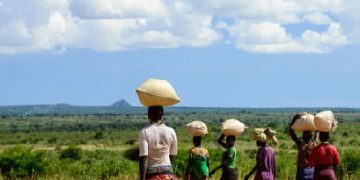



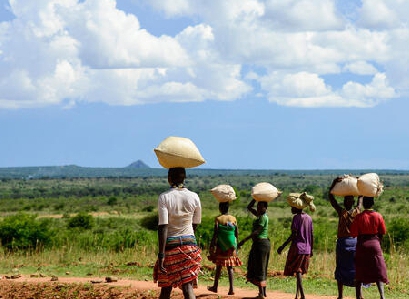
Severe poverty, food insecurity and prolonged drought are pushing more children into labour and increasing the risk of early marriage among girls in Nadunget Sub County, Moroto District, and other parts of Karamoja sub region, community leaders and residents have warned.
The concerns emerged during a community dialogue held under the theme “Youth Voices, Shared Future,” which brought together young people, cultural leaders, local government officials and residents to discuss challenges affecting children and youth, including school dropout, child labour, early marriage and limited participation in decision-making.
The dialogue was organized by the Media Challenge Initiative (MCI) in partnership with Restless Development and KAYESE, as part of efforts to amplify young people’s voices and promote community-driven solutions.
Participants said repeated crop failures caused by harsh climatic conditions have deepened hunger and economic hardship, forcing some families to rely on children’s labour or marry off daughters as a way to cope.
“Some parents see early marriage as a source of wealth, but many girls end up losing their education, freedom and future opportunities,” said Valentina, a resident of Nakapelimen village in Nadunget.
Losike Prisca, another participant, said growing pressure from families was forcing some girls into early unions, warning that the situation could worsen following widespread agricultural losses.
Mangat Prisca, a local council representative for Nadunget Town Council, said rising hunger levels were contributing to increased school dropout rates and exposing children to exploitation.
One of the biggest concerns raised during the meeting was the growing involvement of children, especially girls, in charcoal vending.
Reports indicate, that some children aged between eight and 15 years reportedly travel long distances to nearby towns to transport and sell charcoal, exposing them to dangerous working conditions.
James Israel Lowal, Senior Community Development Officer at Nadunget Town Council, said authorities had started taking action by intercepting children involved in charcoal trading, returning them to their families and encouraging their reintegration into school.
“We are working with young people, police, the Labour Office and community leaders to address the practice through sensitization and protection measures,” he said.
Local leaders have also introduced restrictions against transporting charcoal using children and are conducting awareness campaigns aimed at protecting children from hazardous work.
The challenges facing Nadunget reflect a wider crisis in Uganda’s Karamoja sub-region, where climate shocks, poverty and food insecurity continue to drive child labour and early marriage. Families struggling to survive often turn to child labour or traditional marriage arrangements as short-term coping mechanisms.
Child labour remains a major concern across Uganda, with agriculture accounting for the majority of cases. In Karamoja, some assessments have recorded child labour rates among the highest in the country, with children often engaged in farming, charcoal production and informal work under unsafe conditions.
The consequences are far-reaching. Experts warn that child labour disrupts education, increases school dropout rates and exposes children to injuries, health risks and exploitation, reinforcing cycles of poverty.
Early marriage is also widespread in Karamoja, where many girls face increased risks of teenage pregnancy, limited access to education and reduced economic opportunities. Food insecurity and social pressures further increase vulnerability to harmful practices.
Rita Kampi, Project Manager at MCI, said the dialogue was part of broader efforts to use storytelling, film and community engagement to highlight youth concerns and support inclusive solutions.
The initiative is supported by partners including the Royal Embassy of the Netherlands and the Embassy of Ireland.
While local interventions are underway, stakeholders say more investment is needed in education, labour protection, climate-resilient livelihoods and community support systems to address the root causes driving child labour and early marriage.
They argue that a combination of stronger enforcement, public awareness, economic empowerment and access to education will be critical to breaking the cycle affecting children in Karamoja.