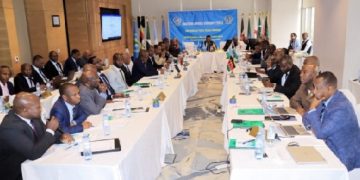



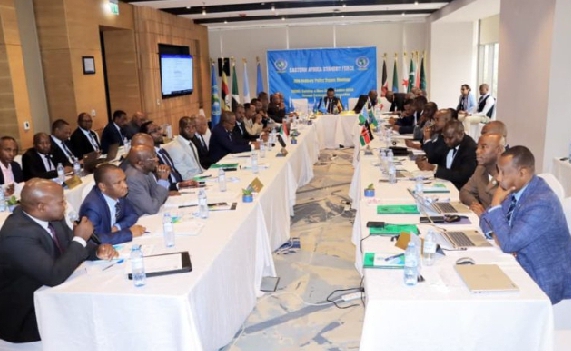
KAMPALA, Uganda — East African countries must strengthen regional security institutions and assume greater responsibility for addressing emerging threats, senior military officials said as experts from member states met in Kampala to review reforms to the region’s standby force.
Uganda Peoples’ Defence Forces (UPDF) Chief of Joint Staff Lieutenant General Jack Bakasumba said stronger cooperation and institutions capable of anticipating new threats were essential to maintaining peace and supporting the region’s economic development.
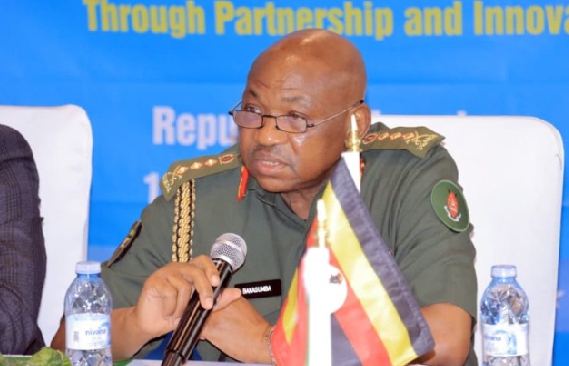
Bakasumba was speaking at the opening of the 36th Ordinary Policy Working Group meeting of the Eastern Africa Standby Force (EASF), where experts are considering reforms to improve the bloc’s ability to respond to regional security crises.
“Peace is sustained through cooperation and secured through institutions that are capable of anticipating tomorrow’s challenges while responding to today’s realities,” he added.
Eastern Africa has significant economic potential, driven by expanding economies, a young population and growing regional connectivity, he said, but warned that these gains depended on a stable security environment.
“Peace and development are inseparable,” Bakasumba said, adding that investment in regional security institutions was an investment in the continent’s economic transformation and long-term resilience.
He reaffirmed Uganda’s support for the EASF and the African Union’s wider peace and security agenda, calling for greater regional ownership of efforts to tackle conflicts and other security threats.
“African solutions to African problems shouldn’t wait for anyone to come in and rescue us,” Bakasumba said. “We have the capabilities. We have the numbers.”
The EASF Director, Brigadier General Ronald Rwivanga, said the region needed to become more self-reliant as international support for peace operations declines and security challenges become increasingly complex.
“Africa must increasingly prepare to shoulder greater responsibility for its own peace and security,” he said.
He described the changing security environment as an opportunity for the EASF to demonstrate its ability to take on greater responsibilities rather than simply as a challenge.
The EASF has spent two decades developing its capabilities through training, military exercises, force verification and efforts to improve interoperability among member states, Rwivanga said.
But he cautioned that military preparedness alone would not guarantee an effective regional security mechanism.
“Operational readiness alone is not enough,” he said. “A capable regional mechanism must also be supported by sound governance, sustainable financing and effective oversight.”
The meeting’s Chairperson of the Experts Working Group, Brigadier General Emmanuel Kazahura, said the expertise of member states would be critical to shaping reforms and ensuring the EASF remains responsive to changing security threats.
He said the recommendations emerging from the meeting would help guide decisions by the force’s policy-making bodies.
The Experts Working Group is reviewing reforms in areas including resource mobilisation, financing and service regulations. Its recommendations will be submitted to the Committee of Chiefs of Defence and Security before being considered by the Council of Ministers.
The discussions come as African regional organisations face growing pressure to develop sustainable, locally funded mechanisms for responding to conflicts and other security emergencies, amid questions over the long-term availability of external support for peace operations.
The EASF is one of Africa’s regional standby arrangements established to support peace and security operations under the broader African Union framework.