


GUANGZHOU, China, (UGNEWSLINE) — Uganda is stepping up its drive to capture a larger share of China’s vast consumer market, using one of the world’s biggest trade exhibitions to position its coffee, shea butter and locally crafted products before international buyers while pushing for greater value addition at home.
At the Third Phase of the 140th China Import and Export Fair, popularly known as the Canton Fair, that ended on November 4, 2026 Uganda showcased the commercial potential of its agricultural and creative industries, seeking to turn international exposure into lasting export contracts, investment opportunities and jobs back home.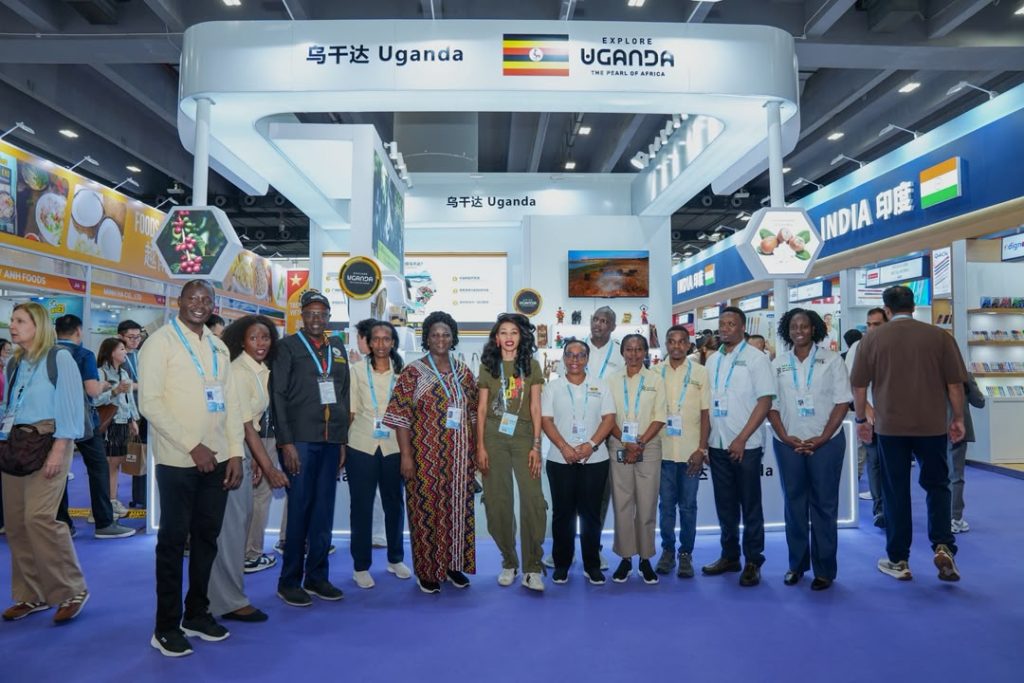 Held in Guangzhou from October 31, the exhibition brought together Ugandan exporters and Chinese and international buyers at a time when Uganda is seeking to diversify its export markets, strengthen trade relations with China and secure better returns for its farmers and producers.
Uganda’s participation was spearheaded by its Consulate General in Guangzhou, led by Ambassador Judyth Nsababera, in collaboration with the Embassy of Uganda in Beijing, with support from the Ministry of Foreign Affairs and the Ministry of Agriculture, Animal Industry and Fisheries (MAAIF).
The Ugandan delegation included Ambassador Richard Kabonero, Head of the Regional Economic Cooperation and Economic and Commercial Diplomacy Hub at the Ministry of Foreign Affairs; Mbale City Mayor Joyce Kidulu Matuka; a MAAIF technical team led by Assistant Commissioner for Enforcement and Regulation Eunice Mutungi Kabibi; and Uganda’s High Commissioner to Malaysia, Ambassador Betty Bigombe, alongside other diplomatic and trade representatives.
 The scale of the opportunity was evident. The 140th Canton Fair attracted 352,000 overseas buyers, while intended export transactions across the exhibition reached US$26.75 billion, reinforcing its standing as a major gateway to China’s consumer and industrial markets.
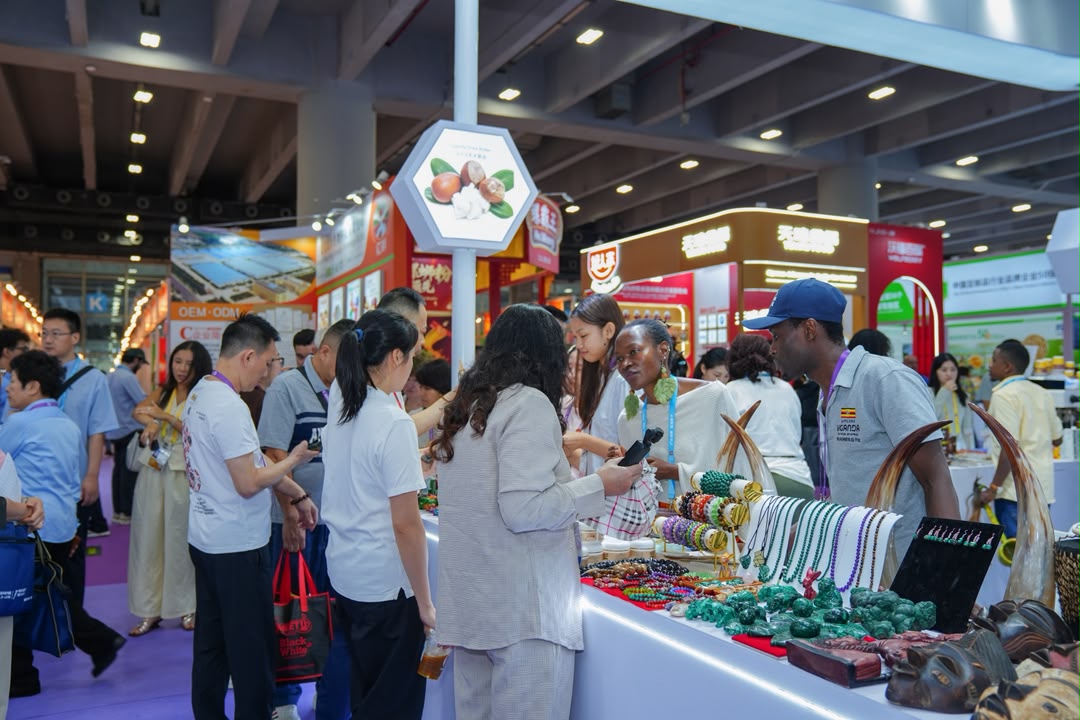
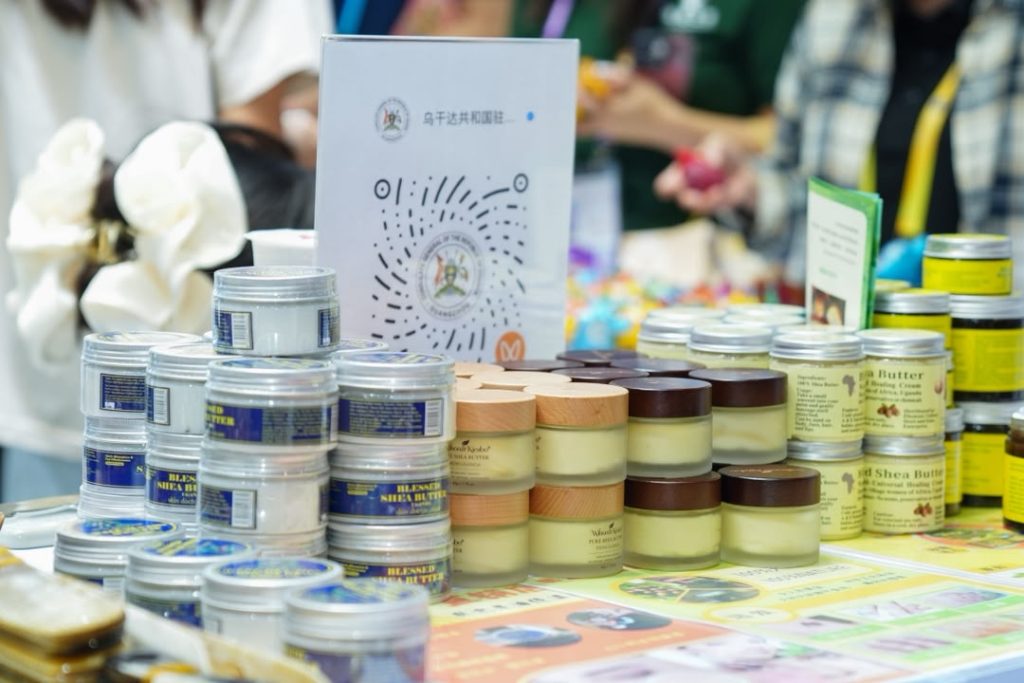
Uganda’s exhibition featured ten companies, including five coffee businesses, two shea butter producers and three craft enterprises. kAmong the participating exhibitors were The Shea House, Ebenezer Ltd, Obato Industries Limited, SeedStar Speciality Coffee Ltd and Champion Coffee.
Through product displays, coffee tastings and direct engagements with prospective buyers, the Ugandan exhibitors sought to establish commercial relationships, negotiate prices and understand the quality and supply requirements of the Chinese market. Coffee emerged as the leading attraction, although the country’s natural cosmetics and crafts also demonstrated opportunities for export diversification.
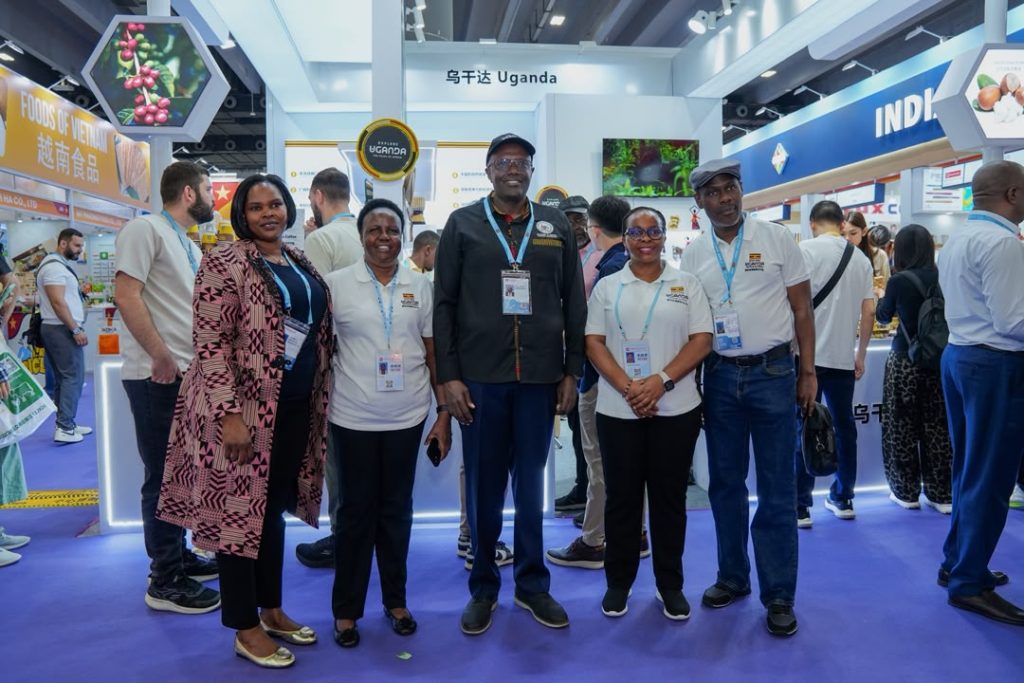 For Ambassador Nsababera, however, the significance of Uganda’s participation went beyond displaying products. The bigger ambition, she said, is to ensure that international trade translates into greater domestic production, processing, employment and wealth creation.
“Our participation was more than exhibiting products. It was about value addition, value retention, and prosperity along the value chain, from farmer to buyer,” she said.
“When farmers process, package and brand at home, they earn more from the same crop. That is how a trade fair in Guangzhou becomes income in a village in Uganda.”
The message reflects Uganda’s growing determination to move beyond exporting predominantly raw agricultural commodities and capture a larger share of the value generated through processing, packaging, branding and distribution.
Kabonero similarly emphasised that the success of commercial diplomacy should ultimately be measured by its impact on ordinary citizens.
“When we add value in Uganda and retain more of that value in Uganda, we create jobs in processing and packaging,” he said. “Our work is to connect the farmer in Uganda to the buyer in China, and to make sure that connection is fair, predictable and lasting. That is what will keep young people in productive work and keep rural incomes growing.”
The growing demand for Ugandan coffee in China provides an encouraging indication of the opportunities available. According to Agriculture and Trade Attaché in Guangzhou, Doryn Negesa, Uganda’s coffee exports to China increased from 62,980 60-kilogramme bags in the 2023/24 financial year to 245,533 bags in 2025/26.
The increase highlights the expanding commercial relationship between the two countries and Uganda’s potential to strengthen its position in China’s increasingly competitive coffee market.
As Africa’s largest coffee exporter and one of the world’s leading Robusta producers, Uganda is seeking to leverage its reputation for quality coffee while expanding opportunities for both Robusta and Arabica varieties.
But the engagements at the Canton Fair also highlighted the increasingly sophisticated expectations of international buyers. For Ugandan Arabica producers, buyers wanted detailed information on growing altitude, washed and natural processing methods, cupping scores, moisture levels and defect counts. Robusta buyers, meanwhile, focused on consistency, screen size and clean-cup quality.
These requirements underline the importance of improvements throughout the production chain, from harvesting and drying to storage, processing and export preparation. For producers, the ability to deliver consistent quality is increasingly decisive in securing competitive prices and repeat orders.
Uganda’s shea butter and craft producers faced similar expectations. Prospective buyers examined production methods, including unrefined and cold-pressed processing, fatty-acid composition, shelf life and cosmetic-grade standards. Craft buyers were particularly interested in product design, finishing, consistency and packaging suitable for international retail markets.
The engagements provided Ugandan businesses with direct insight into what Chinese and international consumers expect, while offering opportunities to establish relationships with potential distributors, importers and manufacturers.
Market access is another important advantage Uganda is seeking to exploit. China provides zero-tariff treatment to originating products from least developed countries under its preferential trade arrangements, covering 100 per cent of tariff lines.
For Ugandan exporters, this presents an opportunity to improve the competitiveness of their products in the Chinese market. However, the preferential treatment is subject to compliance with rules of origin, appropriate Harmonized System classification, direct consignment requirements and valid Certificates of Origin.
Agricultural and food exporters must also satisfy China’s regulatory requirements, including applicable phytosanitary and food-safety controls and registration of overseas food production enterprises under General Administration of Customs of China (GACC) Decrees 248 and 249.
The zero-tariff arrangement therefore offers a significant advantage, but it does not automatically guarantee access. Exporters must still demonstrate compliance with the standards, documentation and quality requirements governing entry into the Chinese market.
Nsababera believes that technology transfer and modern processing equipment could help Ugandan producers overcome some of these challenges and compete more effectively.
She encouraged farmers, cooperatives and processors to embrace appropriate Chinese technologies for drying, sorting, grading, processing, packaging and branding, arguing that such investments could improve product quality, reduce post-harvest losses and increase production capacity.
“China has appropriate machinery for processing, packaging and branding that is suitable for Ugandan producers,” she said. “This helps our producers to meet the quality standards required to access the Chinese market. We should not be afraid to learn, to adopt what works, and to use technology to improve what we already produce well.”
The message is particularly significant for Uganda’s agricultural sector, where limited processing capacity, post-harvest losses and inconsistent product quality can constrain the ability of smallholder farmers and cooperatives to access high-value export markets.
With appropriate investment in technology, skills and production systems, Uganda could strengthen its capacity to supply processed agricultural products while retaining more economic benefits within the country.
The MAAIF delegation, led by Mutungi Kabibi, also engaged with exhibitors on product quality, presentation and regulatory requirements, reinforcing the importance of aligning domestic production with international market standards.
For Uganda, the challenge now is to convert the contacts and commercial interest generated in Guangzhou into actual purchase orders, sustained export relationships and investment in domestic processing. International exposure alone will not guarantee success; reliable supply, competitive pricing, consistent quality and compliance with market regulations will determine whether initial interest develops into long-term business.
Nsababera further urged Ugandan exhibitors and businesses to maintain their engagement with the Canton Fair, which is held twice a year, and use the platform to build lasting relationships with Chinese and international buyers.
The next edition, the 141st Canton Fair, is scheduled to take place from April 15 to May 5, 2027.
For Uganda, the ambition is increasingly clear: to transform its agricultural abundance into internationally competitive products, ensure that more value is created and retained at home, and make expanding trade with China a meaningful driver of jobs, incomes and national economic transformation.