


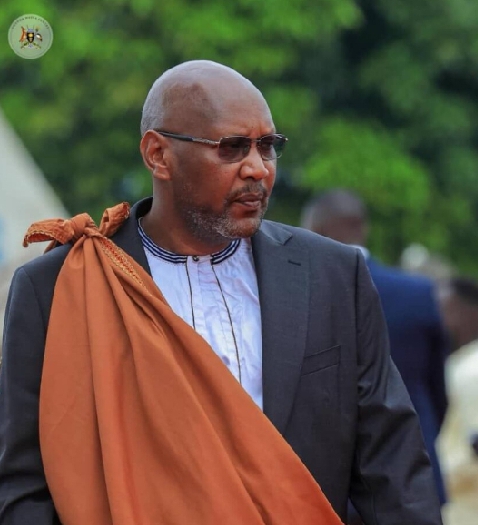
FORT PORTAL, Uganda — Days after taking the throne of one of Uganda’s most prominent traditional kingdoms, Tooro’s new monarch has opted for a cautious start, retaining the late King Oyo Nyimba Kabamba Iguru Rukidi IV’s premier while preparing to shape the administration in his own image.
King Edward Rukidi Nyabongo I has renewed Calvin Armstrong Rwomiire’s appointment as Omuhikirwa, or prime minister, but limited the arrangement to six months. The decision reflects confidence in officials who guided the kingdom through a difficult transition while giving the new king time to assess the structure and direction of Tooro’s leadership.
The appointment follows an extraordinary period for the kingdom. Tooro had only recently entered mourning after the death of King Oyo, who ruled for more than 30 years. His death at 34 triggered renewed debate over succession, royal authority and the future of the institution he had led since childhood.
Oyo died on August 27, 2026, while undergoing medical treatment in the United States. He became king in 1995, aged three, after the death of his father. His early accession made him one of the youngest reigning monarchs in the world, and over time he became one of Africa’s most recognisable traditional leaders.
At first, the succession appeared likely to follow a clear path. That expectation soon gave way to a complicated dispute.
After Oyo’s death, kingdom officials said the late monarch had left an heir. Members of his family later maintained that he had a biological son and a will signed in 2022 naming the child as successor.
The claim raised questions about who held the customary power to choose Tooro’s next Omukama. The Babiito royal clan, which traditionally selects the king, eventually followed a separate process and chose Oyo’s cousin, Prince Edward Kijanangoma.
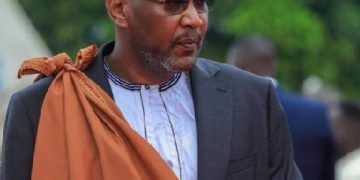
Kijanangoma, who previously worked as a journalist and news anchor at Uganda Broadcasting Corporation, received the backing of the Tooro Supreme Council. He later adopted the royal name Edward Rukidi Nyabongo I and was crowned on September 29 at Karuziika Palace in Fort Portal. His enthronement moved the kingdom into a new phase, although the controversy surrounding Oyo’s alleged heir remained unresolved and sensitive.
With the coronation complete, Nyabongo I has turned his attention to the practical work of running the kingdom.
Rwomiire’s continued presence carries particular weight. He was not merely a senior administrator during Oyo’s final years; he became a key public figure during the crisis that followed the king’s death. He announced Oyo’s passing and helped oversee the kingdom’s affairs during the mourning, burial and succession arrangements.
Oyo first appointed Rwomiire deputy prime minister for planning and investment in September 2024. He became prime minister in February 2025. His latest appointment will last until March 2027, leaving open the possibility of a broader administrative review afterward.
Nyabongo I has also kept Charles Kayondo Kamurasi as Omujwera Musuuga, the senior leader of the Babiito royal clan. Kato Rwakatale will continue serving as his deputy. Kamurasi was central to the succession process, chairing the 21-member committee tasked with identifying Oyo’s successor and defending the clan’s traditional authority in the matter.
The early appointments indicate that the new king is not planning an immediate overhaul. Instead, he appears to be preserving the administrative framework that carried Tooro through the uncertainty after Oyo’s death while gradually creating space for his own priorities.
That approach could help steady a kingdom still recovering from one of its most sensitive succession episodes in recent memory.
For over three decades, Oyo was synonymous with Tooro. He became king as a small child and grew into adulthood before the public, leading the kingdom during a period when Uganda’s traditional institutions increasingly sought influence through culture, education, tourism, environmental advocacy and youth initiatives rather than direct political authority.
When Parliament paid tribute to Oyo, it pointed to his contributions to youth empowerment, education, agriculture and conservation. His climb of Margherita Peak in the Rwenzori Mountains also helped promote tourism and draw attention to climate change.
Because Oyo ruled for so long, many Batooro knew no other monarch. His death and Nyabongo’s accession therefore represent more than a routine change at the top. They close an era shaped by a child king who matured into a national and international figure while carrying the responsibilities of the crown in public view.
Nyabongo I now inherits that legacy at a critical juncture.
Unlike his predecessor, he did not grow up as the expected heir. Before his selection, he built a career in journalism and institutional leadership. His coronation has consequently brought together an old dynastic tradition and a monarch whose professional experience developed largely beyond the palace.
His first decisions point to a preference for order and continuity.
By keeping an interim cabinet, Nyabongo I can familiarise himself with the kingdom’s operations while depending on officials who already know its systems. The arrangement also gives him time to establish his authority and eventually respond to the institutional questions exposed by the dispute over Oyo’s succession.
For Tooro, the central issue is now larger than the identity of the person on the throne. The challenge is whether the new reign can turn a contested transition into a stable period of governance while protecting the cultural identity and public mission that Oyo spent 31 years developing.
The ceremonies at Karuziika Palace have ended, and the crown has passed to a new monarch. But for Omukama Edward Rukidi Nyabongo I, the more demanding task has begun: converting a disputed succession into a durable reign.