


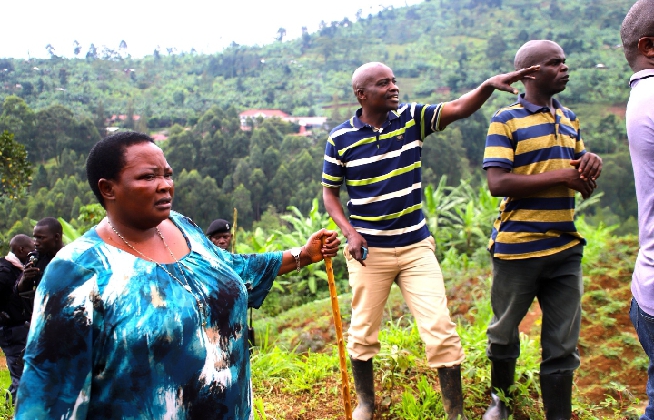
BULAMBULI District (UGNEWSLINE) – Uganda’s Prime Minister, Robinah Nabbanja, has warned leaders in the Bugisu sub-region against undermining the government’s plan to relocate communities living in landslide-prone areas, amid concerns over alleged irregularities in beneficiary lists and the implementation of government programmes.
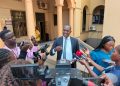
Nabbanja issued the warning on Thursday during a meeting with Bulambuli district leaders at the district headquarters, as she continued a tour of the region aimed at ensuring that residents living in high-risk areas move to safer locations.
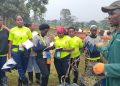
The Prime Minister also addressed residents at Kisi Trading Centre in Bulambuli, where she explained the government’s relocation plan and urged communities to cooperate with the exercise.
She was accompanied by Labour Minister Simon Mulongo and State Minister for Karamoja Affairs Esther Anyakun.
Nabbanja said President Yoweri Museveni had specifically assigned her to oversee the exercise after intelligence reports allegedly revealed irregularities in the lists of people identified for relocation, including names of beneficiaries who could not be traced.
She said the concerns had prompted closer scrutiny of the process to establish whether the intended beneficiaries were being accurately identified and whether government assistance was reaching those who needed it.
During her engagement with district leaders, Nabbanja cautioned against actions or statements that could discourage residents from participating in the relocation programme.
She stressed the need for cooperation between local leaders and central government officials as authorities seek to move vulnerable communities away from areas exposed to landslides.
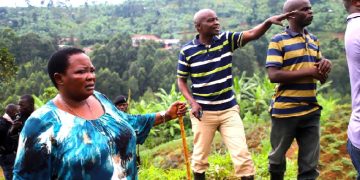
The tour follows a visit to parts of neighbouring Bududa district on Wednesday, where the Prime Minister said she had encountered attempts by some leaders to divert her from reaching residents targeted by the relocation exercise.
Her remarks highlight the challenges authorities face in implementing the programme, particularly in ensuring that communities at risk are reached and that the selection of beneficiaries is transparent.
Nabbanja also raised concerns about possible loopholes in the implementation of the Parish Development Model (PDM), a government initiative designed to support households in moving from subsistence production into the money economy.
She said she wanted an audit conducted in the Bugisu sub-region to establish whether the programme had been implemented properly and to identify any irregularities requiring further investigation.
The proposed audit would add to scrutiny of government programmes in the region as officials assess beneficiary records and the delivery of public support.
Bulambuli and neighbouring districts in eastern Uganda have communities living in mountainous areas vulnerable to landslides, particularly during periods of heavy rainfall. Such events can destroy homes, damage farmland and infrastructure, and put lives at risk, making the identification of safer settlement areas a major concern for authorities.
However, relocation exercises can face practical difficulties, including concerns over land, livelihoods and the willingness of residents to leave familiar communities.
The government’s challenge is therefore not only to identify households at risk but also to ensure that relocation arrangements are credible, adequately communicated and supported by accurate beneficiary records.
Nabbanja’s visit is intended to reinforce the government’s position that people living in dangerous areas should move to safer locations while authorities address concerns surrounding the programme’s implementation.