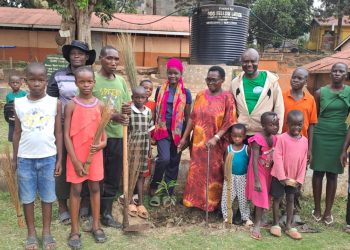



Kyegegwa District — ADRA Uganda has released the impact results of its two-year Resilience Enhancement for Adapting Sustainable Livelihoods (REAL) project, which aims to improve food security and strengthen resilience for 5,880 refugees and 2,520 host community members in Kyaka II and Rwamwanja refugee settlements.
The REAL project funded by DANIDA, the Ministry of Foreign Affairs of Denmark, Novo Nordisk Foundation, FAHU Foundation, Justesen Foundation, and ADRA International has been implemented through Village Savings and Loan Associations (VSLAs), Farmer Market Schools (FMS), and Climate-Smart Agriculture (CSA) interventions.
Speaking during the dissemination workshop, Mr. Jerry Kiwanuka, the REAL Project Manager, said the initiative is already delivering tangible change.
“The REAL project has been transforming lives in Kyaka II and Rwamwanja, with a goal of improving food security and building resilience for both refugees and host communities by 2026,” Kiwanuka said.
Major Achievements Recorded
The project has established 70 VSLAs—35 in Kyegegwa and 35 in Kamwenge—generating a total of 480 million shillings in savings, an 80% increase over the project period.
According to Ms. Farida Nakato, ADRA’s MEAL Manager, the loan portfolio has also grown significantly.
“We have seen the loan portfolio rise from 231 million to 330 million shillings, with more people borrowing to invest in businesses rather than household consumption,” Nakato explained.
Farmers have increasingly adopted climate-smart practices, including vegetable growing, goat rearing, and water-efficient farming methods, all contributing to improved food production.
Voices From the Community
For many beneficiaries, the project has been life-changing.
Anyesi Nyirasabimana, a 52-year-old refugee from Rwanda, said: “Mothers who struggled with breast milk now benefit from goat milk produced through the project. Vegetable gardens have helped families cook balanced meals and improve children’s nutrition.”
Research Findings from Makerere University
Researchers from Makerere University presented evidence showing that combining VSLA, FMS and CSA methods produces stronger livelihood outcomes.
Tabitha Nyasyogo, a Research Assistant, said: “Our findings show that integrating VSLA, FMS and CSA practices yields better results than implementing one practice alone. Together, they improve household food security and asset accumulation,” said Tabitha Nyasyogo, a Research Assistant.
Another researcher, Swadik Yassin, highlighted crop performance results.
“We found that photosynthesis rates differ across vegetables like kale, onions, cabbage and tomatoes, and that irrigation and mulching significantly improve yields,” he noted.
Local Leaders Commend ADRA
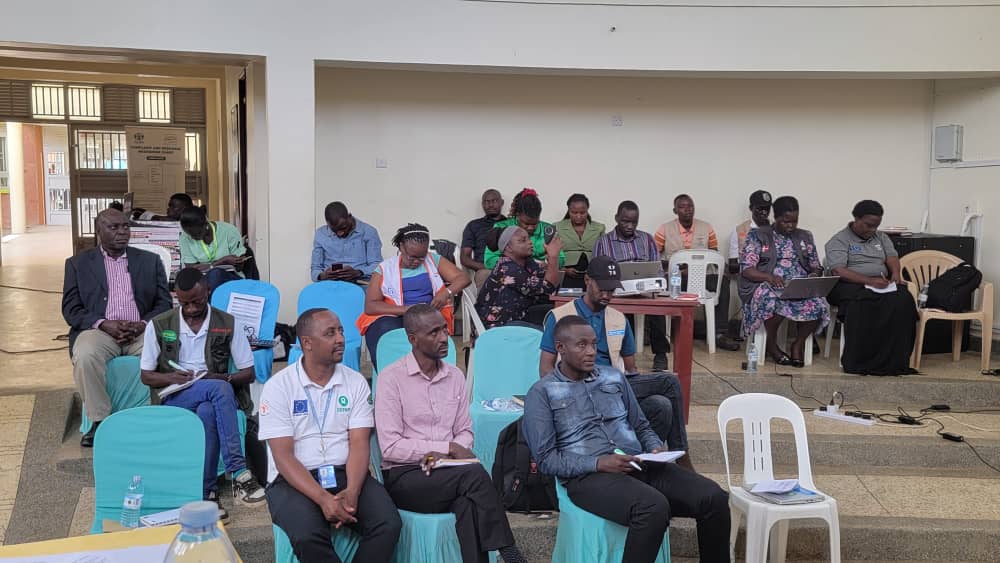
The event was attended by district leaders and refugee settlement officials.
Mr. Christopher Angualia, Assistant Settlement Commandant for Kyaka, praised the project’s impact.
“We are grateful to ADRA for improving the lives of refugees and host communities. We encourage other organizations to replicate this model,” Angualia said.
Kamwenge District Commercial Officer Dennis Kiiza Mwiru also applauded the initiative. “The REAL project has boosted food security and increased incomes. We will continue supporting farmers to adopt climate-smart agriculture,” he said.
Next Steps
ADRA Uganda will hold the final dissemination of research findings and lessons learned at Makerere University on December 4, 2025.
Key Highlights; 5,880 refugees and 2,520 host community members supported, 70 VSLAs formed in Kyegegwa and Kamwenge, Savings grew to 480m (80% increase), Loan portfolio increased from 231m to 330m, Climate-smart agriculture practices improved food production, Makerere University research shows combined VSLA, FMS and CSA practices boost resilience.