


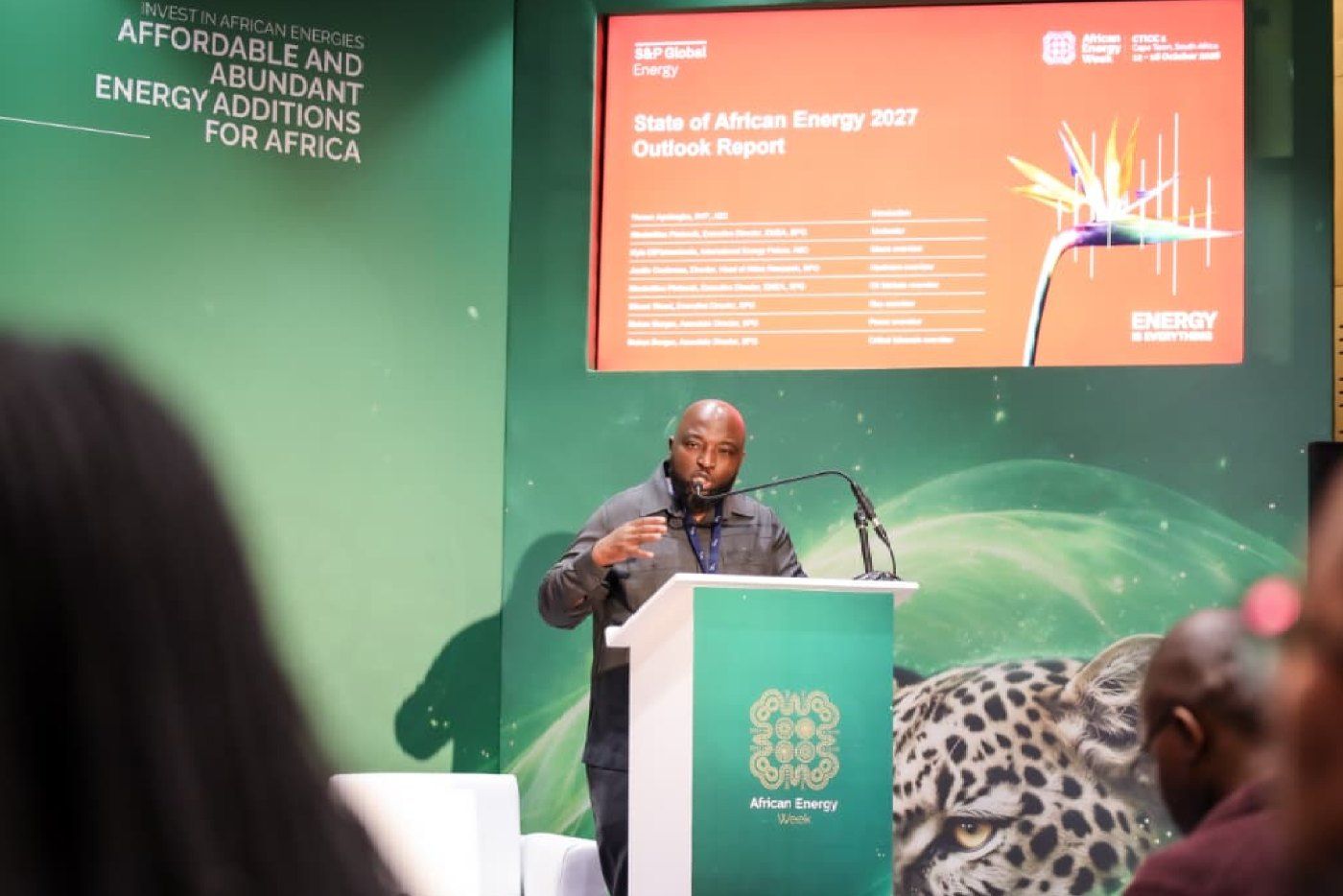
CAPE TOWN, South Africa (UGNEWSLINE) – The African Energy Chamber (AEC) and global market intelligence firm S&P Global have launched the AEC: State of African Energy 2027 Outlook report, highlighting investment opportunities, market trends and policy reforms shaping Africa’s energy future.
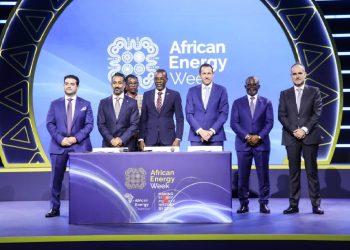
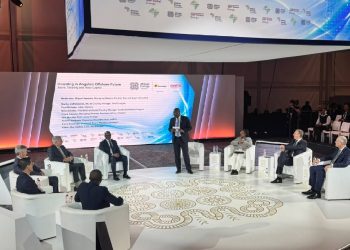
The report, powered by S&P Global Energy data, was launched on Wednesday during African Energy Week (AEW) 2026 in Cape Town, South Africa.
It provides data-driven market intelligence for investors, policymakers and project developers across the energy value chain, covering developments in oil and gas, power generation, critical minerals and data centres.
The launch comes amid shifting global geopolitics and changing supply chains, which are redirecting capital flows and increasing international interest in Africa’s energy resources.
Verner Ayukegba, Senior Vice President at the AEC, said the report is intended to help stakeholders understand emerging trends and make informed decisions across the energy sector.
“What the report is meant to do is to highlight trends in the sector going forward to help with planning and ensure the use of data to see what is happening and coming from upstream to downstream, critical minerals and data centres,” Ayukegba said.
Kyle DiPietrantonio, an International Energy Fellow at the AEC, said geopolitical changes and technological expansion are contributing to Africa’s projected economic growth of 3.9% between 2026 and 2027.
“Growth is being driven by new frontiers and the digital space. On a macro level, Africa’s direct reliance on the GCC region is limited to around 10%, buffering it from deeper regional shocks despite ongoing risks around the Strait of Hormuz,” he said.
However, DiPietrantonio warned that Africa’s dependence on energy imports from global markets remains a vulnerability that could affect economic growth.
On oil exploration, Justin Cochrane, Director and Head of Africa Research at S&P Global, highlighted renewed interest in deepwater exploration, particularly from international oil companies (IOCs).
“Since 2024, we have seen more deepwater presence by IOCs. Between 2025 and 2026, over 50% of global acreage globally was in Africa by global IOCs,” Cochrane said.
He noted that exploration investments remain concentrated in oil-rich basins in West and Southern Africa, while East Africa continues to attract comparatively less attention because of its stronger gas prospects.
“Where the guys are entering is mainly the west and southern Africa and not much in east coast because the west coast is liquid prime and the east is gas prime,” he said.
Cochrane added that international explorers are increasingly targeting frontier areas in search of major discoveries, with current acreage acquisitions expected to lead to seismic surveys and eventually drilling.
“Explorers are moving into greenfield where they are looking for big discoveries. The point is Africa offers something unique and to tap super giant discoveries. What we are going to see moving forward is the acreage capture will turn into seismic and then into drilling,” he said.
On natural gas, Simon Wood, Executive Director at S&P Global, said Africa’s position relative to major global energy transit routes and geopolitical tensions is creating opportunities to attract new investment.
“Africa is not exposed to Hormuz and American politics; hence, frontier investors are turning to Africa. Africa is providing a blueprint to monetise stranded gas,” Wood said.
Meanwhile, Rehan Burger, Associate Director at S&P Global, highlighted the need for increased investment in electricity infrastructure to meet Africa’s growing energy demand.
He said Africa currently attracts only 2% of global investment in the power sector, despite significant gaps in electricity access and infrastructure.
“We have only 2% of global investment into power. There is significant investment needed for energy access in Africa, with demand set to double by 2050, and we will need 370 kWh per person,” Burger said.
The report is expected to provide stakeholders with insights into the investment requirements, emerging opportunities and policy developments that will shape Africa’s energy sector in the coming years.