



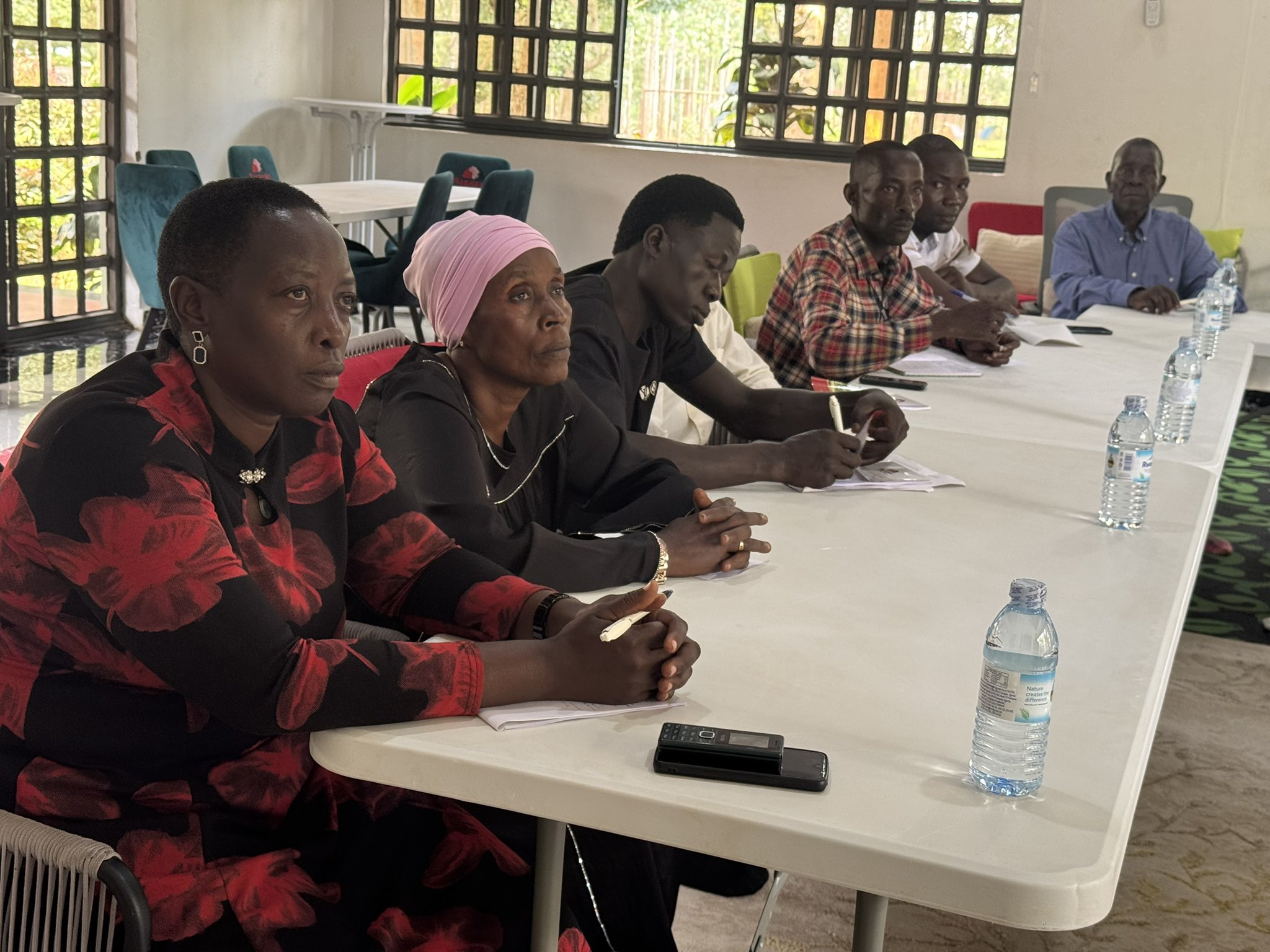
The newly elected leadership of Bamutakudde Village in Ddundu Parish, Kyampisi Subcounty, Mukono District, has unveiled an ambitious five-year development plan aimed at improving access to clean water, creating jobs for young people and increasing household incomes.
The priorities were identified during the first day of a three-day strategic planning retreat for the Bamutakudde LC1 committee, where members were guided by experts on how to develop realistic and achievable development plans for the village.
Speaking during the retreat, the new Bamutakudde LC1 Chairperson, Solomon Sserwanja, said the committee had many aspirations for the village but decided to narrow them down to five priority areas that can realistically be implemented over the next five years.
“Strategically, we have a lot of dreams and visions for this village, but we had to reduce them to what is achievable over the next couple of years through prioritizing,” Sserwanja said.
He identified access to clean and safe water as the village’s top priority, noting that Bamutakudde, also referred to as Bamutakudde Desert Village, continues to experience water stress.
Sserwanja said the leadership plans to sink at least three wells during the first quarter of implementing its strategic plan, with two solar-powered water wells expected to be supported by Mukono District Local Government.
“We believe that in the first three months, or the first quarter of our implementation plan, we will be sinking at least three wells. Two of these, Mukono District Local Government, under the leadership of the LC5 Chairperson, Owek Francis Lukoya, has agreed to sink for us as solar-powered water wells,” he said.
The second major priority will be increasing household incomes, particularly by equipping young people with practical skills that can enable them to access employment and create businesses.
According to Sserwanja, the village plans to train young people in plumbing, painting, basic electrical wiring, tiling, landscaping and gardening.
The district government has also agreed to support the village with 50 beehives, which the LC1 leadership says will provide young people with an opportunity to venture into beekeeping and generate income.
“Our young people will be ready to go to the job market, and they will be ready to serve Bamutakudde Desert Village and beyond,” Sserwanja said.
The leadership also plans to establish two companies, including a professional catering company and an events management company.
Sserwanja said the catering company will seek to train young women in professional cooking and hospitality, with plans to invite experienced chefs from across the country to provide practical training.
“We are going to invite top professional chefs from across the country to come and teach our young women how to cook a professional dish, how to serve it and how to professionalise our catering services,” he said.
He said the company will provide catering services both within Bamutakudde and to clients outside the village, creating another source of income for residents.
The LC1 leadership also intends to mobilise residents to benefit from government programmes, including the Parish Development Model, the Youth Livelihood Programme and initiatives supporting older persons.
Sserwanja said the village has already started organising itself to take advantage of these programmes, including supporting young people to form groups that can access government financing.
The second day of the retreat will focus on resource mobilisation and identifying sustainable sources of funding for the strategic plan.
Sserwanja said the village will align its development priorities with the broader strategic plan of Mukono District Local Government while also seeking support from non-governmental organisations, development partners and corporate organisations with corporate social responsibility programmes.
“We believe that with the support from the local government, we will be able to implement many of these activities, but we will also resource-mobilise from partners, NGOs and corporate organisations with CSR budgets,” he said.
He added that residents are also willing to contribute towards development initiatives, arguing that a well-organised community is more likely to attract external support and investment.
“The villagers are also willing to contribute some little money to improving our village. We believe that when we are organised, we will attract capital or resources that will be very central in the implementation of our strategic plan,” Sserwanja said.
The LC1 leadership says the five-year plan is intended to transform Bamutakudde into a more organised and economically empowered community by addressing basic needs while creating opportunities for residents, particularly young people.