


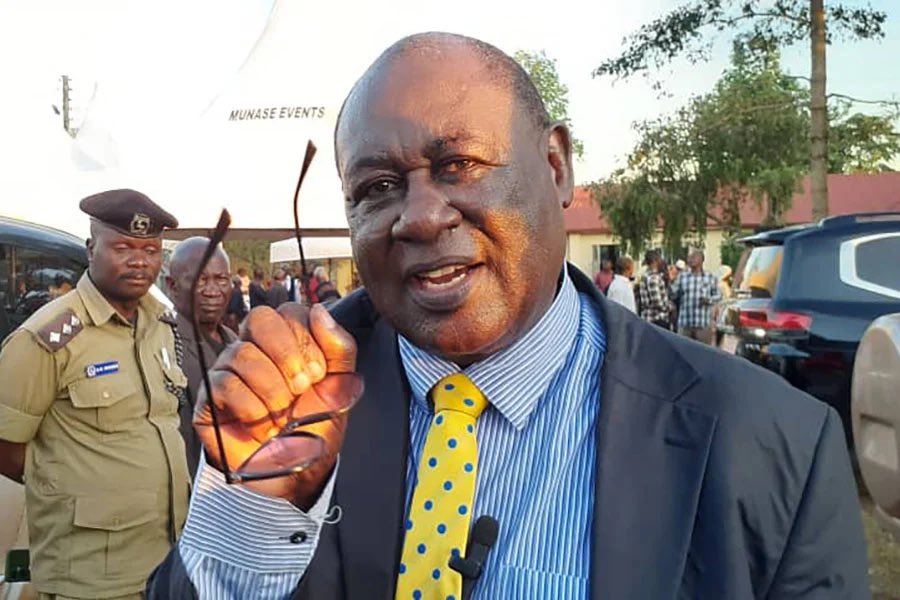
The State Minister for Lands, Dr. Sam Mayanja, has officially announced the 9th National Land Awareness Week, a major government-led initiative that will take place from August 25 to 29, 2025, across the Bugisu and Sebei sub-regions.
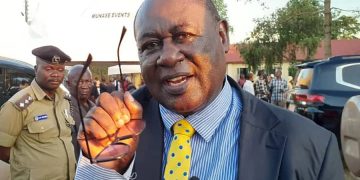
Addressing journalists at the Uganda Media Centre in Kampala, Mayanja outlined the objectives of the week-long campaign, describing it as a “collective movement” aimed at addressing widespread land-related challenges in Eastern Uganda.
“This initiative is not just an event,” he emphasized, “it is about the Government, civil society, cultural and religious institutions, and the people themselves working hand in hand to secure land rights, resolve disputes, protect the environment, and build a foundation for inclusive and sustainable development.”
Organized by the Ministry of Lands, Housing and Urban Development, in collaboration with district local governments, civil society organizations, and other partners, the Land Awareness Week will cover ten districts: Mbale, Mbale City, Sironko, Bulambuli, Namisindwa, Manafwa, Bududa, Kapchorwa, Kween, and Bukwo.
Under the theme, “Promoting Land Rights for Sustainable Land Use, for Inclusive and Sustainable Development,” this year’s campaign aims to tackle deep-rooted issues such as land conflicts, land grabbing, lack of legal documentation, environmental degradation, population pressure, and land fragmentation.
Why Bugisu and Sebei?
Mayanja noted that the Bugisu and Sebei regions have long struggled with unresolved land disputes and the impacts of climate-related disasters such as landslides and displacement.
He said the Land Awareness Week would provide a platform for communities to engage directly with government agencies, legal experts, cultural and religious leaders, and environmental bodies to seek practical and lasting solutions.
“Through this initiative, we are bringing services to the people,” he said. “Communities, especially vulnerable groups like women, youth, and persons with disabilities, will gain access to knowledge, legal aid, and government land services.”
Among the many planned activities are community dialogues, mobile legal aid clinics, public education sessions, media engagements, and creative performances such as poetry, drama, music, and dance to spread messages about land rights.
Additionally, tree-planting exercises are expected to result in at least 5,000 seedlings being planted to promote environmental restoration.
Government agencies such as the National Forestry Authority (NFA), Uganda Wildlife Authority (UWA), and the National Environment Management Authority (NEMA) will also take part, ensuring that land governance efforts align with environmental protection.
The Minister highlighted a major innovation for this year: citizens in the participating districts will be given free access to the Land Information System and support to register on the Land Services Public Portal, making it easier for them to access land services without traveling long distances to regional offices.
Mayanja reaffirmed the government’s commitment to strengthening local land management institutions and ensuring that laws and policies such as the National Land Policy, Land Act, Land Use Policy, and Environmental laws are better understood and implemented at the grassroots level.
“We expect that by the end of the week, communities will be more informed, empowered, and better equipped to claim and protect their land rights. This will not only improve land governance but also contribute to peace, environmental conservation, and national development,” he concluded.
He extended his appreciation to the various partners who have supported the Land Awareness Weeks since their inception in 2017 and urged local leaders, stakeholders, and citizens to actively participate in the 2025 edition.
“This is about securing the land rights and futures of our people,” he said. “Together, we can address our land challenges and build a better Uganda for all.”