


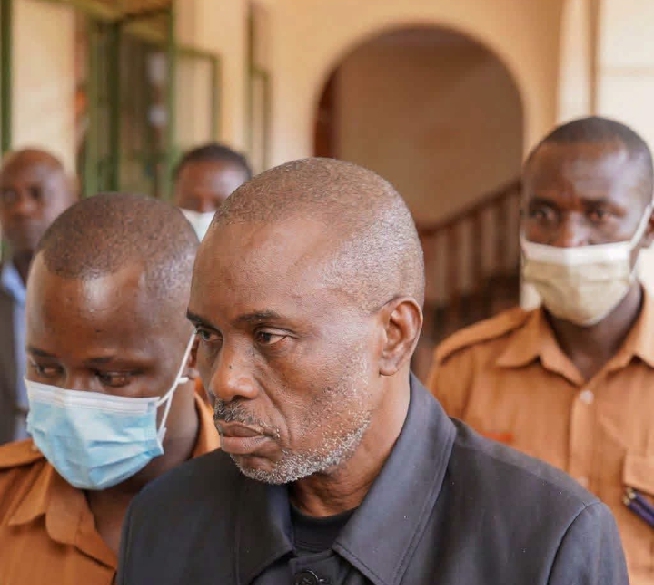
The detained opposition leader’s latest medical emergency comes amid a prolonged legal battle, with his family pressing for urgent care and the courts yet to resolve his bid for freedom.
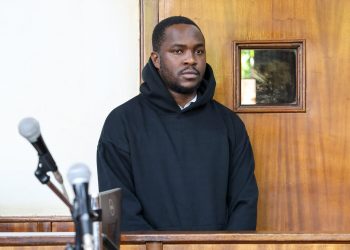
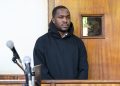
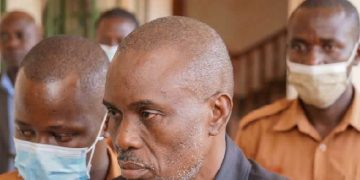
KAMPALA, Uganda (UGNEWSLINE) — The uncertainty surrounding Erias Lukwago’s health has deepened after the former Kampala Lord Mayor was allegedly rushed to Mulago National Referral Hospital in critical condition, adding a new twist to a detention that has increasingly become a source of distress for his family and political allies.
According a relative who requested to rain anonymous for personal reasons, Lukwago’s condition was critical, although details about what triggered the latest emergency and his response to treatment were not immediately available. His hospitalisation comes at a particularly difficult moment, with his lawyers pursuing another attempt to secure his release from Luzira Prison, where he has been held since June.
For relatives who have spent months seeking answers about his health and legal status, the latest development has intensified concerns that time is passing without a clear resolution to either problem.
Lukwago, a lawyer and president of the opposition People’s Front for Freedom (PFF), has repeatedly argued that his health requires specialised medical attention that cannot adequately be provided in prison.
His legal team has sought permission for him to travel to India for a review by surgeons who previously operated on his cervical spine.
The dispute over his treatment has played out alongside his criminal case, with the defence and prosecution offering sharply different arguments over whether he should be released on bail.
Lukwago was arrested on June 15 and appeared before the Makindye Chief Magistrate’s Court two days later, when he was charged with misprision of treason, an offence involving the failure to report knowledge of treasonous activities. He denied the charge and was remanded to Luzira Prison.
Prosecutors allege that Lukwago knew about an alleged plot involving veteran opposition politician Col. Dr. Kizza Besigye and other individuals to overthrow the government but failed to report it to the authorities.
The allegations remain before the courts, and Lukwago is presumed innocent unless proved guilty.
His arrest attracted attention partly because of his position as one of Uganda’s prominent opposition lawyers and his role in representing Besigye, who is also facing treason-related charges.
Lukwago has additionally represented Besigye in a separate legal dispute involving military chief Muhoozi Kainerugaba.
The circumstances surrounding Lukwago’s arrest also generated controversy. His party said he had been taken from his home by security operatives, while opposition figures questioned the circumstances of his detention.
The allegations surrounding his initial custody and treatment have remained part of the wider debate over his case.
Health concerns soon became central to his defence.
Lawyers told court in June that he had suffered serious medical complications, including a hypertension crisis and worsening spinal problems.
They argued that his condition required careful monitoring and specialist intervention.
A subsequent assessment at Mulago National Referral Hospital identified several conditions requiring continued treatment, according to submissions made by his lawyers. These included hypertension, respiratory complications, gastrointestinal problems and difficulties associated with his previous cervical spine surgery.
The defence later asked court to allow him to travel to India under security escort for further treatment.
His lawyers argued that the specialists who performed his earlier operation needed to review his condition and that some investigations could not readily be completed at Mulago.
The authorities have not publicly confirmed that his latest hospitalisation was caused by any particular illness, and the precise circumstances of the emergency remain unclear.
His struggle for release has also encountered repeated setbacks.
In July, the High Court rejected a second bail application, citing missing certified medical documentation from prison authorities and procedural issues relating to the case file.
The prosecution has previously opposed his release, arguing that his influence and the seriousness of the charge presented risks if he were granted bail.
Reports indicated that Lukwago had made a fourth attempt to secure release, arguing that he had spent more than 60 days on remand without trial and was entitled to mandatory bail under Article 23(6)(b) of Uganda’s Constitution. His application also cites the need for specialised medical treatment abroad.
The renewed legal effort followed another frustrating episode last week, when a scheduled bail hearing failed to proceed because the presiding judge was unavailable.
His lawyers asked the Judiciary to expedite the matter, while relatives expressed growing anxiety over his continued detention and deteriorating health.
The strain has extended beyond Lukwago himself. His brother, Abdul Sewankambo, said the prolonged absence had taken an emotional toll on their elderly mother, who had relied on Lukwago for care.