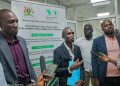



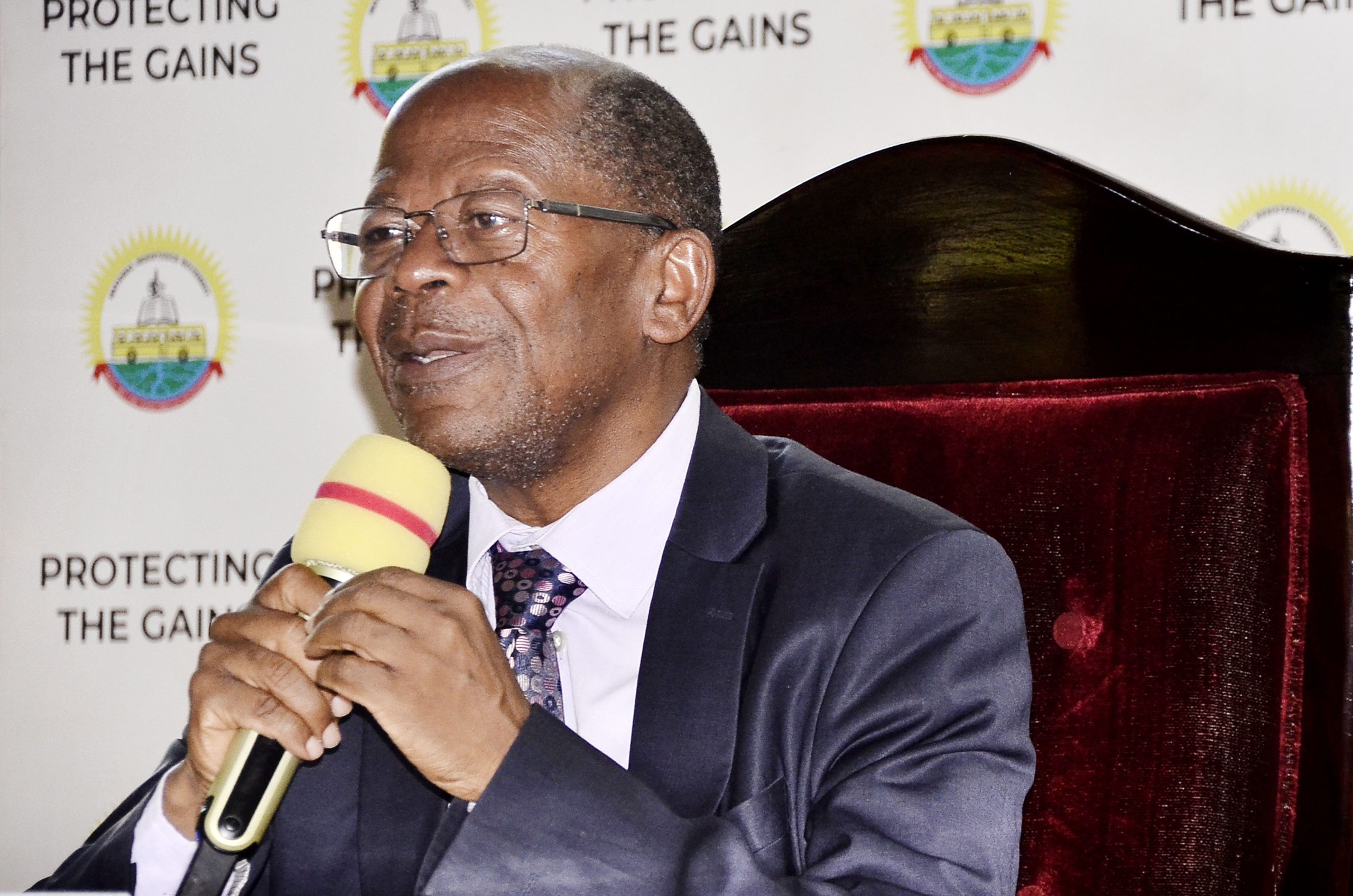
The State Minister for Higher Education Dr. J.C. Muyingo has painted a picture of significant progress in the Education and Sports sector, under the National Resistance Movement (NRM) government’s 2021–2026 commitments.
Highlighting accomplishments across primary, secondary, vocational, and higher education, Muyingo described a nation steadily transforming its human capital through strategic investments in learning, skills, and infrastructure.
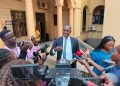
“The NRM, in its 2021–2026 manifesto, made very clear and measurable commitments to transform the education sector and the sports sector into a pillar of human capital development, economic transformation, and national pride,” Muyingo told journalists at the NRM party secretariat today (November 21, 2026).
“Today, I’m very pleased to report that we have made significant progress in fulfilling these commitments, guided by our shared belief that education is the most powerful catalyst for national development,” he added.
From the construction of new schools to modernizing universities and technical institutions, the government has moved decisively to increase access, improve quality, and align education with the needs of Uganda’s economy.
More secondary schools
Among the campaign promises, the government pledged to construct 258 new secondary schools in counties without any public secondary school. “I’m happy to report that instead of 258 schools, we have now constructed 259 schools,” he revealed.
These schools were built in three phases under the Uganda Government Investment in Facilities and Teaching (UGIFT) program. Phase one saw 115 schools completed and fully functional, while 75 schools from phase two await commissioning, and three schools in phase three are ready for immediate operation.
The Ministry plans to construct 116 additional secondary schools and rehabilitate 61 schools in refugee-hosting districts under the Uganda Secondary Investment Fund (USIF), with projects already underway in districts such as Okazo, Kamwenge, Mitoma, Ivanda, and Namutumba.
Traditional schools have also benefited from the government’s commitment to rehabilitation. A total of 121 historic secondary schools, 66 special needs education schools, and 22 teacher training institutions are slated for upgrade and expansion.
In line with these initiatives, Muyingo emphasized, “We already have the money, and we plan to rehabilitate and expand these institutions to meet modern educational needs.”
Between 2021 and 2025, a total of Shs 42.14 billion was allocated to procure instructional materials for secondary schools.
The Ministry successfully distributed over 16.9 million textbooks to Senior 1 and Senior 2 students, and 14.2 million textbooks to Senior 3 and 4 students, covering both core and non-core subjects.
Primary schools were not left behind either, with Shs28.15 billion allocated to procure science and social studies textbooks, teachers’ guides, and supplementary materials for P5–P7 students.
“All these were procured and delivered directly to the schools,” Muyingo said.
he noted that the operationalization of new government-owned and grant-aided schools has also been a priority. Under the UGIFT program, 201 “seed” secondary schools have been opened, while 46 community secondary schools received government grants. Investments extended to equipping these schools with science kits, reagents, and ICT infrastructure to support effective teaching.
Strengthening supervision, welfare
He further explianed that between 2021 and 2025, Shs37.51 billion was spent strengthening school inspection and monitoring systems.
he said by recruiting 448 additional inspectors, the government met the internationally recommended ratio of one inspector for every 40 schools. An integrated inspection ICT system, comprising the Teacher Effectiveness and Learner Achievement system and e-inspection tablets, now operates in all public schools.
He noted that these measures have already improved teacher attendance from 50% in 2023 to 70% in 2025, while inspection coverage for primary schools has risen from 77% to 86% nationally.
The Minister highlighted the government’s efforts to enhance teacher welfare, noting that salaries and living conditions have progressively improved.
In the financial year 2023–2024, Shs111 billion was allocated to increase wages for science teachers, and Shs16 billion was earmarked for headteachers and deputy headteachers in the science category.
Meanwhile, 592 two-unit staff houses have been constructed in 197 newly built secondary schools, and the government now mandates that new school construction projects include at least six teacher houses. Plans to enhance salaries for arts teachers will begin in 2026–2027.
Ensuring students remain in school and acquire relevant skills has been central to the government’s strategy, consultations on a national school feeding program concluded in April 2025, while the introduction of a Competency-Based Curriculum for lower secondary schools emphasized practical skills, entrepreneurship, and social transformation.
Muyingo said the A-Level curriculum has also been aligned to this approach, making learning more learner-centered. He stressed that these reforms aim to equip students with competencies essential for the job market.
Technical, Vocational, and Entrepreneurship Training
He said the government has worked to address underutilization of TVET institutions by relaxing entry requirements and aligning courses with market demands.
Muyingo invited Ugandans to visit the state-of-the-art facilities, saying that that the institutions specialize in strategic sectors: agriculture at Vocala Sania Agricultural College, oil and gas at Chibumba Petroleum Institute, manufacturing at UTC Bushenyi, general construction at UTC Elgon, construction for oil and gas at UTC Chichwamba, and roads and bridge construction at UTC Lira.
“It is important that you go to see the beautiful work that has been done by the NRM government, especially in technical vocational education and training,” Muyingo said.
Construction of facilities in 21 TVET institutions has advanced, with 12 institutions fully completed and nine others ongoing.
This includes specialized schools for nursing, midwifery, and technical skills, reflecting the government’s holistic approach to skills development.
In higher education, the government has prioritized STEM and market-relevant courses. Over the last four financial years, 24,985 scholarships have been awarded to students pursuing undergraduate degrees and diplomas in STEM/STEI and other market related disciplines.
Additionally, 8,451 learners have benefited from the Higher Education Student Financing Scheme. Special consideration has been given to students with disabilities to ensure no capable Ugandan is left behind due to financial constraints.
Muyingo said the government has also moved to expand higher education geographically, establishing a constituent college of Guru University in Karamoja, with 708 acres of land acquired and a multipurpose building under construction. Furthermore, regional universities such as Mountains of the Moon and Busoga University are being revamped, with significant infrastructure development completed, land secured, and academic programs submitted for accreditation.
A new public university is planned for the Bunyolo sub-region, with 98 acres already secured and 18 academic programs cleared. Muyingo stressed that the country which had one public university by the time NRM took over power, now have over 10.
Sports
He noted that preparations for CHAN 2025 and AFCON 2027 have accelerated investments in sports infrastructure.
The Mandela National Stadium in Namboole has been renovated, while regional stadiums in Hoima City and Ilira are under construction. Training pitches, multi-sports complexes, and swimming facilities in schools such as Teso College have also been developed.
Special attention has been given to inclusive education for learners with hearing impairments. At Mbali Senior Secondary School for the Deaf, a vocational workshop, classrooms, and sanitary facilities have been built, while Wakisok Senior Secondary School for the Deaf has received dormitories, classroom blocks, workshops, and teacher accommodation.
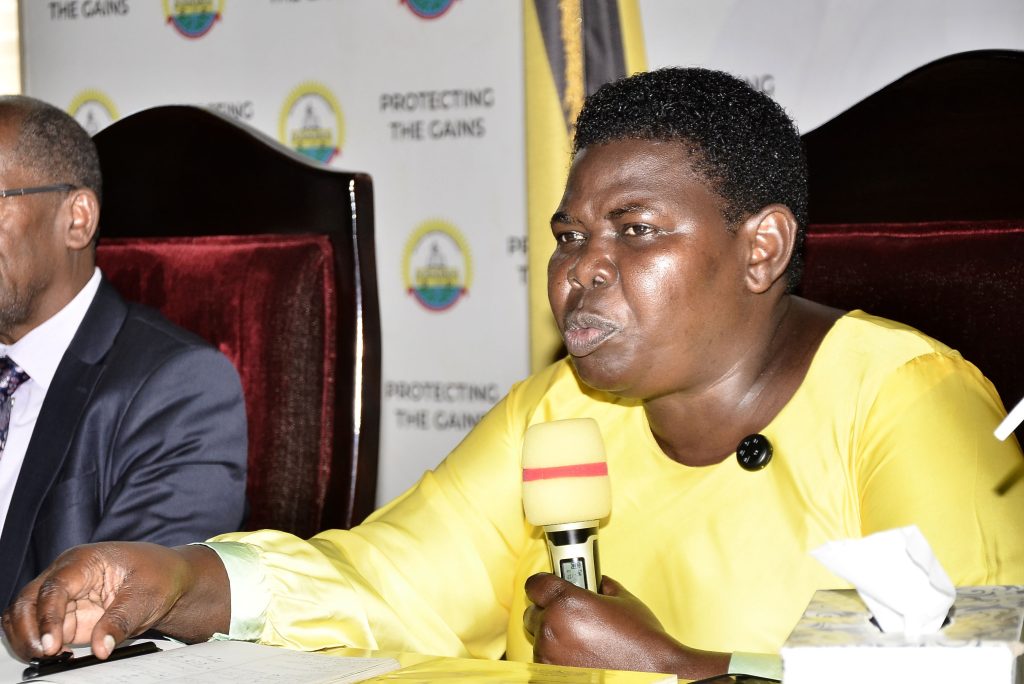
The party deputy secretary general, Nsereko Namayanja said: “The NRM government remains steadfast in its mission to build a modern, prosperous, knowledge-based society. Our investment in education and sports are investments in the future of our beloved motherland, of our children, the younger people, and the workforce”.
She stressed that the government has committed to maintaining and protecting all these achievements, ensuring that every Ugandan child has access to education, the opportunity to compete, innovate, and succeed.
Namayanja said the NRM will be having weekly activities to highlight the milestones for each sector against its committment for the ending term come January 15, 2026.