


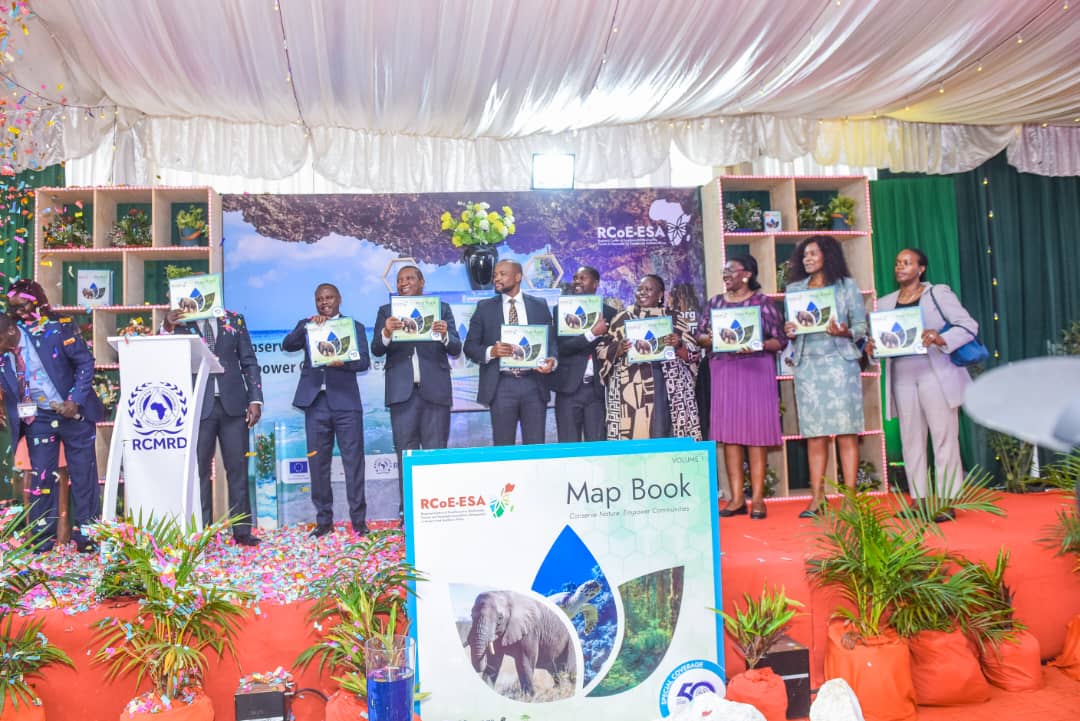
Nairobi, Kenya — The Regional Centre of Excellence for Biodiversity, Forests, and Seascape Ecosystems Management in Eastern and Southern Africa (RCoE-ESA), hosted by the Regional Centre for Mapping of Resources for Development (RCMRD), has officially launched a groundbreaking Map Book aimed at strengthening conservation and sustainable land and sea use planning across the region.
Unveiled during RCMRD’s 50th Anniversary celebrations, the RCoE-ESA Map Book spans 24 countries in Eastern and Southern Africa, offering an extensive collection of high-quality thematic and spatial maps. It highlights key biodiversity hotspots, protected and conserved areas, and transboundary conservation networks, while also identifying critical gaps in conservation coverage.
Designed for use by policymakers, conservationists, researchers, and development agencies, the Map Book provides data-driven insights to inform decision-making in the face of escalating threats such as climate change, habitat degradation, and unsustainable land use.
“Geospatial science is a powerful tool for conservation and sustainable development. Through data-driven planning and ecosystem mapping, we can restore biodiversity-rich forests, seascapes, wetlands, and other vital ecosystems,” said Dr. Emmanuel Nkurunziza, Director General of RCMRD. “This Map Book is a call to action and a key tool for strategic planning across our region.”
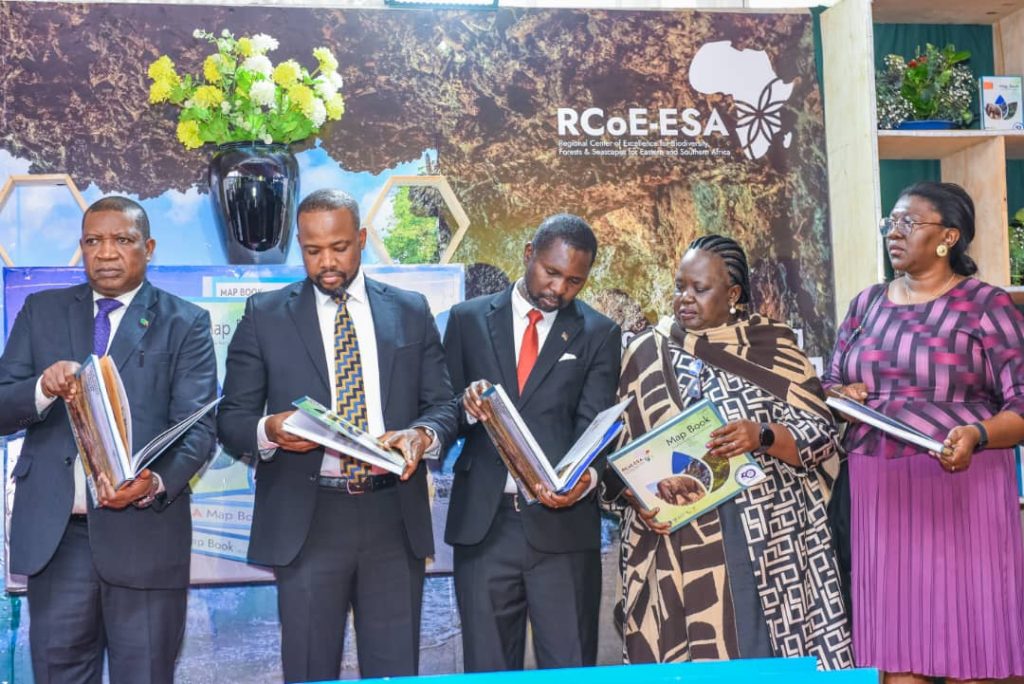
In addition to supporting national and regional planning, the Map Book tracks progress toward Target 3 of the Global Biodiversity Framework, which calls for conserving 30% of the Earth’s land and seas through Protected Areas (PAs) and Other Effective Area-Based Conservation Measures (OECMs).
The launch forms part of the broader RCMRD@50 Golden Jubilee festivities, celebrating five decades of leadership in geospatial science, Earth observation, and capacity building. With the backing of 20 Member States and multiple development partners, RCMRD continues to be a cornerstone institution, supporting sustainable development efforts for over 500 million people across the region.
“Indeed, it has been a journey of five decades advancing geospatial excellence for sustainable development. This Map Book is a testament to that legacy,” added Dr. Nkurunziza.
The event also coincides with a Sensitization Training Workshop on the Integrated Management Effectiveness Tool (IMET)—a digital platform designed to enhance the planning, monitoring, and evaluation of protected and conserved areas.
The training aims to build stakeholder capacity in effective ecosystem management and ensure the long-term delivery of ecosystem services for the benefit of communities that depend on them.
The RCoE-ESA Map Book is available online and free to access via: https://rcoe-mapbook.rcmrd.org